


 RBA Signals More Rate Hikes as Inflation Risks Rise
  Fed’s Williams Sees One More Rate Hike in 2026, None in 2027
  Monero Price Holds $515 Support as XMR Eyes $545 Breakout
  Philippines Current Account Deficit Seen at $19.1 Billion in 2026
  India Voter List Protests Reach Supreme Court as Opposition Demands Election Chief's Resignation
  US Inflation Surges in September, Raising Fed Rate Hike Bets
  Ripple-Backed Evernorth Set for Nasdaq Debut With 473 Million XRP
  Cardano Hits Five-Year Transaction Record as ADA Price Falls
  AI Crypto Payments Surge to 138 Million Transactions on Base
  Florida Seeks Tougher Meta Rules to Protect Young Users
  Wall Street Ends Mixed as Investors Await CPI and Bank Earnings
  Gold Prices Mixed Ahead of US Inflation Data and Fed Rate Outlook
  Samsung, SK Hynix Shares Plunge as China Chip Competition Grows
  DeFi Development Adds 22,070 SOL to Solana Treasury
  Maduro, Wife May Face New US Torture Charges
  ICC Rules Duterte Fit to Stand Trial in Drug War Case
  Second DOJ Lawyer Exits Trump Probe


 Add as a preferred source on Google
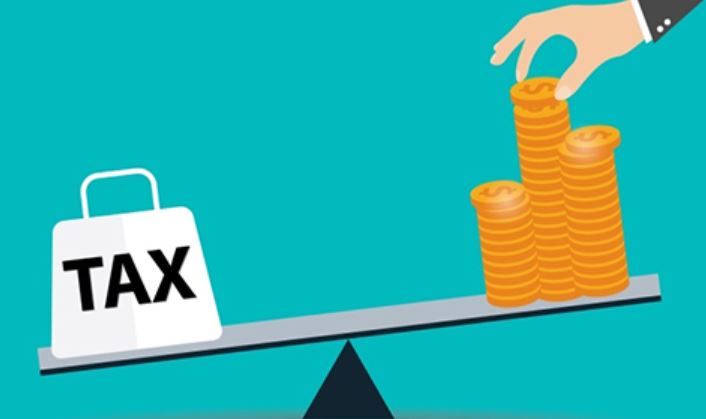

The Trump administration wants to change the way capital gains are taxed to factor in inflation.
To many, this may sound like a technical change of little consequence. To others, such as the Tax Policy Center’s Len Burman, it’s a “windfall” for the very rich who are still adding up their gains from the 2017 tax cut.
As a tax policy expert, I agree that the proposed change could make sense as part of broader tax reform that simplifies the tax code and benefits all taxpayers. But on its own, this policy would only make the tax code more regressive and less efficient.
To understand why, let’s review some of the basics.
What are capital gains?
In economics, a person’s income in a given year should include all inflows of new financial resources that can be used for either consumption or gains in net worth.
A familiar example is your paycheck. But financial resources don’t always come in the form of cash. Income can also come from the appreciation of non-cash assets such as stocks and real estate, also known as capital gains.
Most Americans get the vast majority of their income from wages and salaries. Among the top 1 percent, however, capital gains make up 36 percent of total income.
How are gains calculated and taxed?
The IRS needs to know how much money a taxpayer makes in a year in order to tax her properly under the 16th amendment, which was ratified in 1913 and gave the U.S. the power to tax incomes “from whatever source.”
Unlike wages, capital gains are harder to calculate – and harder to tax.
Ideally, we’d need to know how much value her investments gained. The value of some assets like stocks and mutual funds is straightforward because they are bought and sold frequently. But that’s not the case for assets like real estate or fine art that don’t change hands often. So it’s harder to know their value.
The solution has been to only tax capital gains when they are realized – that is, when the asset is sold. The gain is the difference between the sale price and the original purchase price, ignoring the impact of inflation, which erodes its real value.
As long as you hold onto an asset, you don’t have to pay capital gains taxes on it. In fact, if you die, your heirs don’t have to pay either and the gain will never be taxed.
How much is the tax?
In the early years of the income tax, capital gains were taxed at the same rates as ordinary income, or as high as 77 percent in 1918 as the rate soared to cover the cost of World War I.
After the war, conservatives began to make the case for tax cuts. So Congress lowered the top individual tax rate to 58 percent in 1922 and split off capital gains from regular income, slashing the rate to 12.5 percent.
Since then, capital gains tax rates have been changed frequently, climbing as high as 40 percent but typically remaining much lower than the top rate on ordinary income.
What are the effects of capital gains taxes?
Supporters of lower rates for capital gains argue that it stimulates economic growth, mitigates double taxation of corporate income and alleviates the “lock-in” effect that discourages investors from selling assets to avoid taxes. They also point out that inflation erodes the real value of capital gains. Lower rates help offset this penalty – as would the administration’s proposal.
Other research, however, suggests that capital gains tax breaks have no significant effect on economic growth and create other distortions that hurt economic efficiency. For example, hedge fund managers exploit the “carried interest” loophole to categorize their income as capital gains instead of wages.
Whether capital gains tax policy actually increases economic efficiency, we do know it makes the tax system more regressive. Since capital gains are highly concentrated among high-income taxpayers, tax breaks for capital gains primarily benefit the wealthy. The Tax Policy Center estimates that in 2016 taxpayers with incomes over US$1 million received over three quarters of the benefits of lower rates while taxpayers earning less than $75,000 received just 2 percent.
As for the administration’s proposal, given the vast complexity of our tax system, it would be a very minor fix that benefits a small number of wealthy people.
Or in the words of Burman, also a professor of public administration and international affairs at Syracuse University, the proposal would result in tax savings of “up to $20 billion a year for the richest Americans and open the door to a raft of new, inefficient tax shelters.”
 Stephanie Leiser does not work for, consult, own shares in or receive funding from any company or organization that would benefit from this article, and has disclosed no relevant affiliations beyond their academic appointment.







