A 1909 mission report records a broad Presbyterian network in Korea before North Korean leader Kim Il-sung’s rise, giving historical context to journalist Jonathan Cheng’s argument about the roots of North Korea’s personality cult.
The publisher lists Cheng’s 768-page book, Korean Messiah: Kim Il Sung and the Christian Roots of North Korea’s Personality Cult, as released April 14, 2026. In a ChinaTalk interview, Cheng said whether the borrowing was deliberate or unconscious was uncertain.
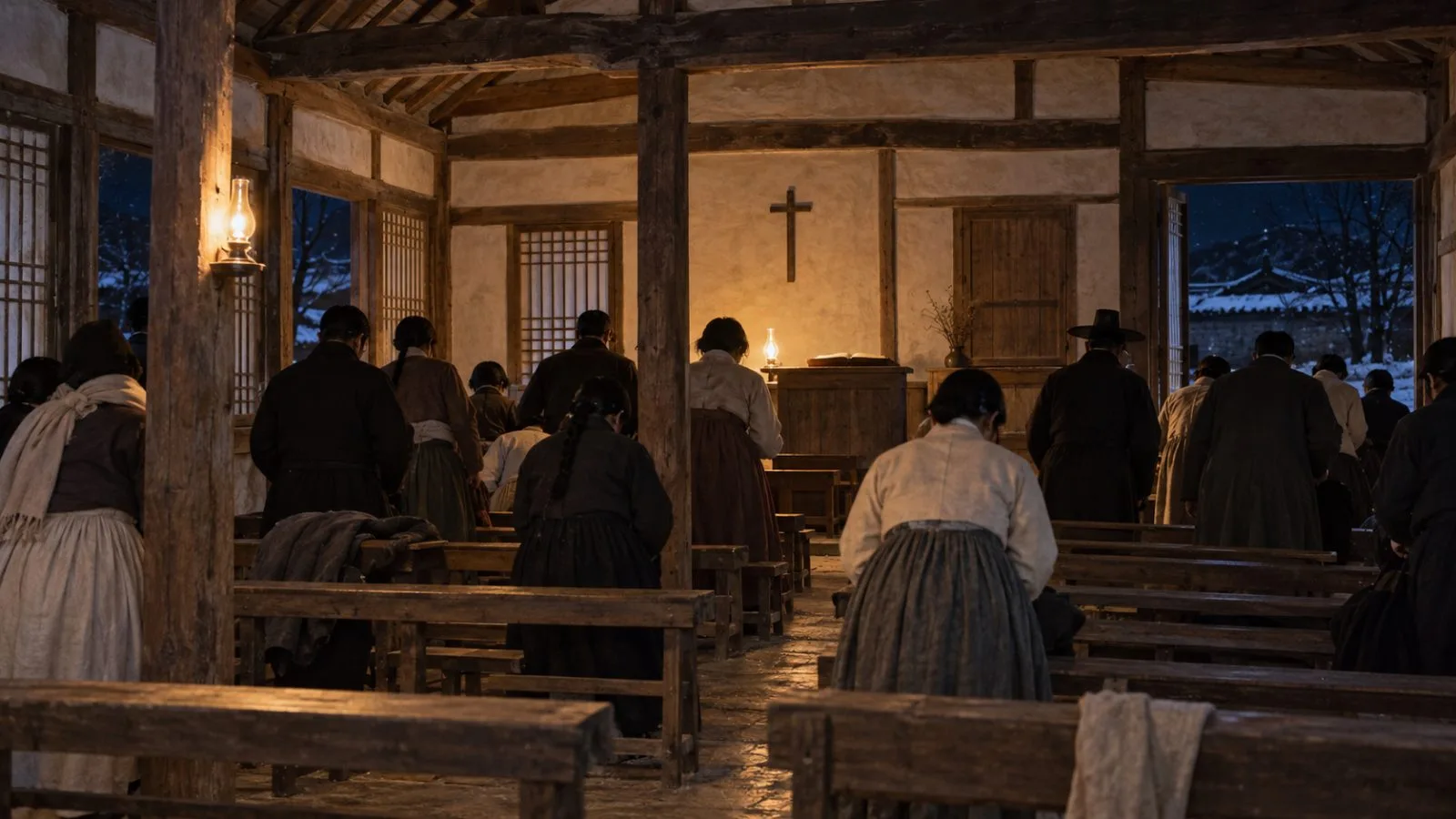
Missionary Samuel Austin Moffett’s report places a major revival in Pyongyang in January 1907, during evening services held as a Bible Training Class was ending. He described the movement reaching churches and schools before spreading elsewhere in Korea.
For 1909, Moffett listed 119,380 adherents, 1,539 congregations and 1,184 church buildings for the Presbyterian Church in Korea, identifying the totals as figures reported by the church. He credited Koreans with most evangelistic work and said Bible classes for church Helpers and Leaders were instrumental. Moffett also wrote that Koreans built most church and school buildings and supported 94% of the 1,052 salaried native workers.
A separate article in Church History examines Protestantism’s political role around the 1919 March First Movement, when church life and Korean nationalism intersected.
Accounts of Kim’s personal background conflict. Author Dae Young Ryu’s 2019 article in the Journal of Church and State describes Kim’s parents as Christians and says he apparently taught Sunday school; Ryu notes that Kim did not mention the teaching role in his memoir. In With the Century, published in 1994 by North Korea’s Foreign Languages Publishing House, Kim said his father was an atheist, his mother attended church without believing in Jesus, and religion did not influence him.
A 2015 study by researcher Fyodor Tertitskiy, drawing on North Korean and Soviet sources, says North Korea was under complete Soviet control from 1945 to 1950, with important decisions about the cult made by Kim’s Soviet supervisors. Tertitskiy says Kim’s independent role in shaping the cult grew after 1967.
The sources document the earlier church network and competing accounts of Kim’s upbringing, but they do not establish that Presbyterian practices shaped the personality cult. Cheng’s proposed connection remains an interpretation, alongside Tertitskiy’s account of Soviet influence on the cult’s early development.