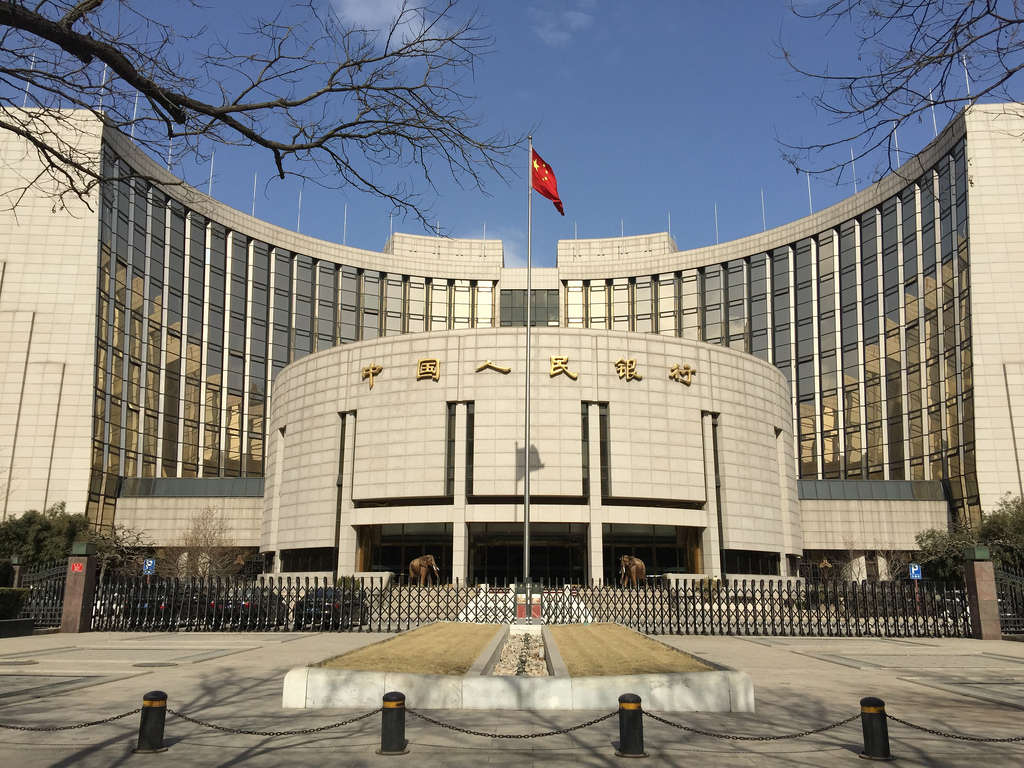
China's central bank left its benchmark lending rates unchanged on Monday for the 14th straight month, in line with market expectations, as policymakers continued to prioritize monetary policy stability while navigating an uneven economic recovery.
The People's Bank of China (PBOC) kept the one-year Loan Prime Rate (LPR) at 3.00% and maintained the five-year LPR, the key benchmark for mortgage lending, at 3.50%. The decision signals that authorities remain cautious about introducing broad monetary stimulus despite persistent challenges in the domestic economy.
China's economic outlook has remained mixed in recent months. Exports have continued to perform well, supported by resilient overseas demand and stronger manufacturing activity. However, consumer spending has yet to recover fully, while the country's struggling property market continues to weigh on broader economic growth.
Economists have described the current environment as a "K-shaped" recovery, where export-oriented industries and manufacturers outperform sectors tied to domestic demand, including real estate and household consumption.
The PBOC has instead focused on maintaining ample liquidity in the financial system without resorting to aggressive interest rate cuts. Analysts believe policymakers are balancing the need to support growth with concerns about financial stability and capital flows.
China's Loan Prime Rate is determined each month after 20 designated commercial banks submit their proposed lending rates to the central bank. The one-year LPR serves as the benchmark for most new corporate and household loans, while the five-year LPR is widely used to price residential mortgages.
By keeping both rates unchanged, Beijing reinforced its preference for a measured policy approach as it monitors economic conditions in the second half of the year. Investors will continue watching upcoming economic data for signs of stronger domestic demand and whether additional fiscal or monetary measures will be introduced to support China's long-term growth trajectory.