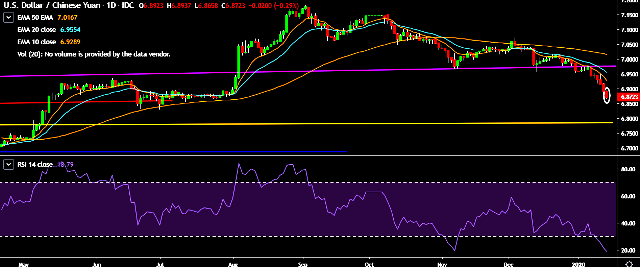
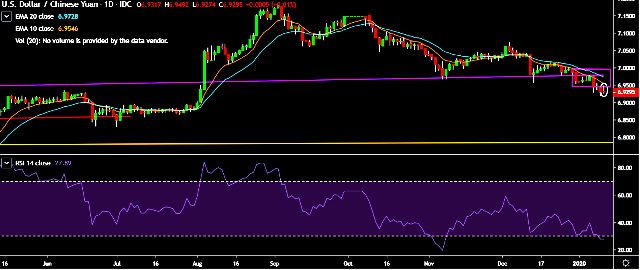
The Chinese yuan is expected to advance moderately in the coming weeks, catching up with recent gains in regional peers such as the KRW and TWD, according to the latest research report from Scotiabank.
The People’s Bank of China (PBoC) has been setting USD/CNY in line with market expectations since mid-October given fading depreciation pressure on the yuan.
China’s FX trading platform, China Foreign Exchange Trade System (CFETS), has adjusted the weightings of currencies in its 24-currency RMB Index on the back of the 2018 trade statistics. With effect from January 1, 2020, the CFETS said in a statement that it would reduce the USD’s weighting to 21.59 percent from 22.40 percent but increase the EUR’s weighting to 17.4 percent from 16.34 percent.
In addition, the weighting of the JPY has been lowered from 11.53 percent to 11.16 percent, with the AUD’s raised from 4.40 percent to 5.20 percent. The adjustment does reflect the impact of prolonged US-China trade tensions and improving Europe-China economic relations.
As the EUR is expected to advance against the USD this year, an increase in the EUR’s weighting could lead to a bigger rise in the CNY to ensure a steady yuan versus the basket, the report added.
In the meantime, rising weightings of commodity currencies such as the AUD and NZD suggests China’s persistently strong demand for raw materials and agricultural products.
"We maintain our short USD/CNH position amid sustained risk appetite arising from easing trade tensions with the US and the PBoC’s monetary easing measures," Scotiabank further commented in the report.
Meanwhile, US President Donald Trump tweeted on Tuesday that he will sign a phase-one trade deal at the White House on January 15 in the presence of high-level representatives from China and that he will travel to Beijing at a later date to begin the phase-two trade talks.