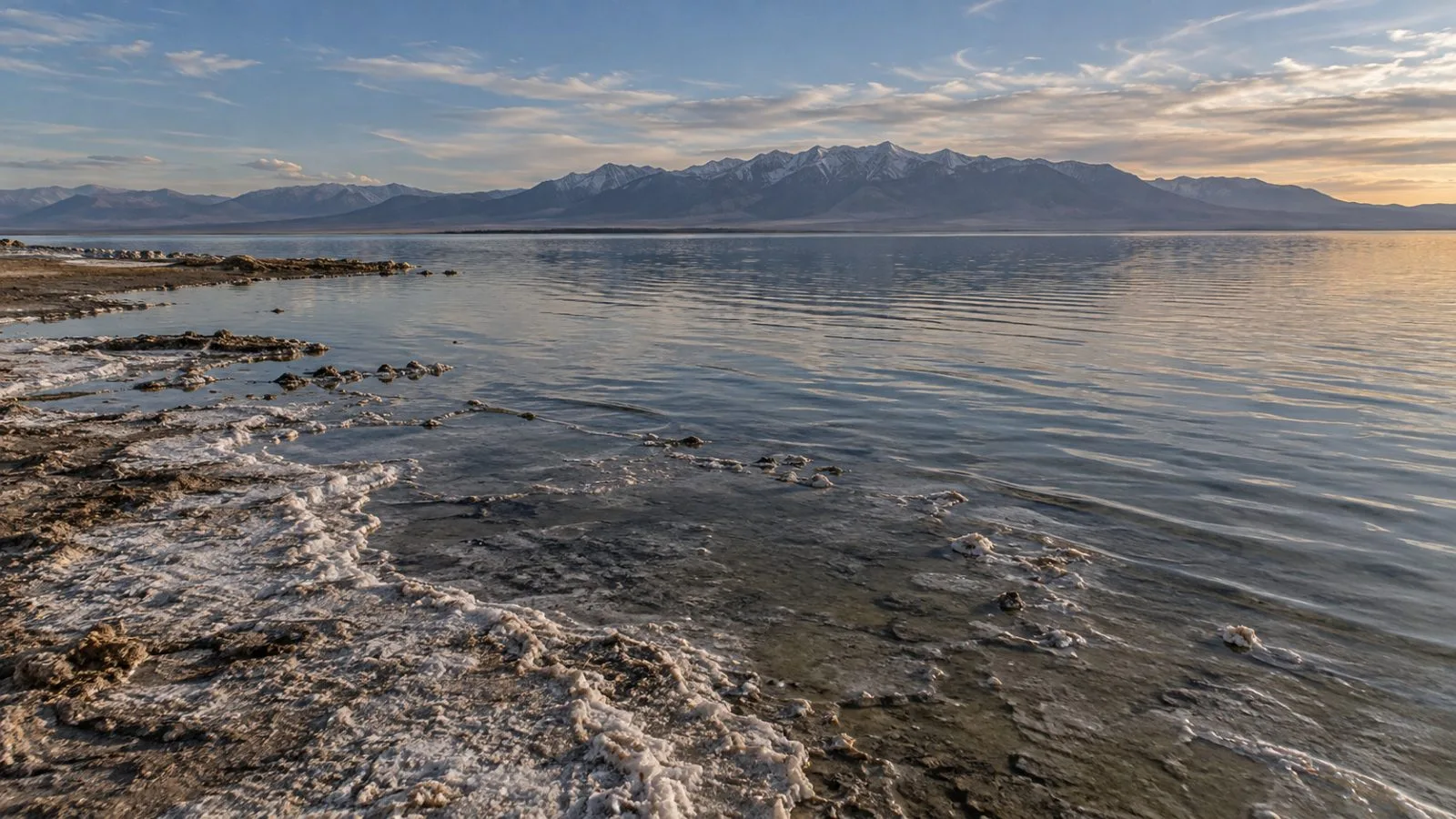
A global assessment of 85 saline lakes found climate change drew the largest share of expert votes on pressures facing them, while documenting the lakes' biodiversity and human uses.
Climate change drew 28% of the votes, compared with 24% for land-use change and 22% for overuse of natural resources. The study described the three pressures as close in importance, with climate change ahead by four percentage points over land-use change and six over resource overuse.
Published Sept. 3 in Nature Communications, the study recorded 200 species classified by the International Union for Conservation of Nature (IUCN) as threatened or near threatened across the lakes, averaging five species per lake.
The lakes provide services tied to research, tourism and recreation. Researchers counted scientific research as a service when more than 20 Web of Science papers targeted a lake; 88.4% of lakes met that threshold. Tourism or recreation was recorded for 83.7%.
Some roles were harder to quantify. The paper discussed saline lakes' effects on regional dryland microclimates and their role in limiting dust storms, but excluded those services from its quantitative analysis.
Their sensitivity extends across the basin: almost every saline lake lacks a surface exit, and evaporation can counter water coming in as conditions across the catchment shift. Climate and land-use changes across those areas can affect the conditions shaping lake levels.
That creates competing claims on water. The researchers said heavy resource use can undermine benefits provided by the lakes, while irrigation may conflict with efforts to maintain levels in lakes shared across national borders.
For Great Salt Lake, the study noted, the ecosystem did not fully register hydrological changes in its catchment until 15 years had passed. The paper also found that most saline lakes lack comprehensive management plans.
The researchers urged managers to plan across entire watersheds and collect lake-specific data over time, so decisions can account for biodiversity alongside the services communities use.