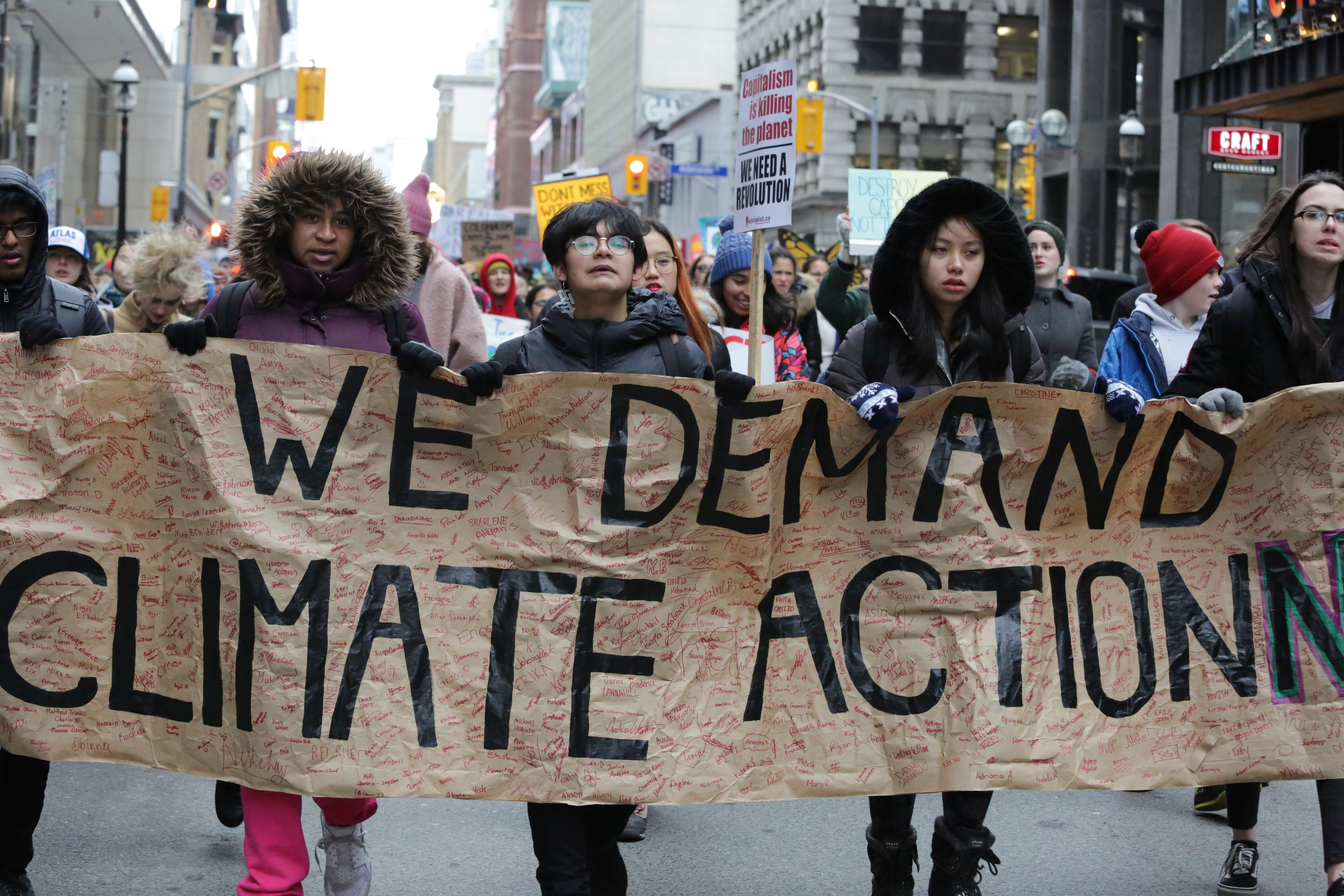
The recent Intergovernmental Panel on Climate Change (IPCC) report underscored the dire state of the climate crisis, concluding that “immediate, rapid and large-scale reductions in greenhouse gas emissions” are needed to limit global warming even to 1.5°C or 2°C.
The report renewed calls for urgent action and an end to “dithering” by politicians. These echo longstanding arguments which bemoan the lack of “political will” to tackle climate change.
The world absolutely needs to reduce or eliminate emissions, and fast. But while many of the problems inhibiting effective climate action are political, they aren’t really about politicians failing to do anything. There has actually been plenty of climate action over the last couple of decades. So far, however, it’s largely failed.
Climate action for whom?
Different kinds of climate action have different costs and benefits for different people. Because of this, choices about what courses of action to pursue are profoundly shaped by relations of power.
We live in a world marked by severe disparities of wealth and power within and between countries, many of which are rooted in longer histories of colonialism and exploitation. These disparities have often allowed powerful companies in sectors like finance and energy to dictate the course of climate action. This has made it very difficult to pursue measures that might threaten their interests, but which would dramatically reduce emissions – like banning fossil fuel exploration.
Instead, we’ve had a slew of measures to address climate change which rely on making emissions reductions profitable. But the quickest ways to reduce emissions aren’t always the most profitable. And what is profitable for some can be harmful for less powerful people and communities.
One example is carbon credits – permits that allow firms and governments to meet emissions targets and offset their pollution by funding projects that reduce emissions elsewhere, mainly in developing countries. The Clean Development Mechanism (CDM) organised by the UN was meant to help reduce emissions this way. As agreed in the 1997 Kyoto Protocol, the CDM was supposed to mobilise investment to install renewable energy, retrofit factories and restore habitats.
While a large market developed for carbon offsets, it failed to substantially reduce emissions. A major reason for this was its reliance on profit-seeking private investors. Many of the projects funded through the CDM were probably profitable on their own – the distribution of CDM credits very closely mirrors patterns of private foreign investment in developing countries, with the vast majority funding projects in China and India.
Only a narrow range of possible emissions reduction projects, which either delivered their own revenue or provided cost savings for existing businesses, were financed as a result. But even these efforts were hampered by the push to create secondary markets for carbon credits, in which banks and financial institutions speculated on the price of credits. This was supposed to create more accurate prices, but instead, it made them more volatile, inhibiting new projects, as it became hard to predict how much the carbon credits they generated were worth.
Carbon trading also privileged the interests of private investors over those of communities near CDM-funded projects. Windfarms built in southern Mexico and financed through the CDM, for instance, privatised communal land, displacing indigenous communities.
Not-so-sustainable energy
Another major plank of climate action so far has been incentivising the adoption of new technologies with lower emissions. Governments in developed countries have offered subsidies for people to buy electric cars, or increased funding for research and development of clean energy technology.
It is tempting to think public and private investment in renewable energy might allow governments, businesses and civil society to pull together and fight climate change. But there remain significant obstacles. For one, many of the major energy firms investing in wind and solar power, like Shell and British Petroleum, also supply oil and gas. As long as producing fossil fuels remains profitable, these firms will resist efforts to stop selling them.
More importantly, shifting to fully renewable energy sources would require mineral extraction on a truly massive scale to supply the materials for batteries, wiring and other components of solar panels and wind turbines. Recent estimates suggest that meeting current global energy demand with 100% renewable energy would take more cobalt, lithium, and nickel than is known to exist on earth.
A scramble for these minerals is already underway. Demand for batteries in phones, laptops, and electric cars has triggered a rush to establish industrial mines in the southeast of the Democratic Republic of Congo, where the majority of the world’s known reserves of cobalt are found.
Foreign-owned industrial mines employ very few Congolese workers and the profits largely accumulate abroad. Some communities have been removed to make way for mining operations. Small-scale mining by local people, often operating without permits or formal mineral rights and using their own tools, has become the main means by which cobalt has benefited local livelihoods.
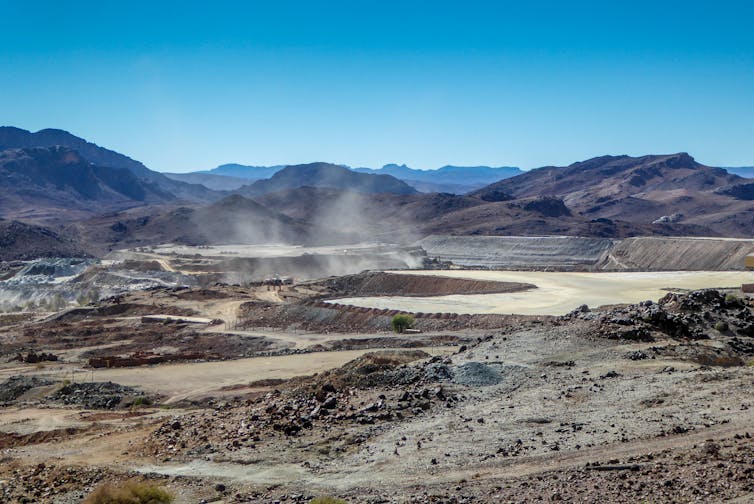
A cobalt mine in Morocco. Sunart Media/Shutterstock
But according to media and activist reports, child labour is rife in these smaller mines. Meanwhile, the cobalt boom has been linked to landslides, river pollution, and deforestation, and locals have suffered widespread exposure to toxic mining dust in the air and in food and drinking water.
Some firms, including manufacturers of cars and electronics, as well as financial institutions involved in trading cobalt, have tried to minimise the negative effects of mining. Most of these programmes focus on tackling child labour, by certifying that cobalt was extracted from industrial mines rather than from the small-scale mines where most of the problem exists. But replacing smaller mines with industrial-scale ones wouldn’t necessarily benefit mining communities.
Climate action so far has failed to confront the interests of powerful businesses and governments, while passing costs on to vulnerable people and places which have contributed very little to the climate crisis. If we want results, we may need to go beyond simply demanding action and instead focus on changing the way the global economy is organised and governed.