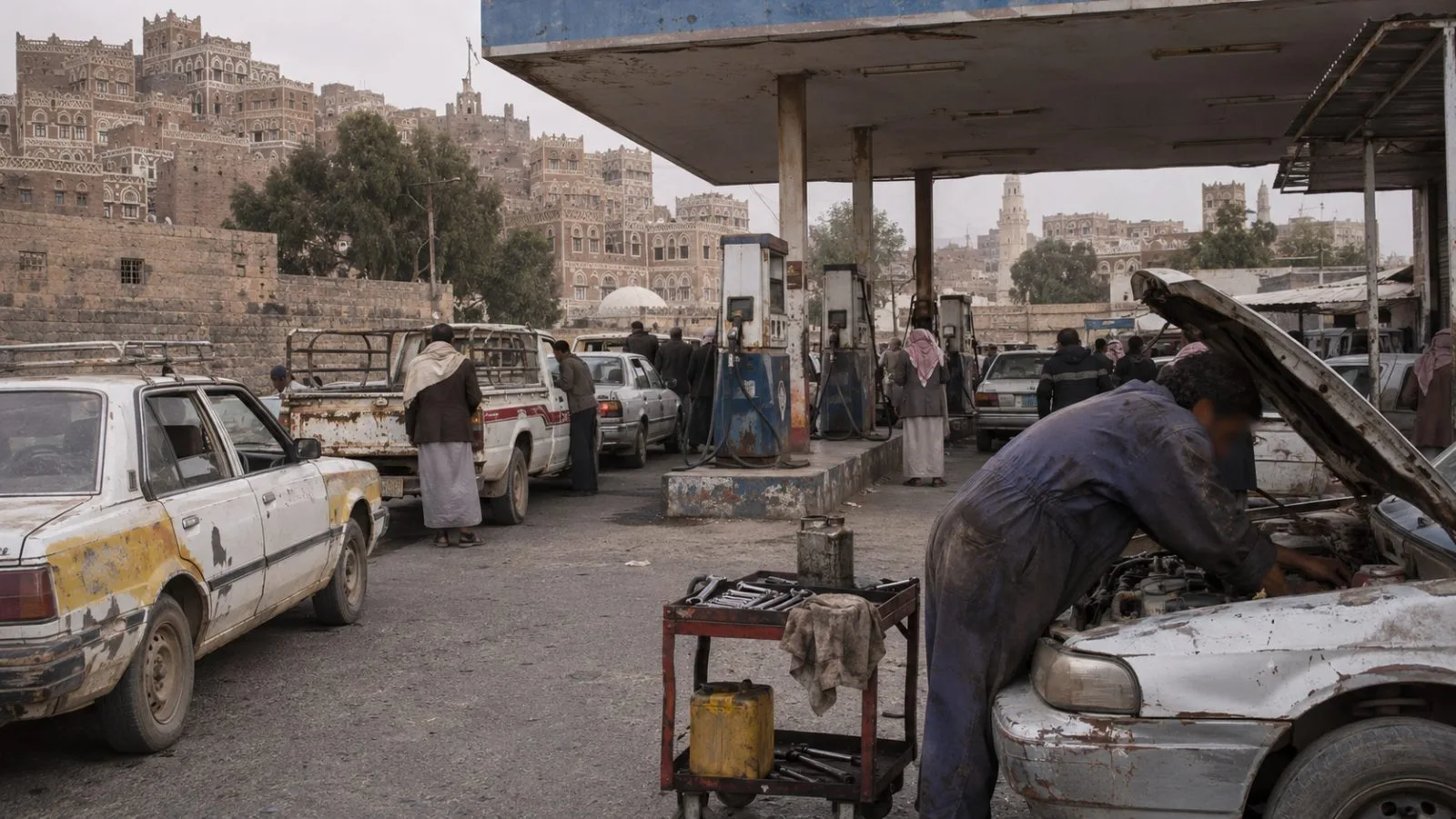
Contaminated petrol is damaging vehicles and pressuring livelihoods in Houthi-controlled areas of Yemen, where fuel imports have plunged and drivers face higher prices and repair bills.
Fuel deliveries through ports controlled by Sana’a-based authorities fell 73% during January-May 2026 from a year earlier, the World Food Programme said. Imports through government-controlled ports declined 60% over the same period.
The WFP said reports of substandard fuel were increasing and disrupting vehicles, pumps, power facilities and people’s livelihoods. A June 2026 episode affected Sana’a and other Houthi-controlled cities, where the Sana’a Center documented damage across transport, agriculture, industry and power infrastructure.
The Sana’a-based Yemen Petroleum Company attributed the contamination to storage tanks destroyed in U.S. and Israeli airstrikes. It said replacement facilities could not adequately settle impurities or purify fuel before distribution. Analysts cited by the Sana’a Center instead pointed to restricted imports, poor-quality supplies and weak oversight.
Al Jazeera reported that the price of 20 liters of petrol in Sana’a increased from 9,500 Yemeni riyals, about $18, to 11,400 riyals, about $21, a 20% rise. The outlet also reported that taxi driver Akram Naji paid 55,000 riyals, about $100, for repairs.
“We pay for the expensive petrol that damages our engines,” driver Yazan told Al Jazeera. Naji said paying the repair bill immediately was difficult for many taxi drivers.
The crisis is unfolding amid Yemen’s prolonged economic deterioration after more than a decade of conflict. The International Monetary Fund said gross domestic product contracted 0.5% in 2025 and projected a further 0.7% contraction in 2026. More than half the population needs urgent humanitarian support, the IMF said.
The Sana’a Center linked fuel shortages to attacks on Red Sea port infrastructure, sanctions and disrupted shipping. The WFP said reduced fuel availability was adding pressure to essential services and household livelihoods.