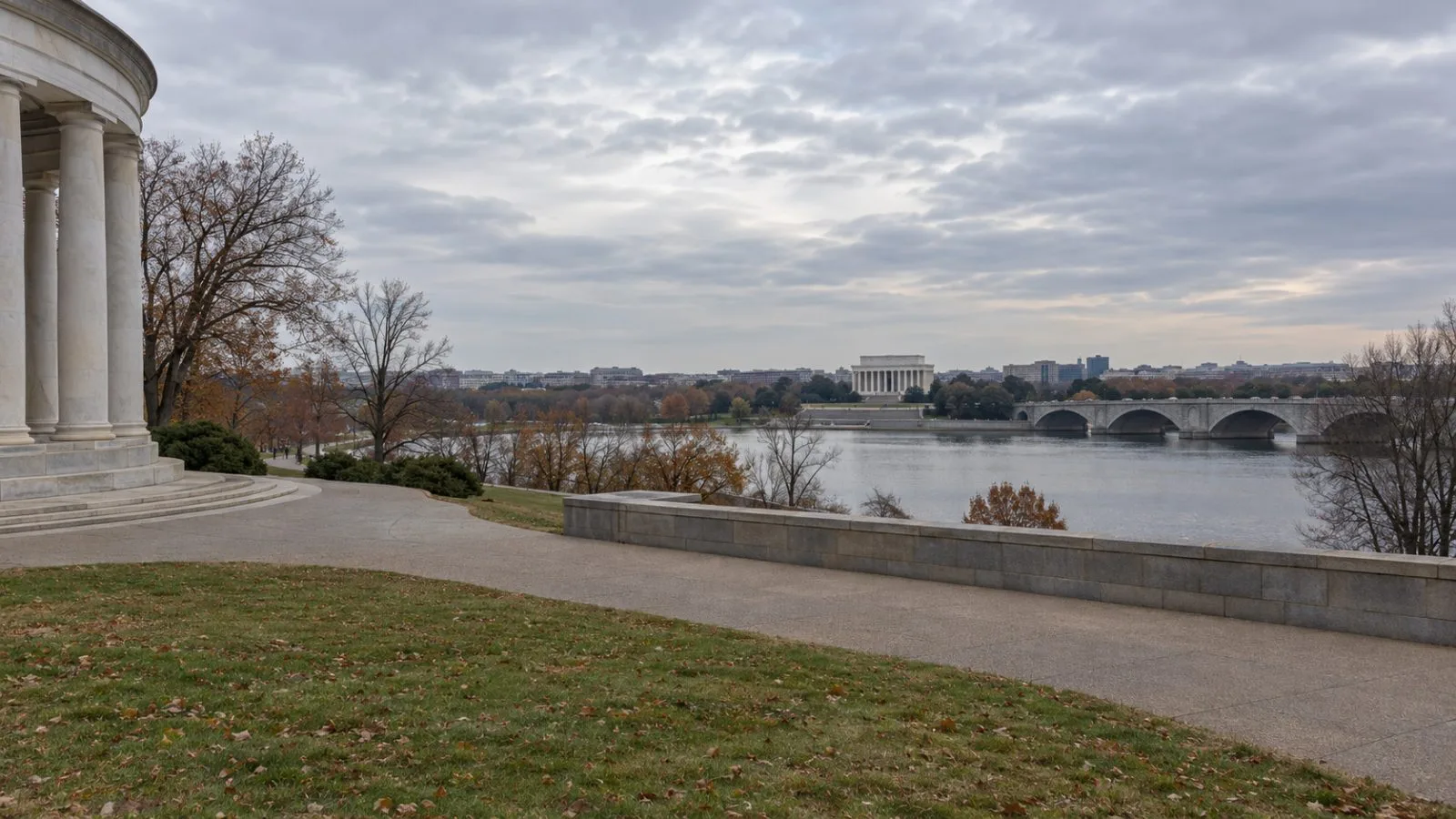
The Trump administration is defending a proposed arch at Washington’s Memorial Circle in court, arguing that its height and location could aid defenses against small unmanned aircraft.
An Oct. 28 filing urges a federal judge to reject a request from three Vietnam War veterans and an architectural historian to halt construction. It argues the site could give sensors and personnel a higher vantage point and provide infrastructure for responding to aircraft threats. Homeland Security Secretary Markwayne Mullin called the arch “a centralized and elevated infrastructure node,” while Defense Secretary Pete Hegseth described it as “a generational national defense opportunity.”
Mullin’s declaration cites a projection that the U.S. commercial drone fleet could number as many as 1.015 million by 2027. That figure is a projection, not a confirmed fleet count.
The National Capital Planning Commission (NCPC) synopsis for its Nov. 5 review describes an arch approximately 250 feet tall and 166 feet wide, with a 55-foot-wide opening. It lists security features but gives no details about drone-defense equipment, operators or how such systems would be used.
The plaintiffs argue that the administration needs congressional approval and say the arch would harm their experience of views between Arlington National Cemetery and the Lincoln Memorial. The government argues that a 1925 law authorized a 1924 design for 166-foot columns topped by statues; those columns were never built.
The National Park Service (NPS) found that the project would adversely affect one or more historic properties. Its environmental finding says the arch would not cause significant environmental impacts.
The NCPC is scheduled to review final plans Thursday, Nov. 5, at 1 p.m. ET (18:00 UTC). The government’s schedule identifies that date as the earliest possible construction start, contingent on NCPC approval and NPS authorization. Excavation and foundation work are estimated to take six to eight months, with above-ground construction no earlier than May 2027. The full schedule is estimated at 33 to 39 months.