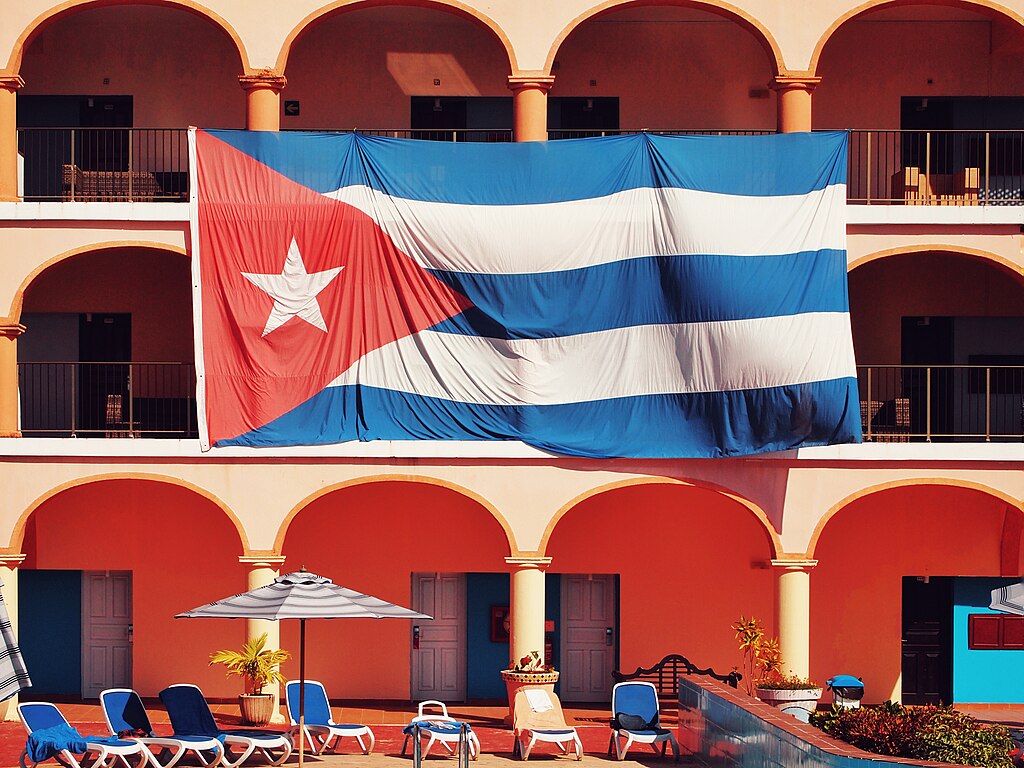
Cuba has run out of oil, the country’s energy minister announced on May 14, 2026.
It marks a new depth to the island’s energy crisis, which has gotten worse in recent months amid the tightening of U.S. sanctions imposed in January 2026.
U.S. Secretary of State Marco Rubio announced on May 13 that the U.S. continues to be ready to offer humanitarian assistance of up to US$100 million – but only if Cuba reforms its communist government. The State Department did not provide many specifics, but according to Archbishop Thomas Wenski of Miami, who is involved in the discussions on behalf of the Catholic Church in its role as distribution partner of U.S. aid, a regime change would be necessary.
But at current prices, this aid would buy only about 20 days’ worth of oil for the island nation, covering a mere 5% of Cuba’s annual oil import.
As an economist specializing in Latin America and a master’s candidate in public policy, we believe that the broader history of Cuba’s energy sector sheds some light on the current situation.
Dependence on foreign oil
For most of Cuba’s history, its energy capabilities lacked a stable infrastructure. This was primarily due to its dependence on foreign countries for the supply of oil necessary to produce electricity.
According to the official history of the state-run energy company, Union Eléctrica, until 1956 only about 56% of the country’s population had access to electricity. By 1992, that number had grown to 95%, largely due to fuel supplies and technological aid sourced from the former Soviet Union.
However, beginning in 1989, the weakening and eventual fall of the Soviet Union marked a return to energy insecurity, and electricity produced in Cuba fell by 25% by 1994.
In 1998, Hugo Chavez was elected president of Venezuela. Within a year, he had negotiated a deal with Cuban President Fidel Castro that made Venezuela the main provider of Cuban oil. This was a lifeline for Cuba.
Venezuela was the largest exporter of petroleum and oil to Cuba through 2021. And though there is no data past 2021, we know that Venezuela continued to be a major oil supplier to Cuba until Jan. 3, 2026, when U.S. forces captured Venezuelan President Nicolás Maduro in Caracas.
Finding a long-term solution
The current U.S. embargo on Cuba now puts the nation in a situation similar to the one it faced when the USSR fell. Memories of 1989 linger in the minds of many Cubans. The cause may be different, but the blackouts Cuba is now experiencing are not new.
As oil limitations persist, Cuba is increasingly looking to alternative sources of energy, and it has found one solution in solar power. Historical experience with energy insecurity and the recent blackouts have helped spur the transition.
Still, the nation relies heavily on oil for most of its energy production. According to data from the International Energy Agency, oil accounts for 83% of Cuba’s energy production, while solar accounts for just 0.84%.
And a transition to solar energy does not necessarily equate to energy independence. Indeed, part of Cuba’s transition to solar energy has already been expedited by assistance from foreign nations, including China and Brazil. China’s contributions through its Belt and Road Initiative, as well as Brazil’s assistance, indicate that Cuba’s reliance on foreign powers for energy will likely continue.
But at this point, one thing is clear: There is no short-term, immediate solution to satisfying the oil energy requirements of Cuba’s electrical grid. There is a clear need for a long-term solution to a long-term problem.
Whatever Cuba chooses to do about its energy crisis, it will also remain dependent on foreign nations. The questions are, which nations and how dependent?

The authors do not work for, consult, own shares in or receive funding from any company or organization that would benefit from this article, and have disclosed no relevant affiliations beyond their academic appointment.
Luisa Blanco, Professor of Public Policy, Pepperdine University; Institute for Humane Studies