President Donald Trump's Iran war, which the Pentagon estimates has cost more than $47 billion, could face tougher scrutiny after Democrats reportedly won Congress, Arirang News reported on Nov. 4.
Democratic control of both chambers would give lawmakers more scope to question the administration's foreign policy over its remaining two years. It would not itself end the war or prevent further military action.
Trump began military operations against Iran in February without congressional authorization. Democrats could demand testimony about the war's objectives and costs, examine further deployments and challenge funding, making sustained political and financial support harder to secure.
Roughly six in 10 voters thought the United States was wrong to launch military action against Iran, an Associated Press voter survey found. About a third considered the war central to their vote.
On Ukraine, Democrats could seek to revive military assistance and reverse Trump's easing of sanctions on Russian energy. Those efforts could attract Republican support, although the extent of any backing remains unclear.
Nearly half of House Democrats previously voted to cut military aid to Israel, an annual payment of $3.8 billion, Arirang reported. Trump has said he will end those payments after this year, despite an existing agreement running through 2028.
Democrats could also resist Trump's proposed 67% increase in defense spending to $1.5 trillion and seek to restore billions of dollars in foreign aid. Those proposals would put spending alongside military operations among the areas of potential disagreement.
Congress faces limits on its ability to constrain the president. Most major legislation needs 60 Senate votes to overcome a filibuster, a procedure used to block a vote. Trump retains his veto, and his administration has repeatedly used existing executive powers to pursue policy.
For South Korea, the issues include its $350 billion investment commitment to the United States and continuing security negotiations. Those talks cover nuclear-powered submarines and civilian nuclear cooperation. The scale and scope of investment, particularly in technology and strategic industries, remain part of the bilateral agenda.
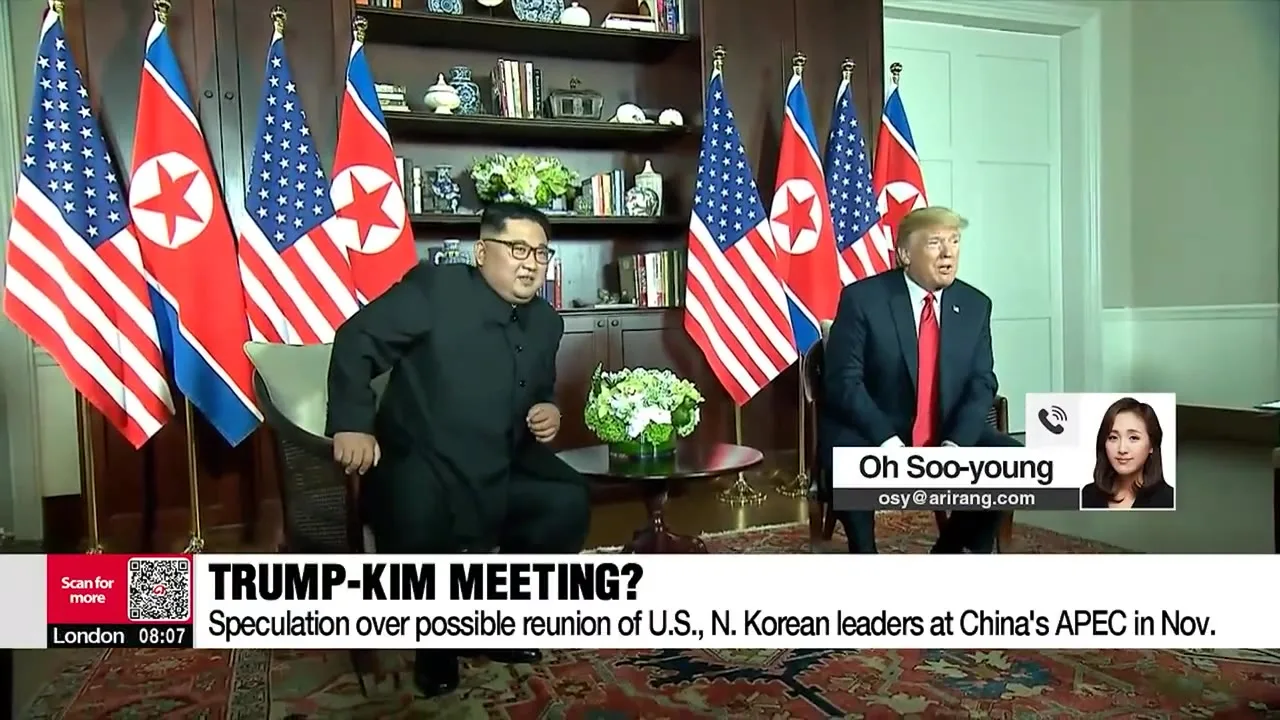
A possible meeting between Trump and North Korean leader Kim Jong-un is another unresolved issue. Speculation has centered on a reunion at the Asia-Pacific Economic Cooperation meeting in China this month.
Trump said in October that he might meet Kim during his Asia trip. He later expressed uncertainty about whether a meeting request had been sent to Pyongyang, leaving the prospect of talks unsettled.
Kim's sister said dialogue remains an option but would not necessarily serve North Korea's interests. She accused Washington of maintaining a hostile policy through its demands for denuclearization, military exercises and sanctions.