A Danish facility is putting e-methanol into commercial use for two industries that are difficult to decarbonize: ocean shipping and plastics manufacturing.
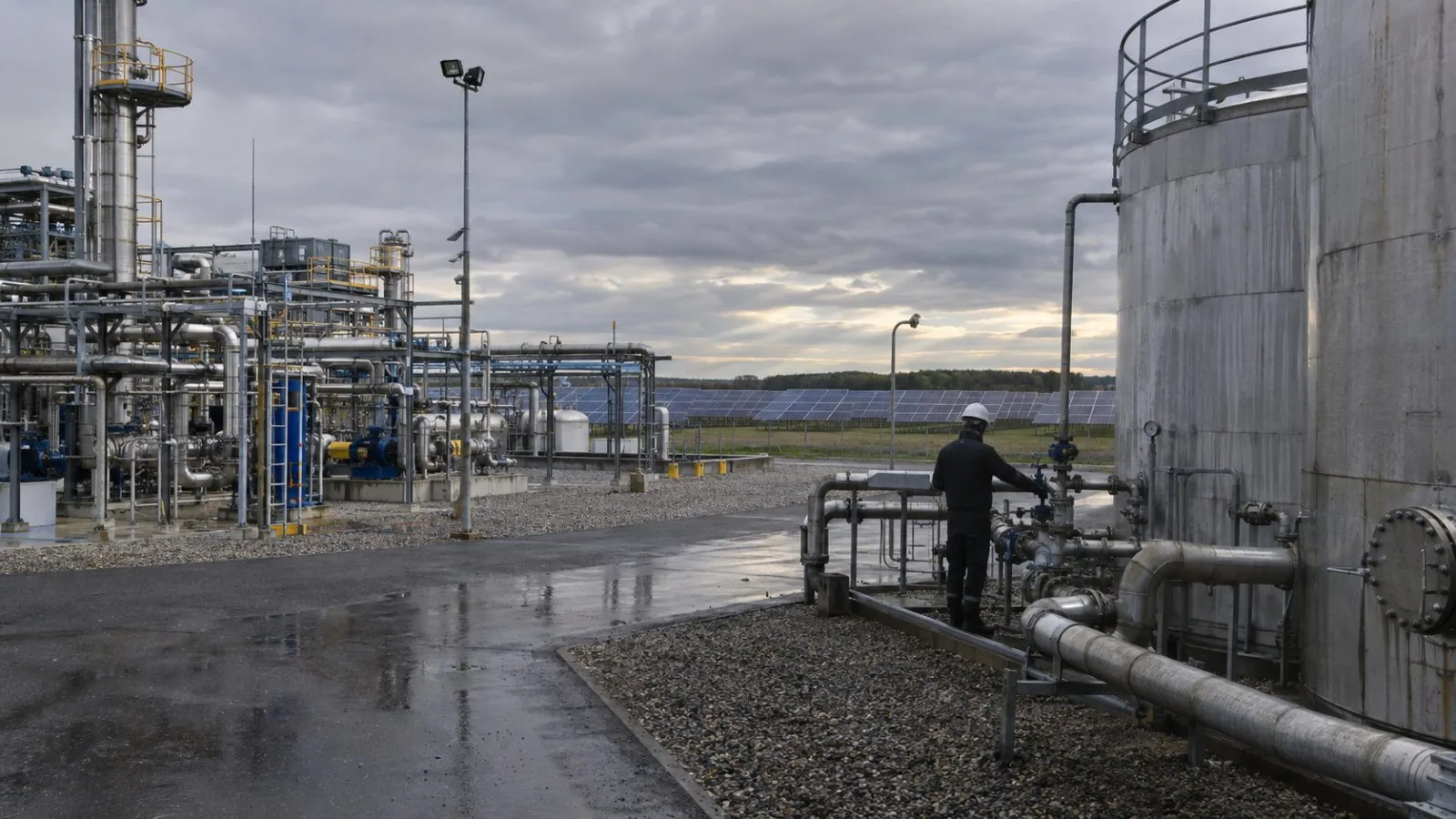
European Energy’s Kassø plant in Aabenraa was inaugurated in May 2025 and is designed to produce up to 42,000 tonnes of e-methanol a year. The project combines renewable electricity from the adjacent 304-megawatt solar park with hydrogen made by electrolysis and biogenic carbon dioxide captured from a local biogas operation.
The plant’s first commercial customers include A.P. Moller–Maersk, the LEGO Group and Novo Nordisk. European Energy says the first batch was delivered to Maersk’s Laura Mærsk, a container ship capable of running on methanol, during the facility’s inauguration.
For shipping, methanol offers an alternative liquid fuel that can be handled within existing port and bunkering systems, although new engines and supply infrastructure are needed. The European Union’s FuelEU Maritime regulation, fully applicable from Jan. 1, 2025, is intended to increase the use of renewable and low-carbon fuels in the sector.
The global policy signal is less settled. The International Maritime Organization says its proposed Net-Zero Framework would impose a lifecycle fuel-intensity standard and a greenhouse-gas pricing mechanism. Member states adjourned adoption talks in October 2025; the extraordinary session is scheduled to resume Dec. 4, 2026, subject to the outcome of the organization’s December committee meeting.
E-methanol also works as a chemical feedstock. LEGO said in September 2026 that it had started using the material in more than 90 rigid elements, including minifigure hands, connectors and steering wheels. The company said the e-methanol is fed into a continuous production process that still includes some virgin fossil material, allowing gradual scaling.
That dual use is the main attraction of projects such as Kassø: one molecule can serve as a marine fuel or replace fossil methanol in industrial chemistry. The constraint is scale. Kassø’s designed capacity is up to 42,000 tonnes annually, and the plant’s output depends on operating conditions, renewable-power availability and access to certified biogenic carbon.
European Energy has called Kassø a practical demonstration that Power-to-X can serve sectors where direct electrification is difficult. Whether it becomes a broader industrial solution will depend on the cost of renewable electricity, reliable carbon sourcing, long-term offtake contracts and regulatory certainty.