Discovered Materials said on Aug. 10 that it had closed a $9 million seed round to search for chip materials, while its benchmark showed how few computer-screened proposals were ready for lab trials.
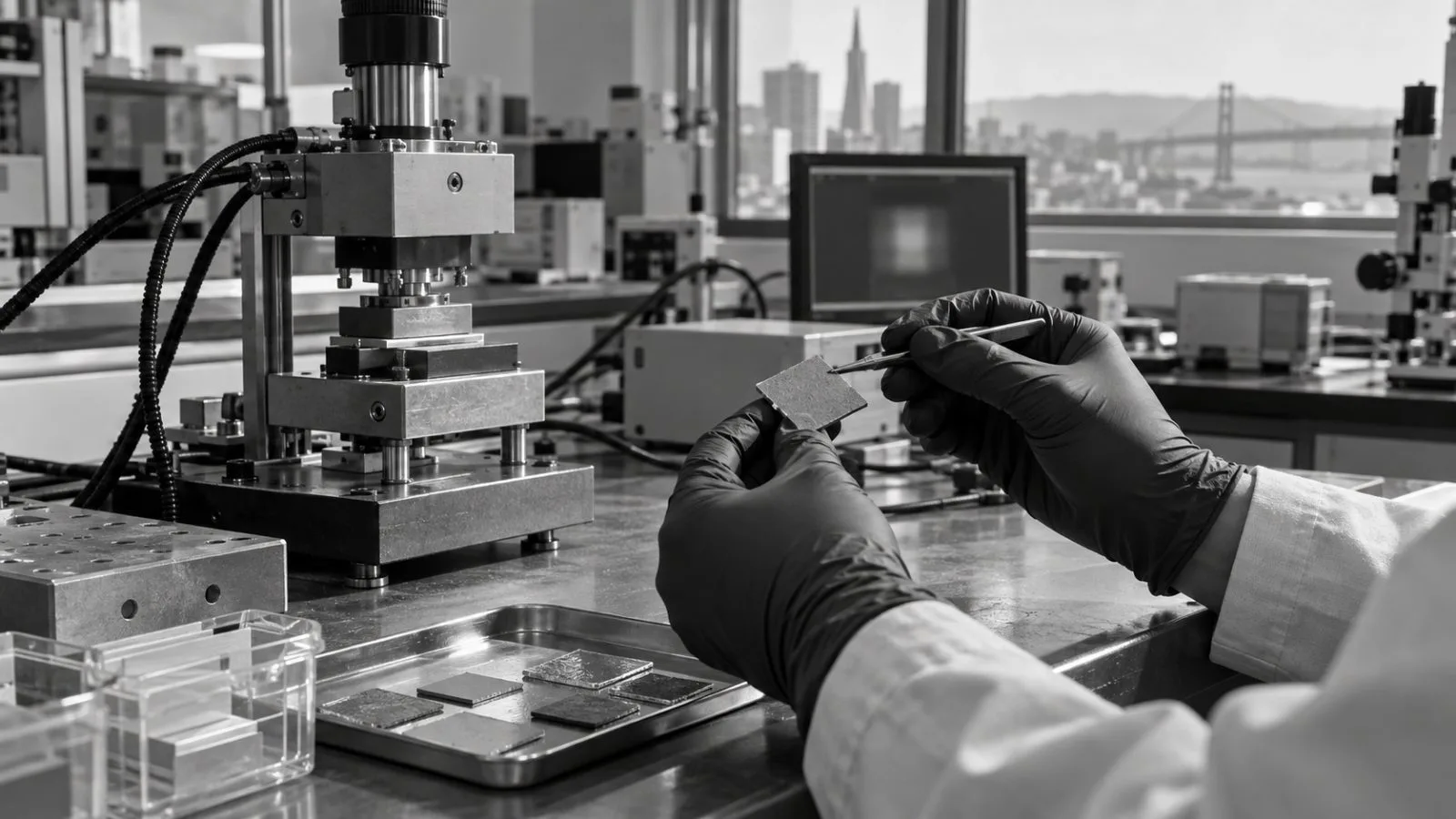
Lightspeed India Partners led the financing, with Y Combinator, Peak XV Partners and angel investors participating. The San Francisco startup said it would use the money to expand its team and laboratory and increase the capacity of its AI research agents.
The company is seeking electrical insulators that can carry heat away from chip components. Bringing memory and computing circuitry closer together could reduce the energy used to move data, it says, but heat makes stacked designs difficult to cool. Chipmakers and data centers are the intended beneficiaries if such materials prove usable.
In its Material Discovery Bench, seven AI models produced more than 500 computer-screened candidates. The benchmark counted a material as new when it had no record of thin-film deposition under the specified manufacturing conditions. That test did not establish that every chemical composition was previously unknown.
A language model graded proposed recipes for making the candidates against criteria designed by experts. It rated just one recipe plausible for an attempted synthesis. That rating is a screening result, not proof that the material can be made.
Discovered Materials has separately said it made and tested thermal-interface materials during its Y Combinator program that matched existing products’ performance. The company has not identified those tested materials as candidates from the benchmark.
Co-founders Akash Ramdas and Advaith Sridhar bring materials science and AI backgrounds to the effort. Ramdas holds a doctorate from Stanford University and co-authored research on ultrathin electrical conductors. Sridhar, the startup’s CEO, studied AI at Carnegie Mellon and worked at Persona AI and Luma Labs.
The company says moving a material from an experiment into semiconductor production can take years and cost hundreds of millions of dollars. It says it is now attempting to make the benchmark candidate with the plausible recipe; it has reported no successful synthesis or dated next milestone.