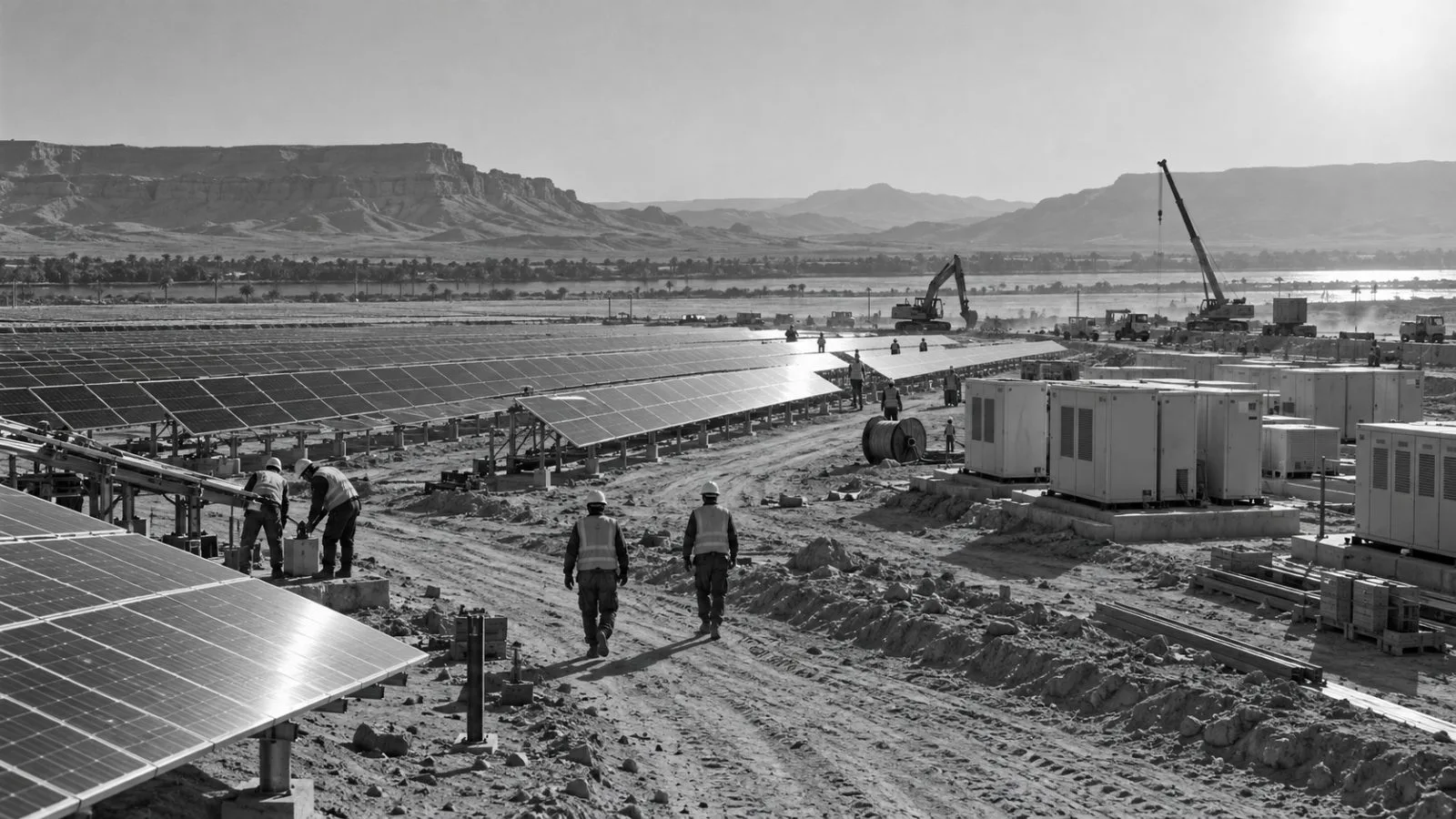
The European Investment Bank (EIB) will lend up to $90 million to Egypt’s Dandara solar and battery project, which is planned to supply renewable electricity to Misr Aluminium Company, known as EgyptAlum.
The loan is guaranteed by the European Union’s European Fund for Sustainable Development Plus (EFSD+). The EIB says the planned first phase in Qena Governorate includes a 569 MWp solar photovoltaic plant and a 100 MWh battery energy storage system.
Scatec said Oct. 28 that it had signed loan agreements for the first phase and was starting construction. The developer said the project has $217 million in non-recourse financing from the EIB, the European Bank for Reconstruction and Development and the African Development Bank, equal to about 80% of an estimated $271 million cost.
EgyptAlum is expected to purchase the electricity under a 25-year power purchase agreement. The EIB says Egypt’s Ministry of Finance guarantees EgyptAlum’s payment obligations under the contract.
The African Development Bank (AfDB) said the project could help EgyptAlum remain competitive in Europe as the EU’s Carbon Border Adjustment Mechanism entered its definitive phase in January 2026. The bank said the project could help safeguard more than 6,000 Egyptian jobs and estimated about 2,500 construction jobs and 23 permanent operating roles.
The EIB said the project aligns with Egypt’s goal of sourcing 42% of its electricity generation from renewable sources by 2030. Output estimates vary: Scatec forecasts about 1.4 terawatt-hours, while the EIB estimates around 1,500 gigawatt-hours in the first year of operation. EIB Vice-President Gelsomina Vigliotti said battery storage is intended to make renewable power more reliable for Egyptian industry.
Scatec targets commercial operations in the first half of 2028. The EIB lists April 2028 as the scheduled start.