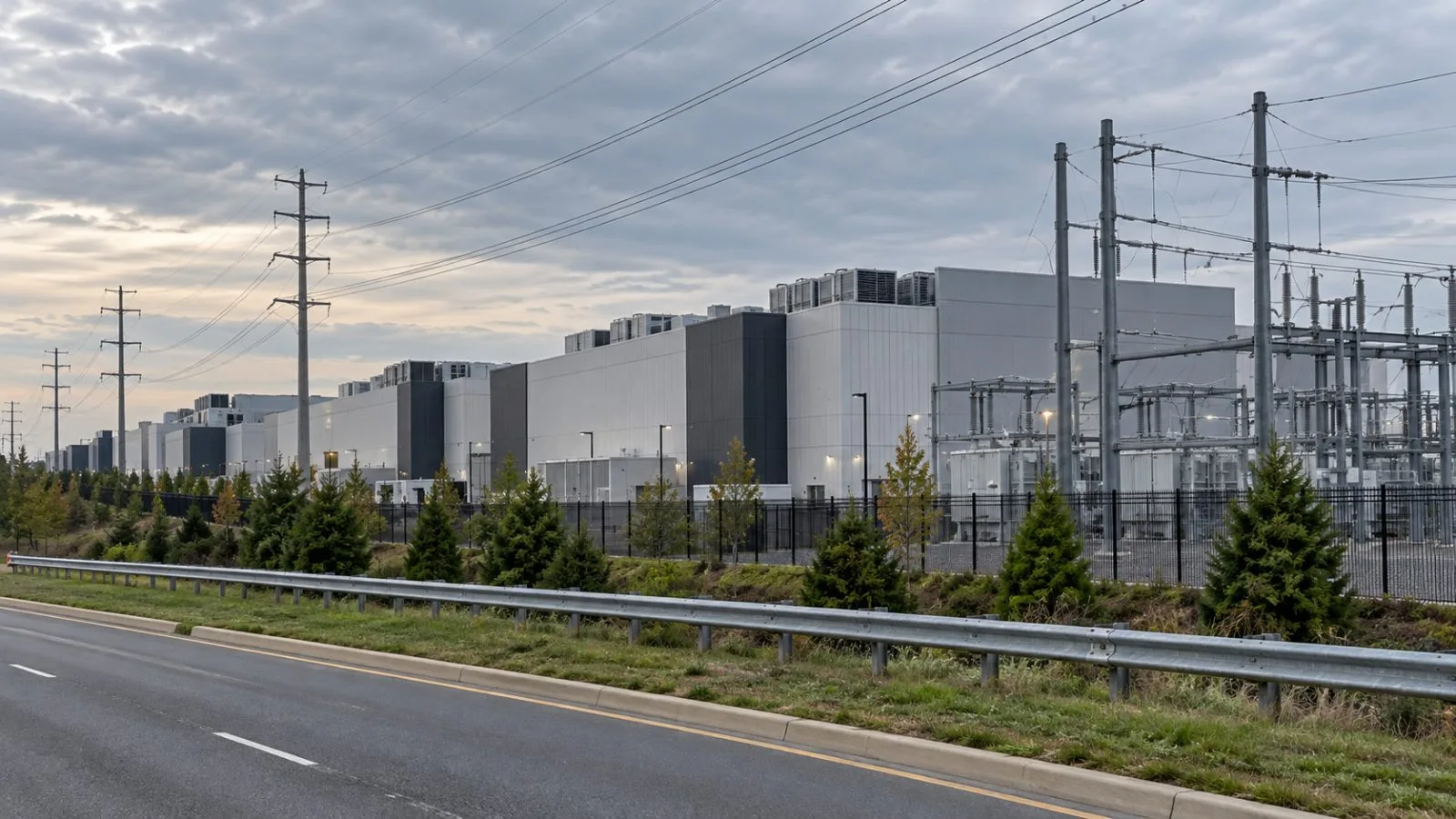
Solar and battery project announcements grew more in U.S. regions with the highest pre-ChatGPT data center capacity than in comparison areas, while gas projects had essentially no net relative change, a study found.
Researchers Alexander Heiss, Zacharias Sautner and Thomas Schmid compared project announcements before and after ChatGPT’s November 2022 release, which they used as a marker for expected data center electricity demand. The treated regions were 100-by-100-kilometer areas with the most data center capacity before the release. Together, they held 93% of U.S. capacity in the third quarter of 2022; the analysis also included control regions.
Solar projects accounted for much of the increase, alongside battery storage. The net gas finding refers to the difference between treated and comparison regions, not to overall U.S. gas investment. A University of Zurich summary of the research said a modest rise in gas projects supplying data centers directly was balanced by a decline in grid-connected gas projects.
The researchers tracked announcements, not completed facilities or the electricity they eventually produce. They identified long-term power purchase agreements as a financing route for renewable developers. Operators’ climate pledges also tracked the type of nearby project announced: solar and storage around companies with net-zero pledges, and gas around those without them.
Joachim Klement wrote in an Oct. 19 post that the findings challenge the view that U.S. data center growth mainly supports gas power. He argued that the expansion is also helping advance the energy transition.
The researchers flagged a possible cost: demand from large data center operators could crowd out electricity users with fewer financial resources. They described this as a risk, not an observed outcome.