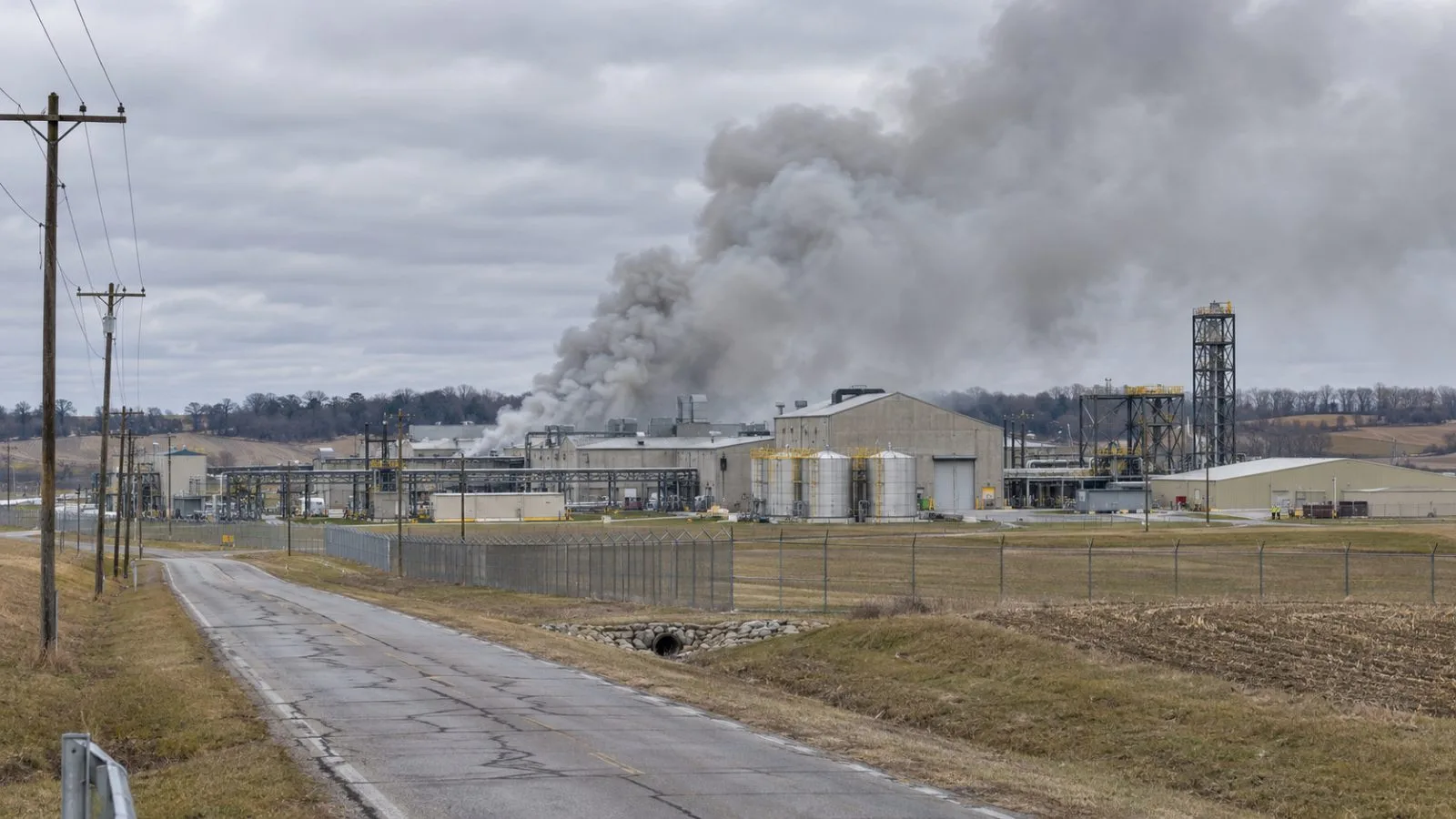
The U.S. Army detonated degraded lead azide at its Iowa ammunition plant Wednesday, and the U.S. Environmental Protection Agency (EPA) reported zero airborne-lead detection on real-time monitors while laboratory testing continued.
The Army said the in-place operation involved material from approximately 68 drums containing more than 9,700 pounds of net explosive weight of lead azide.
At the one-hour mark, EPA said its Xact monitors showed zero airborne-lead detection, a reading repeated in Thursday’s update. That finding applies to the real-time instruments; laboratory work on air, soil, water and dust samples was still pending.
The Army said age-related crystallization created the danger. A March 11 monitoring inspection found partial crystallization in the decades-old material, increasing its sensitivity to friction, shock and cold. The Army said storage, relocation, chemical neutralization and other treatment options posed unacceptable risks. An EPA emergency permit for the intentional detonation took effect Nov. 13 and runs through Feb. 11, 2027.
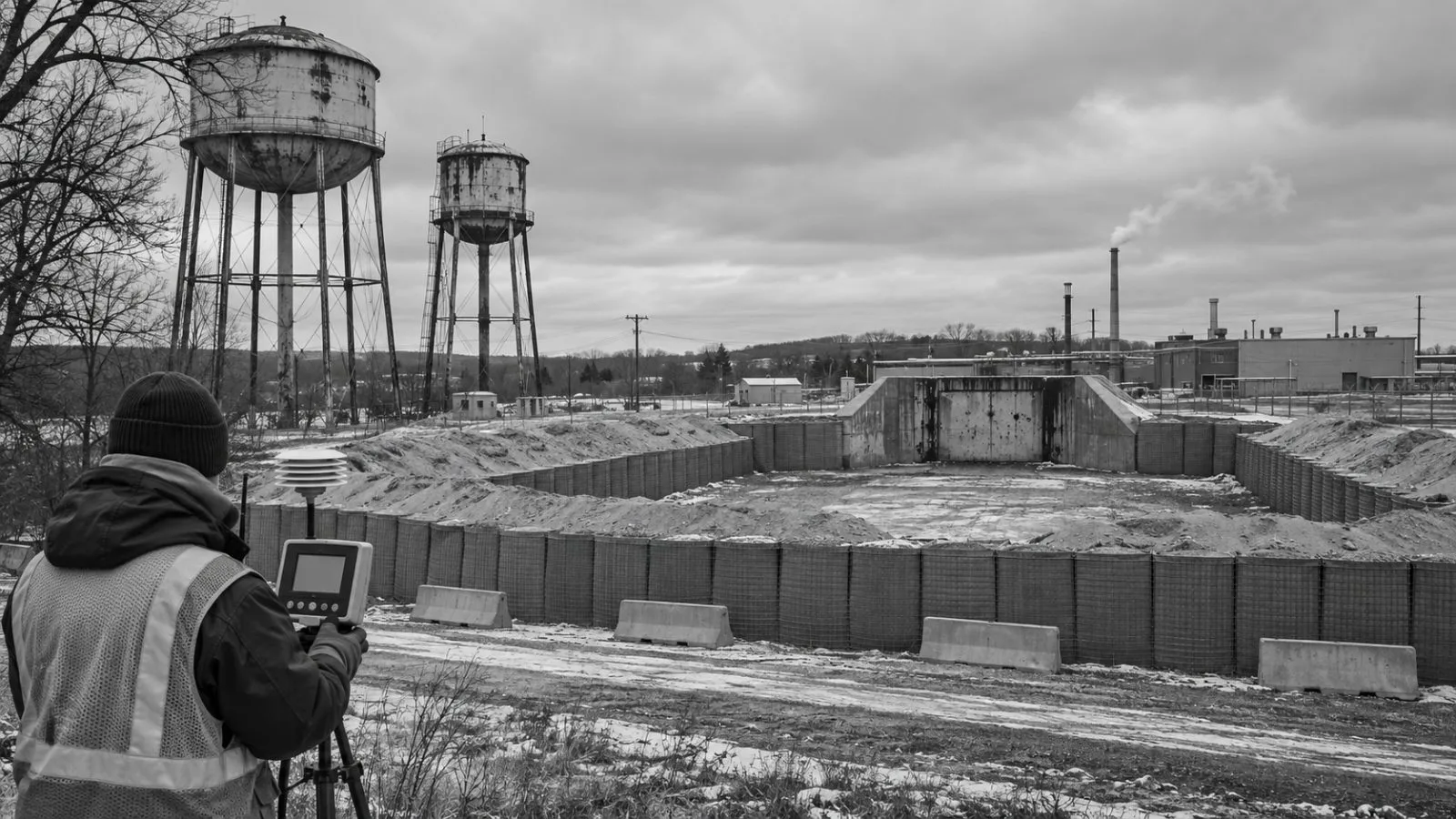
The operation used sand-filled barriers, two walls made from four 16,000-gallon water tanks, gel blocks, foam and water-misting systems to limit particle movement.
Before the blast, EPA had taken 1,591 air, water, soil and dust samples; more than 1,000 were collected afterward. Follow-up checks involved more than 130 structures and 300 employees and contractors. Sampling included homes, playgrounds, drinking-water intakes, farms and the Mississippi River watershed.
The Army’s Nov. 24 model projected possible surface-deposition thresholds across 27 square miles at 100 micrograms per square foot and 148 square miles at five micrograms per square foot. The projections were thresholds, not confirmed contamination results.
The Army’s advisory said FEMA supported recommended relocation within a five-mile cone southwest of the plant. Residents bore the immediate disruption, including sheltering and limits on outdoor activity. The Army said it would fund remediation if residential soil exceeded 200 parts per million and that its Claims Service would process property-damage claims.
Acting Secretary of the Army Adam Telle said, “Inaction is no longer an option.” Iowa Gov. Kim Reynolds called the result “a best-case scenario” for Middletown and surrounding communities.
The operation follows EconoTimes’ earlier report on the Army’s lead-azide stockpile.
EPA expected initial laboratory results as early as Friday, while air monitoring and additional sampling remained underway.