South Korea and the United States have agreed to review Alaska LNG, while a consultant’s analysis of earlier budgets shows construction-cost uncertainty remains central to the proposed export project.
In a December 2025 report for Alaska lawmakers, energy consultant GaffneyCline classified previous project budgets as Class V estimates, with an approximate accuracy range from 50% below to 100% above the estimate. That range applies to the earlier assessments; the report did not say Glenfarne’s newer estimate could double. GaffneyCline said more detailed engineering, sales contracts and financing were needed before a final investment decision.
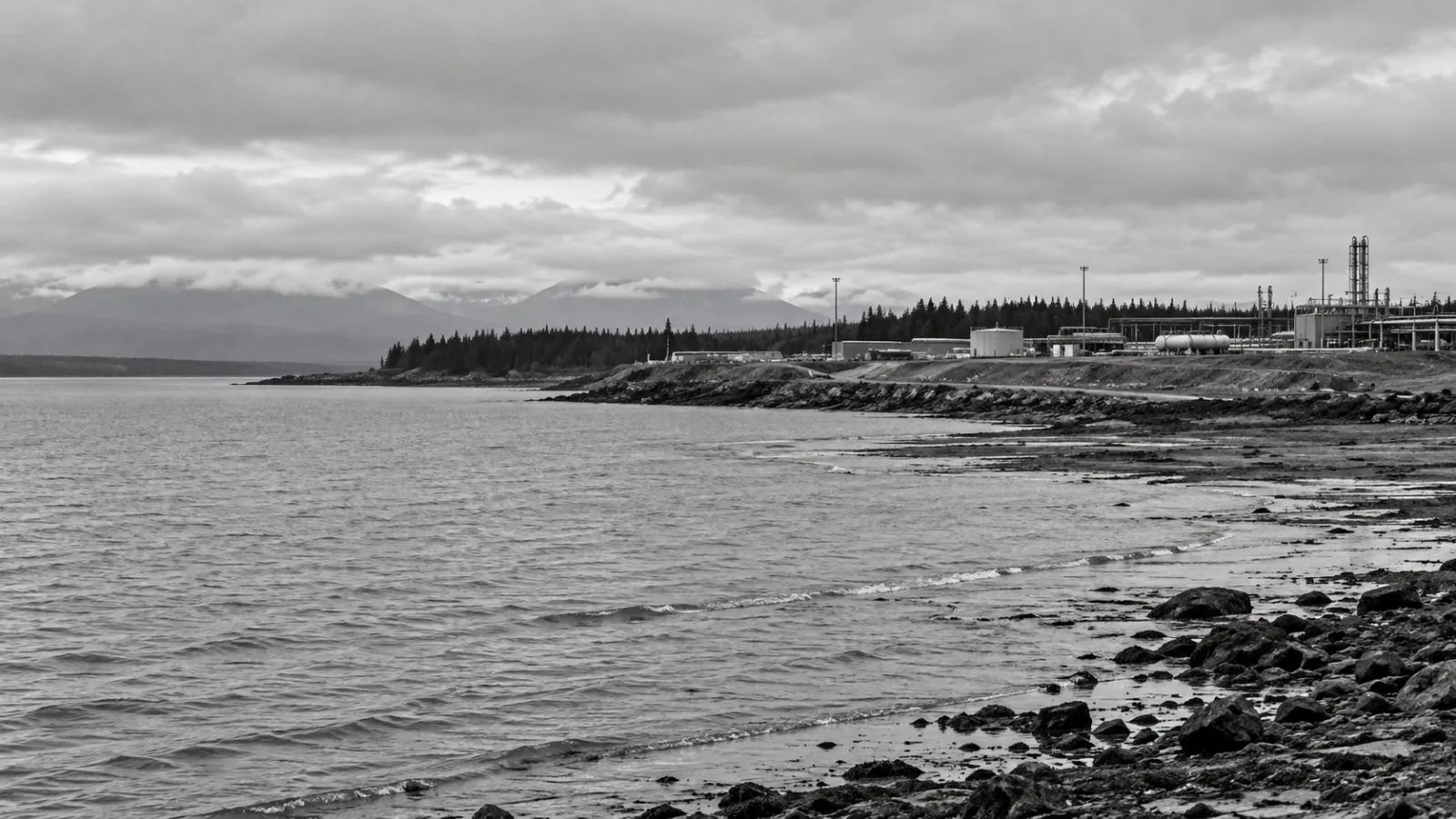
Glenfarne Group, LLC, the project’s lead developer, told the Alaska Senate Finance Committee on June 3 that construction of the full project would cost an estimated $44.5 billion to $54.5 billion. It put the first-phase pipeline at $13.2 billion to $16.9 billion. The plan calls for an 807-mile pipeline from Alaska’s North Slope, a gas treatment plant and an LNG export terminal at Nikiski.
On Oct. 13, the White House said a $200 billion South Korean energy investment included $54 billion for an Alaska gas pipeline. South Korea’s Ministry of Finance and Economy said the two countries had agreed to begin reviewing Alaska LNG and would decide whether to proceed if the project meets commercial and domestic legal requirements. The ministry said Korean suppliers could have opportunities to participate and South Korea could receive preferential access to the gas if the project goes ahead.
GaffneyCline identified high construction costs and the risk of further increases as the project’s main hurdle. It said Alaska’s gas resources and shorter shipping distances to Asian markets could help the project compete, while higher costs for the treatment plant, pipeline or export facilities could weaken its economics. The report listed detailed engineering, sales contracts and financing as steps needed before a final investment decision.