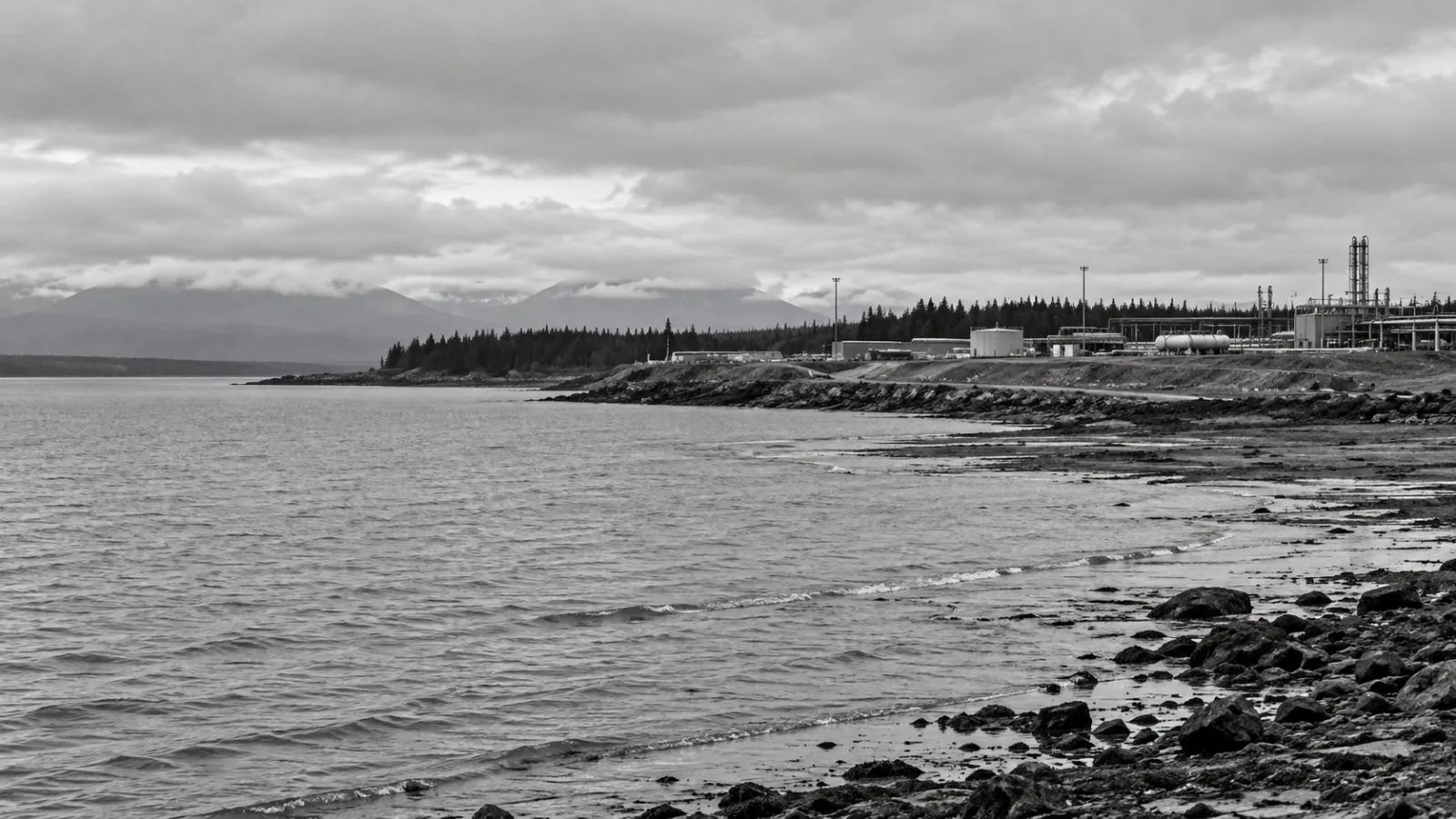
The proposed Alaska liquefied natural gas project remains at a review stage, with South Korea’s participation contingent on commercial reasonableness and domestic legal requirements; the White House alone has cited a $54 billion allocation.
South Korea’s Ministry of Finance and Economy said the two governments would begin by reviewing the proposal. A decision on whether to proceed would follow that review and depend on the project meeting commercial reasonableness and applicable domestic legal requirements. The ministry’s announcement assigned no dollar amount to Alaska LNG.
The White House said President Donald Trump’s September announcement included $54 billion for an Alaska pipeline within a broader plan for $200 billion in South Korean energy investment in the United States. That $54 billion figure is the White House’s account; it does not appear as a project allocation in the ministry’s release.
Kang Kyung-wha, South Korea’s ambassador to the United States, discussed the project in an opinion essay published Nov. 11 in The Washington Post. She described Alaska LNG as part of bilateral cooperation subject to commercial and legal conditions, but did not give a South Korean investment amount for the project.
Kang separately described a framework for up to $120 billion in South Korean investment in eight large-scale nuclear reactors to be built by Korean and U.S. companies. That figure concerns a different energy initiative and does not establish an Alaska LNG commitment.
The ministry said the LNG project could diversify South Korea’s supply sources and strengthen its energy security. It also cited possible U.S. tariff reductions for project equipment and preferential South Korean access to Alaska LNG if the project goes ahead.
Earlier cost estimates provide separate context for the proposed review. EconoTimes’ coverage of Alaska LNG cost uncertainty cited project developer Glenfarne Group’s estimate of $44.5 billion to $54.5 billion for full construction and $13.2 billion to $16.9 billion for the first pipeline phase.
The next step is the joint review. The governments’ decision on whether to proceed depends on its results and the stated commercial and legal conditions.