Australia’s electronic surveillance laws are being reformed with a goal of making them “clearer, more coherent and better adapted to the modern world”.
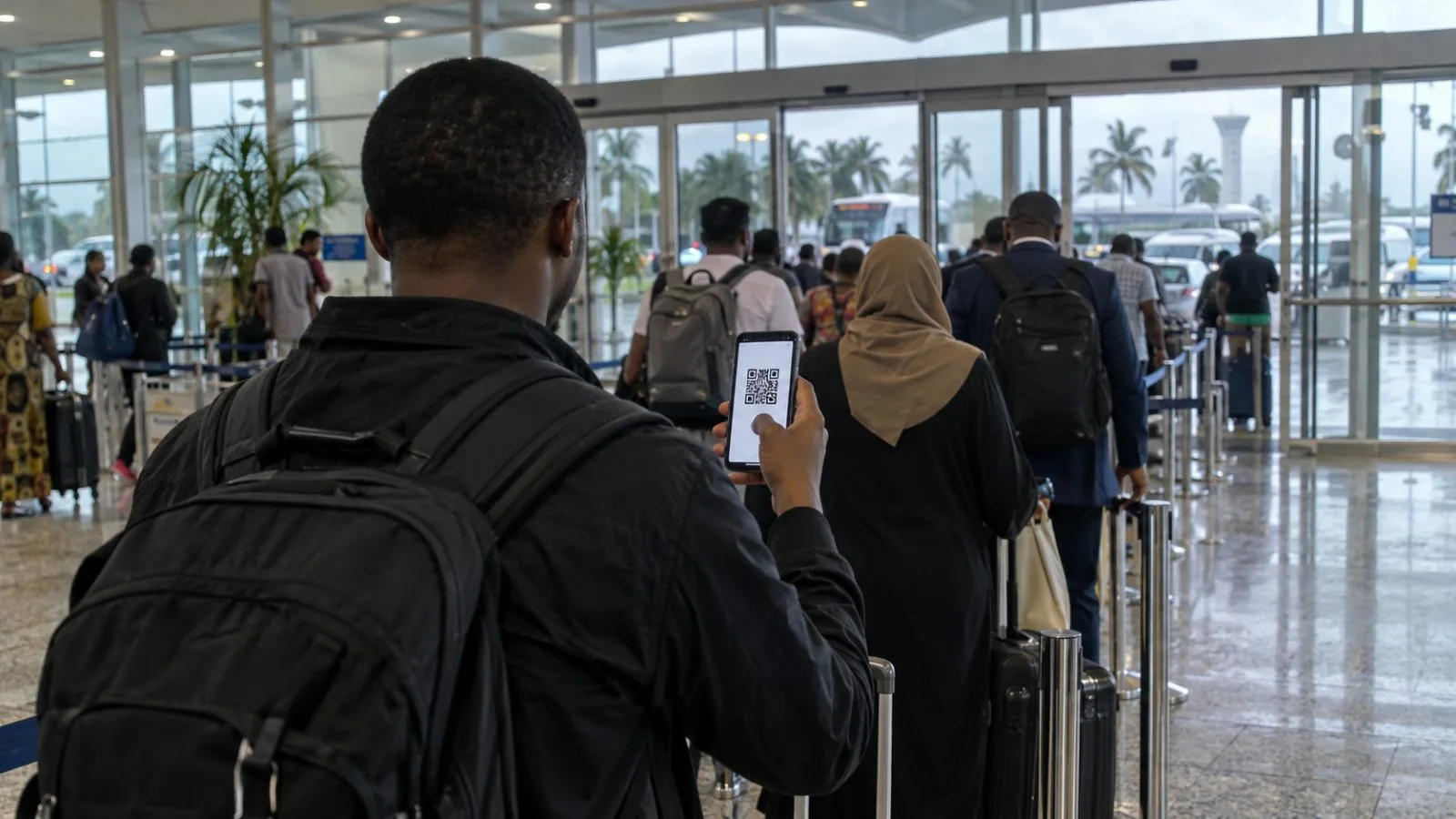
However, there is one significant set of powers beyond the scope of the reforms: the Australian Border Force’s (ABF) broad powers to search personal digital devices and copy electronic information without a warrant.
One man who had his phone searched by the ABF on entering the country recently told The Guardian he had “no idea what officials looked at, whether a copy of any of the data was made, where it would be stored and who would have access to it”.
The surveillance reform aims to deliver better protection of individuals’ information and ensure law enforcement agencies have the powers to investigate serious crimes and threats to security. So why has the privacy of travellers and migrants who cross Australia’s border been left so exposed?
A notable omission
The reform aims to replace the “current patchwork of laws” governing electronic surveillance, including the Telecommunications (Interception and Access) Act 1979 and the Surveillance Devices Act 2004, with a single piece of streamlined, technology-neutral legislation.
However, the reform’s scope is limited to accessing information and data covertly. Activities that fall under this definition include “intercepting phone calls, remotely accessing a person’s computer or using a listening or tracking device”.
The Deparment of Home Affairs gives as an example of an activity not covered by the reform an agency accessing a computer when executing a search warrant. This scenario may not involve covert surveillance, but some protection is provided by the need to apply for a warrant.
In contrast, the ABF’s powers to access electronic information and data do not require a warrant. The Customs Act 1901 allows ABF officers to examine any goods subject to customs control, including digital devices such as mobile phones and laptops.
ABF officers can also make copies of documents that may be relevant to prohibited goods, the commission of an offence, or “security”. A “document” includes mobile and other phones, sim cards, personal electronic recording devices, computers, written material and photographs.
Under the Migration Act 1958, ABF officers can search a person and their property if the officer suspects there are reasonable grounds for considering cancelling the person’s visa. The person must either be detained or has not been cleared by immigration. “Property” includes digital devices.
Intrusive powers
A guiding principle of the reform is to develop a law that “contains appropriate thresholds and robust, effective and consistent controls, limits, safeguards and oversight” of “intrusive” powers.
Electronic surveillance powers are described as “intrusive” because they can reveal sensitive information about an individual or organisation. The ABF’s powers are arguably equally as intrusive, but have less protection and lack transparency.
ABF officers do not require your permission to search your devices. If you refuse, you may be referred “for further law enforcement action”.
The ABF also has no obligation to inform you what information was examined or copied.
The ABF can pass information gathered from searches of digital devices to other federal and state departments, agencies, police forces or a coroner if it falls within a broad category of “permitted purposes”. Permitted purposes include the rather far-reaching “information relating to immigration, quarantine or border control between Australia and a foreign country”.
Notably, it is more difficult for police within Australia to search your mobile phone. Although police have general search powers, if they want to unlock your mobile phone or electronic device they must apply for a warrant first.
According to a Freedom of Information application made by the transparency activist organisation Right to Know, between July 1 2009 and June 30 2019 there were 436 incidents where electronic devices were examined. In the same period, the contents of electronic devices were copied 109 times.
An opportunity missed
By limiting the reform to covert electronic surveillance powers, the government has missed an opportunity to strengthen accountability of equally intrusive surveillance powers at Australia’s border.
Why the omission? Officially, because the ABF’s powers aren’t covert. This is despite individuals not knowing what information is accessed, copied or stored.
Unofficially, because the government is unlikely to dilute its migration and border control powers. According to the ABF, it “exercises its functions and powers at the border in order to protect the Australian community and deliver its mission to enable legitimate travel and trade”.
As the recent Novak Djokovic deportation case shows, “strong borders” are popular with the public.
What should you do if the ABF wants to search your mobile phone or laptop? Considering you may face a criminal sanction if you refuse, be smart about your data protection. You may wish to use two-factor authentication and store sensitive information in the cloud on a secure European server while you are travelling.
Public submissions on the reform of Australia’s electronic surveillance framework are due by February 11 2022. Unfortunately, there is no space for a conversation about the ABF’s extraordinary surveillance powers.