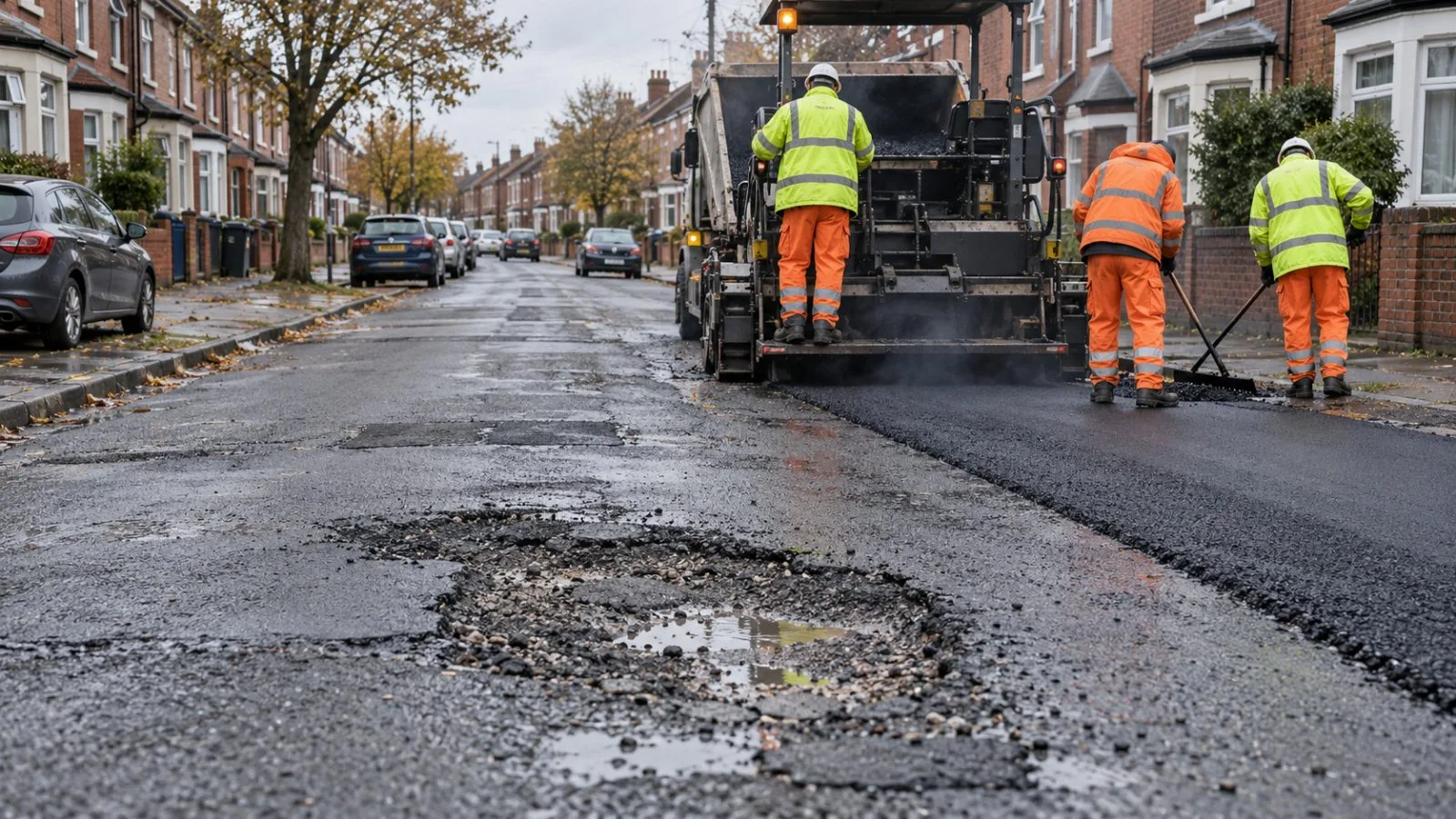
The Department for Transport (DfT) has made £220 million in road-maintenance incentives available to English councils that meet performance targets, as local authorities project work across nearly 7,000 carriageway miles in 2026-27.
Announced Oct. 21, the funding is part of a program tied to council reporting and maintenance practices. The mileage figures are projections for the financial year ending in March 2027 and should not be read as a count of completed work.
Council reports divide the planned work into nearly 2,000 miles of structural maintenance and nearly 5,000 miles of preventative treatments. The combined distance includes different kinds of upkeep; it does not mean every mile will be fully resurfaced. The DfT plans to check the submissions before publishing a final, more detailed dataset.
Authorities reported spending £4.1 billion in 2024-25 and £4.4 billion in 2025-26, then forecast £4.9 billion for 2026-27. These self-reported totals use a narrower scope than the department’s official expenditure statistics, which recorded £5 billion for 2024-25. The reports also show that 94% of authorities expect to use preventative treatments in 2026-27, up from 76% in 2025-26; those figures describe plans, not confirmed delivery.
The four-year highways maintenance allocation totals £7.344 billion from 2026-27 through 2029-30. Of the £1.617 billion allocated for 2026-27, £525 million is designated for incentives. DfT guidance says half of an authority’s incentive funding is released after it publishes a report, with the rest dependent on further requirements, including spending its DfT maintenance allocation on highways. The Oct. 21 announcement did not explain how the £220 million relates to that annual incentive amount.
Separate DfT statistics put 4% of local A roads, 6% of B and C roads, and 16% of unclassified roads in the red category in the year ending March 2026. The shares for local A roads, B and C roads, and unclassified roads each fell by one percentage point from 2025. The category flags roads for maintenance consideration, but does not mean treatment is necessarily required; the figures also predate the funding announcement and cannot measure its effects.
The Asphalt Industry Alliance’s 2026 survey estimated a one-off £18.62 billion backlog in carriageway repairs across England and Wales. It said local roads are resurfaced on average once every 97 years, based on responses from 79% of local authorities. The RAC says pothole damage beyond a puncture can cost drivers around £590. The DfT has cited potential savings of nearly £600 per driver, but did not estimate savings from the work planned for 2026-27. Transport Secretary Heidi Alexander said the figures showed the government was “starting to turn a corner.”
The DfT expects to publish final detailed transparency data and updated council ratings in early 2027. Official maintenance-expenditure statistics for the year ending March 2026 are due in December 2026.