


 Chainalysis AI Traces $387M Bitget Hack in Under 10 Minutes
  TRUMP Memecoin Launches New Dinner Contest
  Standard Chartered Sees Ethena ENA Hitting $2 by 2028
  Cardano Price Struggles as NIGHT Token Surges 20%
  Hyperliquid Sets $856 Million HYPE Token Unlock for October
  Bitcoin Exchange Reserves Hit Multi-Year Low at 2.68 Million BTC
  Zcash Awards $8 Million in Grants After Orchard Bug Crisis
  Midnight NIGHT Token Surges 86% as Smart Contract Launch Nears
  Bitcoin Posts 42.7% Q3 Gain as ‘Uptober’ Begins Amid Crypto Turmoil
  Citi Raises Bitcoin Price Target to $113,000 on ETF Optimism
  Michael Saylor Sees Strategy, Strive Expanding Bitcoin Credit Market
  XRP Ledger Hits 10 Million AI Payments as Bitcoin Retreats
  Evernorth Set for Nasdaq Debut With 473 Million XRP Treasury
  Goldman Sachs Names CATL, Zenergy Top China Battery Picks
  Crypto Rallies as CLARITY Act Failure Opens Door to Faster SEC Rules
  MSTR Stock Rises 3% as Strategy Challenges MSCI Bitcoin Stance


 Add as a preferred source on Google
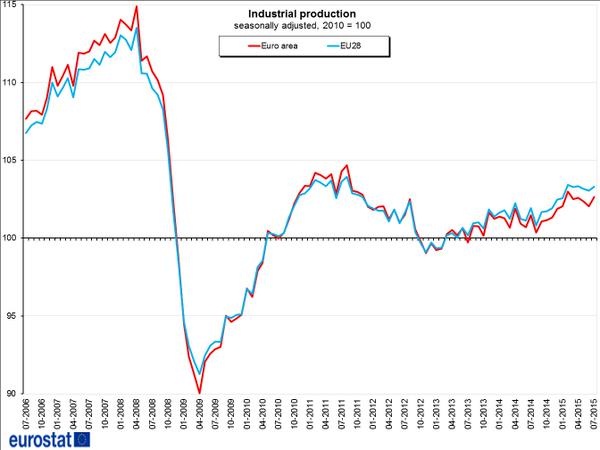
Euro area industrial production has beaten estimates for July, growing 0.6% from June, while median expectation was just about 0.2%.
Industrial production probably picked up in July, as concerns over Greece had started subsiding.
Which sectors remain a drag to production?
- Decline was registered in intermediate and non-durable consumer goods, both of which registered drop of -0.6%.
Which sectors grew?
- Energy production rose by most at 3% followed by Capital goods (1.4%) , and durable consumer goods (1.3%).
Where (Country) industrial production grew most?
- Highest annual increase in production was registered in Ireland, which grew by 17.9%, followed by Slovakia (11.9%), Latvia (8.3%) and Malta (7.7%).
- Largest monthly increase in production was registered in Ireland (7.2%), followed by Greece (4.3%) and Latvia (2.8%)
Where (Country) industrial production declined most?
- Highest annual decline in production was registered in Estonia, where it dropped by -5.9%, followed by Netherlands (-4.4%) and Greece (-1.5%), France (-1.4%) and Finland (-1.4%).
- Largest monthly decline in production was registered Denmark (-4.6%), and Malta (-1.8%).
The detailed report is concerning as it keep posing evidence of growth fragmentation across the region and it also reflects continued slowdown in core economies such as Netherlands.
Euro is currently trading at 1.133 against dollar, focus now is on FOMC.







