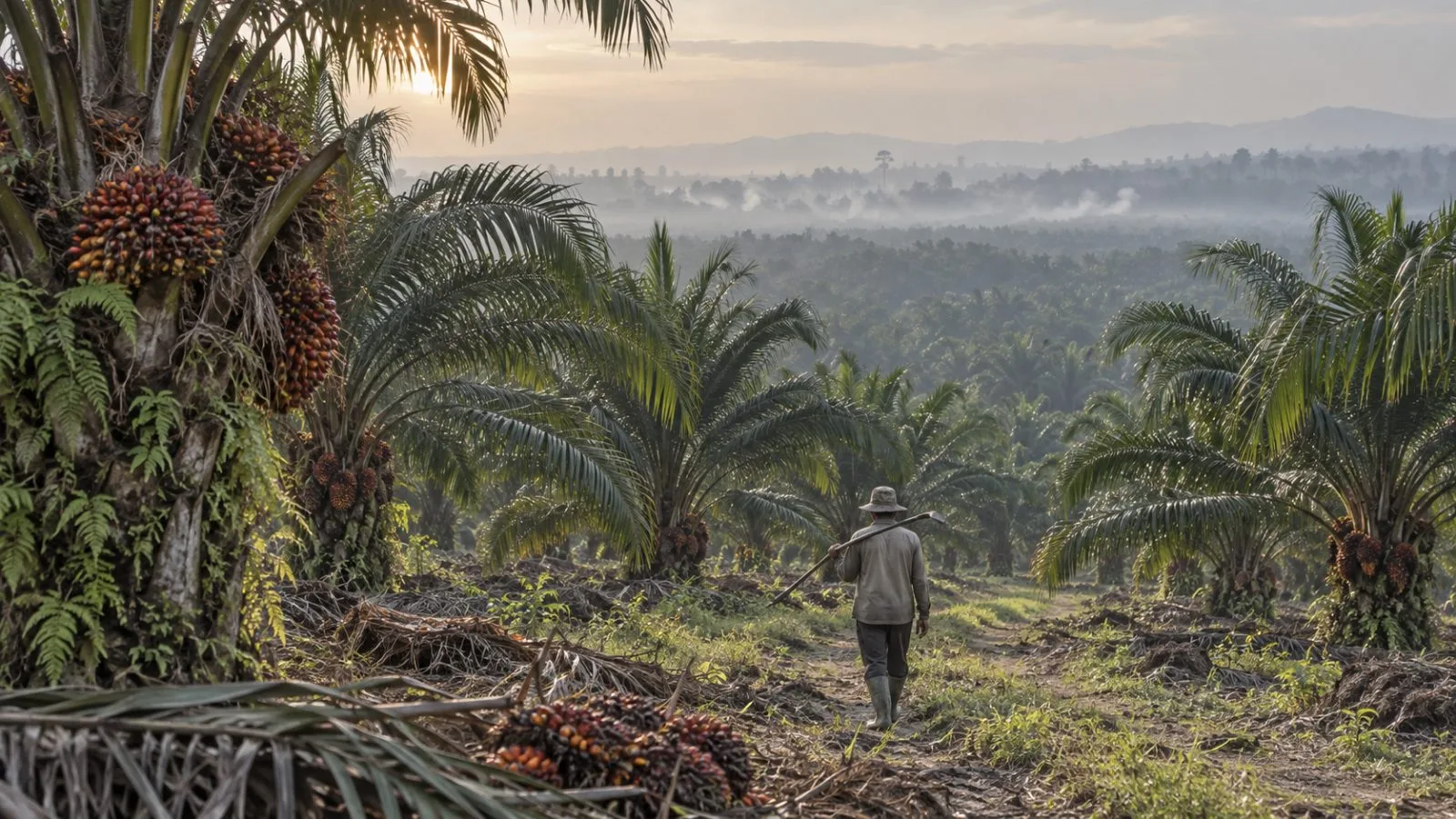
Euronews reported Oct. 30 that Indonesian groups had found signs of forest clearing in 2024 at a Central Kalimantan palm oil estate, raising questions over traceability as the European Union prepares to apply deforestation rules.
Euronews said the groups — WALHI Kalteng, TuK Indonesia and Sawit Watch — found the signs at PT Karya Makmur Abadi. A record from the Roundtable on Sustainable Palm Oil identifies the operation as a subsidiary of Kuala Lumpur Kepong Berhad (KLK).
The report named PepsiCo, Unilever, Ferrero, Mondelez and Procter & Gamble as recent buyers of palm oil from the estate. It did not establish that any named company violated the rules. PepsiCo’s self-reported 2024 mill list places Karya Makmur Abadi under KLK, showing a mill-level supply-chain link. The list does not trace oil from the plots cited in the report to PepsiCo or products sold in the EU.
The European Union Deforestation Regulation (EUDR) covers oil palm, cattle, cocoa, coffee, rubber, soy and wood, as well as specified products made from them. Covered products must be legally produced in their country of origin and deforestation-free. For palm oil, relevant commodities cannot come from land deforested after Dec. 31, 2020.
For palm oil from Indonesia, operators must provide plot-level geolocation data and submit the required due-diligence statement. Indonesia is classified by the European Commission as standard risk. Member-state competent authorities must check at least 3% of operators, non-SME downstream operators and non-SME traders that place relevant products on the market, make them available or export them from standard-risk origins.
The application date was postponed in December 2024 and December 2025. In July 2026, the European Commission announced updates to the regulation’s product scope and the system used to submit due-diligence information.
Sawit Watch executive director Achmad Surambo told Euronews, “Indonesian communities want immediate and strong enforcement of European supply chain sustainability regulations.”
The next key date is Dec. 30, 2026, when the rules begin applying to large and medium operators. Most micro and small operators have until June 30, 2027.