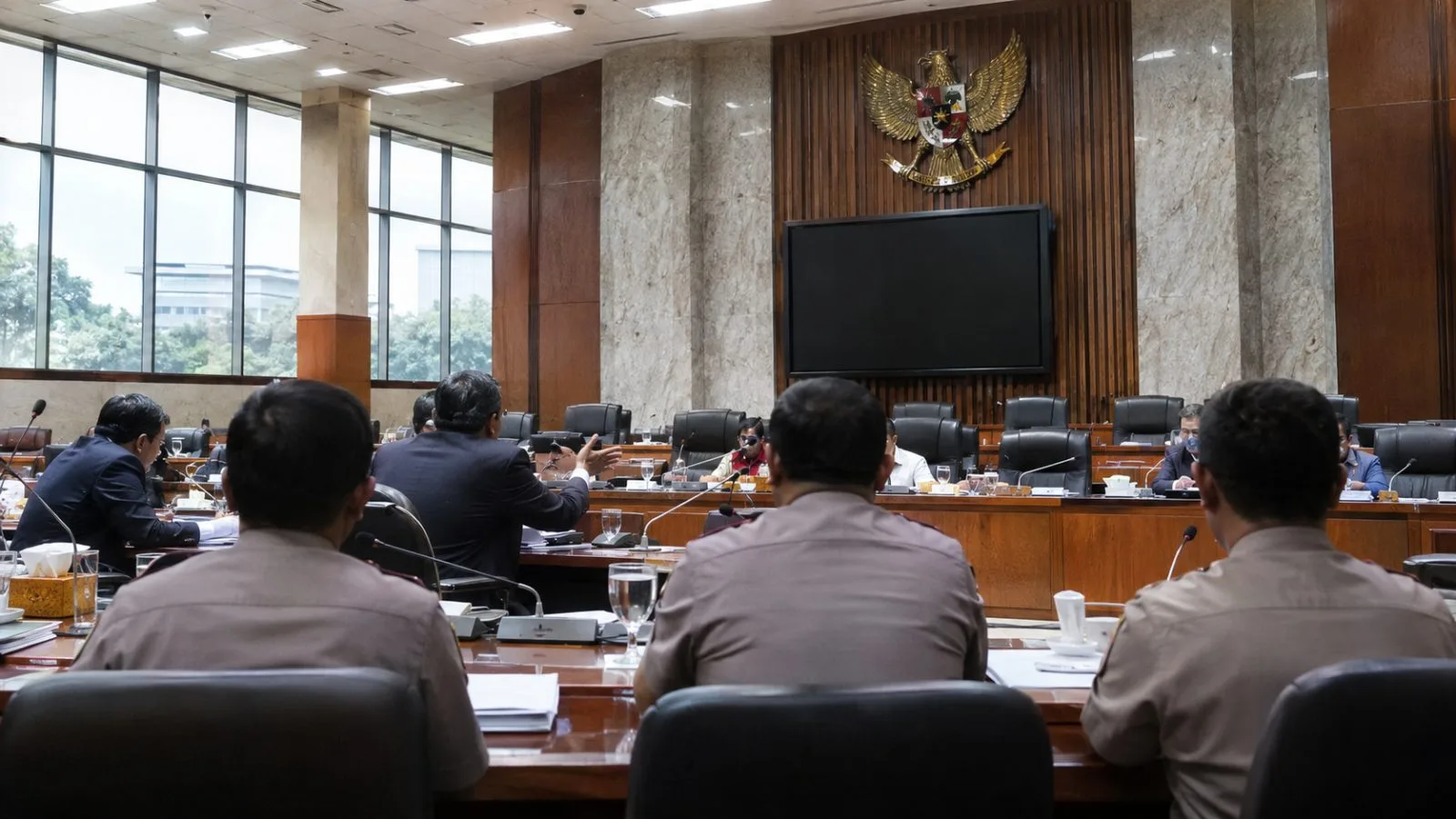
Indonesia’s House of Representatives approved an asset-forfeiture measure Nov. 19 that would let courts confiscate certain crime-linked property without a criminal conviction in specified cases, expanding the state’s recovery powers.
The measure sets out two tracks: forfeiture after a final criminal judgment and an in-rem process focused on the property itself. The second route could apply when a suspect or defendant has died, fled, become permanently ill, cannot be identified or cannot be located.
The non-conviction procedure would be limited to assets valued at least 1 billion rupiah. Article 4 lists corruption; narcotics and psychotropic offenses; terrorism financing; human smuggling; arms, ammunition and hazardous-material smuggling; human trafficking; and certain technology-enabled fraud or embezzlement affecting the wider economy.
Eligible property includes criminal proceeds, assets transferred or converted into the offender’s or another person’s wealth, items used directly in an offense and assets discovered and known to derive from crime. Other lawful property belonging to the offender could also be taken to cover losses, up to the amount ordered for forfeiture.
A state attorney, identified in the draft as “Jaksa Pengacara Negara,” would apply to a district court. The process includes tracing and blocking assets, seizure, public notice, a hearing, judgment, appeals and enforcement. Owners and other affected parties could object before the first-instance ruling, arguing lawful ownership or good-faith acquisition and seeking compensation.
The draft assigns the burden of proving criminal origin to the state attorney. An objector would have to establish lawful ownership or good-faith acquisition. A presidentially established management body could store, maintain, value, develop, use, auction or return recovered property. Auctions would have to be open and transparent, with relevant investigators, prosecutors, judges, auction officials and close family members barred from buying the assets.
A separate five-member oversight body would supervise forfeiture and management. Members would serve five-year terms, renewable once.
DPR Commission III Chairman Habiburokhman said lawmakers had refined procedures to permit cases without a conviction. “We have also improved the procedural law to allow proceedings without a criminal conviction,” he said in a House report. The House said the bill had been discussed for 18 years through more than 87 hearings and consultations, including visits to 15 provinces and 46 electoral districts.
The House says the system is intended to speed recovery for the state and victims when criminal cases cannot proceed. Potential beneficiaries include victims, corporations and communities entitled to restitution, while third-party owners face risks if their property is alleged to be linked to crime. The draft provides objection and compensation procedures.
CNA quoted Sandra Sahelangi of Flint Global as saying that a credible threat of tracing and confiscating criminal proceeds, including after a suspect flees or dies, could raise the cost of corruption and help honest firms compete.
Reuters reported that Parliament had passed the measure into law, but the official DPR text reviewed remains an unpromulgated draft with blank law-number, promulgation-date and State Gazette fields. Formal promulgation is therefore not independently confirmed in the supplied official text. The draft calls for implementing regulations within 12 months of promulgation and says the law would take effect 12 months after promulgation and after both new bodies are formed.