


 Bitcoin Posts 42.7% Q3 Gain as ‘Uptober’ Begins Amid Crypto Turmoil
  Chainalysis AI Traces $387M Bitget Hack in Under 10 Minutes
  TRUMP Memecoin Launches New Dinner Contest
  Goldman Sachs Names CATL, Zenergy Top China Battery Picks
  Midnight NIGHT Token Surges 86% as Smart Contract Launch Nears
  WordPress Malware Uses Ethereum to Evade Removal
  NEAR Price Rally Cools as $4.60 Support Takes Focus
  Bitcoin Exchange Reserves Hit Multi-Year Low at 2.68 Million BTC
  Bank of America Sees EUR/USD at 1.15 by Year-End
  PUMP Price Surges 15% as Whales Accumulate $3.58M
  Ripple Locks 700 Million XRP Back in Escrow After October Release
  XRP Ledger Batch Upgrade Set for October 9 Mainnet Launch
  Zcash Awards $8 Million in Grants After Orchard Bug Crisis
  Robinhood Stock Nears $114 as Jobs Data Boosts Risk Appetite
  Hyperliquid Top Traders Turn Bearish as Smaller Wallets Stay Bullish


 Add as a preferred source on Google
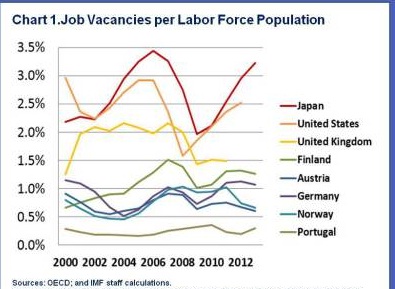
The chart from IMF reveals Europe's chronic problem, especially for the countries in Euro Zone. The chart shows job vacancies per labor force population. While the ratio remains high for Japan (+3%), US (+2.5%), for Euro zone countries it is just around 1% or below.
Euro zone really needs to improve its employment scenario by creating more jobs.
European Central Bank (ECB) is already pushing record easing by purchasing about €60 billion per month of asset purchase in a bid to boost inflation.
But the last thing Euro zone need is Asset price inflation thanks to easy monetary policies, what is required is demand driven inflation, which can hardly be achieved without maximum employment. Current ECB mandate doesn't include employment but it is expected to ease financial condition such that to boost growth and employment.
However, while loose monetary policy is keeping the conditions in place for employment and growth improvement, it clearly needs support of fiscal policy. Politicians in Europe, needs to go beyond poll friendly shorter term policies to growth and employment driven longer ones.
Unless Euro zone's tight labor market loosens Euro zone unlikely to realize its true potential.
With unemplyement hovering around 11%, it may not be wise to expect social stability.







