


 Jameson Lopp Downplays AI Threat to Bitcoin Cryptography
  XRP Whale Activity Drops 27% in Eight Days Amid Market Sell-Off
  Trump Sanctions International Criminal Court, Sparking EU Backlash
  Hegseth Praises USS Abraham Lincoln Crew After Record Iran War Deployment
  Cardano Price Drops 14% as ADA Funding Rate Hits Four-Month Low
  US Pressures Allies to Distance From Anti-Disinformation Conference
  ICC Rules Duterte Fit to Stand Trial in Drug War Case
  XRP Price Eyes $1.50 as ETFs Attract $8.17M Inflows
  David Schwartz to Reveal XRP Ledger Future at Ripple Swell 2026
  Solana Price Drops 3% Despite Samsung USDC Partnership
  Zcash Plans Quantum-Resistant Security Upgrade for January
  Zelenskiy Slams US Over Deadly Russian Strikes on Ukraine
  Flavio Bolsonaro Leads Lula 49%-45% in Brazil Runoff Poll
  Maduro, Wife May Face New US Torture Charges


 Add as a preferred source on Google
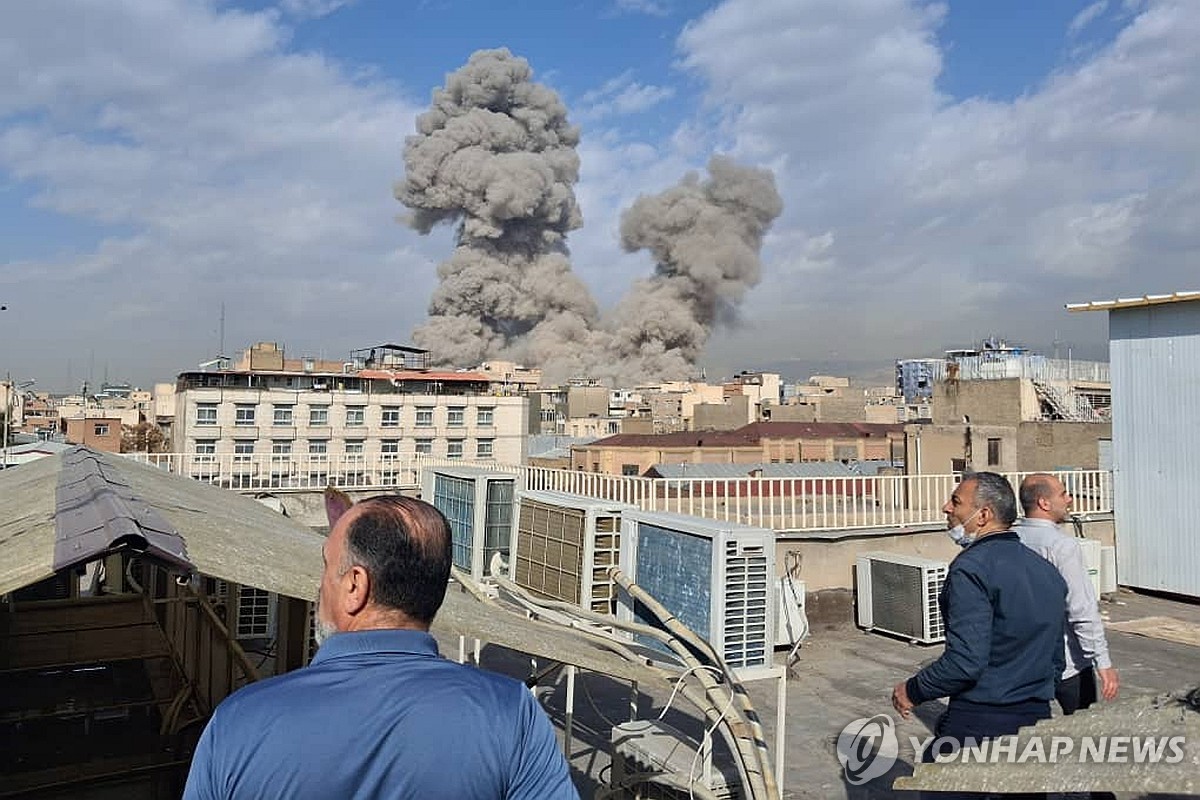

US-Israeli joint strikes on Iran over the weekend have seen war break out in the region once again and the death of Iran’s supreme leader. Iran has retaliated with volleys of ballistic missiles and drones targeted at Israel, but also several of its Persian Gulf neighbours.
Iran has launched hundreds of missiles and drones across the gulf, at targets in United Arab Emirates (UAE), Saudi Arabia, Oman, Bahrain, Kuwait and Qatar, grounding planes as a result. This is in spite of none of these nations coordinating officially with the US and Israel in their initial operations.
This is a deliberate strategy by the Iranian government, designed to exact early and substantial costs on its neighbours and overall stability in the region.
An unpopular neighbour
In spite of Iran’s relative size and military power in the region, the Iranian government is not well liked by its neighbours. At best, Iran is seen as a rival, at worst an adversary.
Saudi Arabia and Iran have spent more than a decade in a proxy war over Yemen.
Iran also claimed historical ownership over Bahrain as recently as December last year.
The rest of the gulf states, namely the UAE, Kuwait, Oman and Qatar, have fostered more pragmatic relations with Iran by keeping regular diplomatic channels open and offering to mediate disputes within the Gulf Cooperation Council.
Despite simmering tensions, Iran has never been in a direct military confrontation with any of these states.
So why send the bombs?
Almost all of the gulf states have one important thing in common: they all have security guarantees from the US and host US military bases.
Iran sees this as one of the most effective ways it can retaliate for a few reasons. Firstly, these bases are firmly in the range of its most plentiful ballistic missiles.
Bases in the gulf also have significant strategic value to the US. The base struck in Bahrain over the weekend was the headquarters of the US Fifth Navy Fleet.
Al Udeid Airbase, just outside of Doha, the capital of Qatar, was also targeted with Iranian ballistic missiles. Al Udeid is home to US Central Command (US-CENTCOM), coordinating military operations across the region. It’s also home to 10,000 US troops – the most in the area.
However, Iran is aware of how sophisticated US early warning systems are and likely doesn’t expect to significantly damage US infrastructure.
What’s the aim then?
Instead, the strategy is to make the region less stable and ensure all its neighbours feel it. It’s effectively vowing that if operations continue, the relative peace and prosperity the gulf has enjoyed will come to an end.
Iran is hoping its neighbours will see this as a war of choice by the US and Israel, with them being dragged into the hostilities. Gulf states will be forced to either double-down on their alliance with the US or work toward deescalation.
It’s not clear if this strategy will pay off. It’s possible this could lead to even more military pressure on Iran if the gulf states become more involved in operations.
At the same time, the increasingly strained relations between the gulf states and Israel over the last two years would likely make several of them reluctant to get more involved.
It’s also impossible for Iran to keep this strategy up indefinitely. Even though it has the region’s most extensive and varied arsenal of missiles, at some point it will run out of ordnance. Other countries may choose to just wait it out.
Iran has made this kind of action a signature of its long-held “forward defence” strategy – attacking targets far away from its borders to show the depth of its reach. Using its drone and missile arsenal is simply one way to tell the region, and the world, the regime will not go quietly.
Dragging the whole region into chaos
Alongside this, Iran has a damaged, but still far-reaching network of independent proxies across the region. Groups in Yemen, Iraq and Lebanon are likely to stay loyal to the Islamic Republic and employ long-term insurgent strategies in its name.
The Lebanese paramilitary group Hezbollah has already fired projectiles into Israel. This has restarted hostilities across the Lebanese border, opening up another front for Israel.
The Strait of Hormuz, through which 20% of the world’s oil travels, is another part of the region Iran can weaponise. Already, two oil tankers have been attacked in the strait and the price of Brent Crude has risen 13%.
Put another way, the extent of these attacks are a signal. These are not the same as the calculated deescalatory strikes Iran conducted in 2024 and 2025.
This war is existential for the Islamic Republic. Its strikes across the gulf are designed as a reminder that it will do all it can to drag the entire region into chaos, uncertainty and instability to save itself.
At a minimum, Iran wishes to create political consequences for all involved. The question is whether the regime will survive long enough for these consequences to have an effect.

Andrew Thomas does not work for, consult, own shares in or receive funding from any company or organisation that would benefit from this article, and has disclosed no relevant affiliations beyond their academic appointment.








