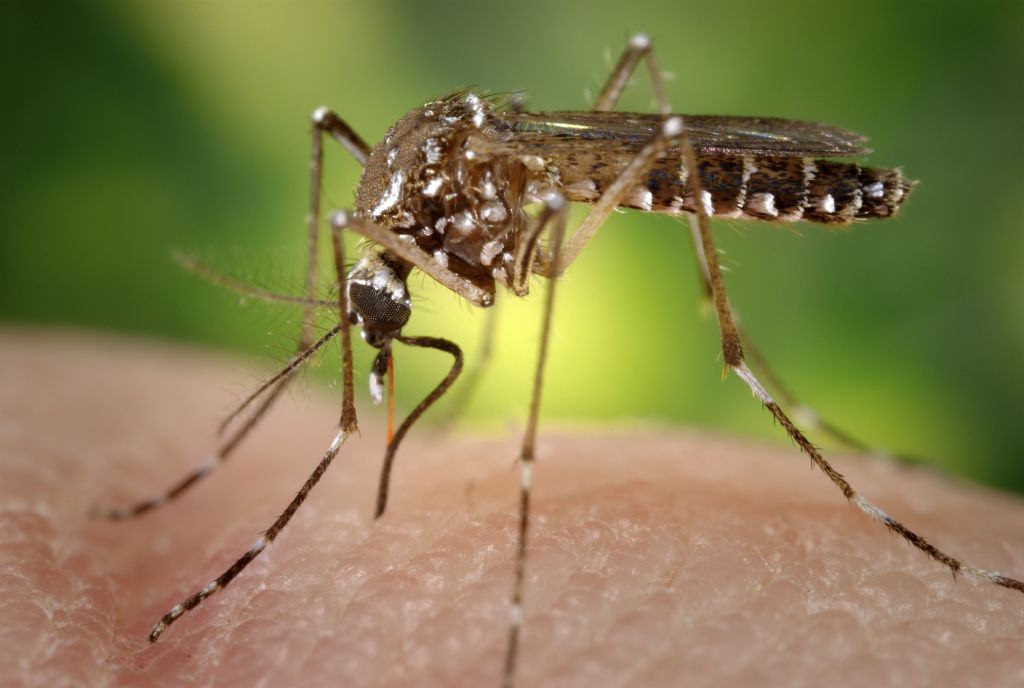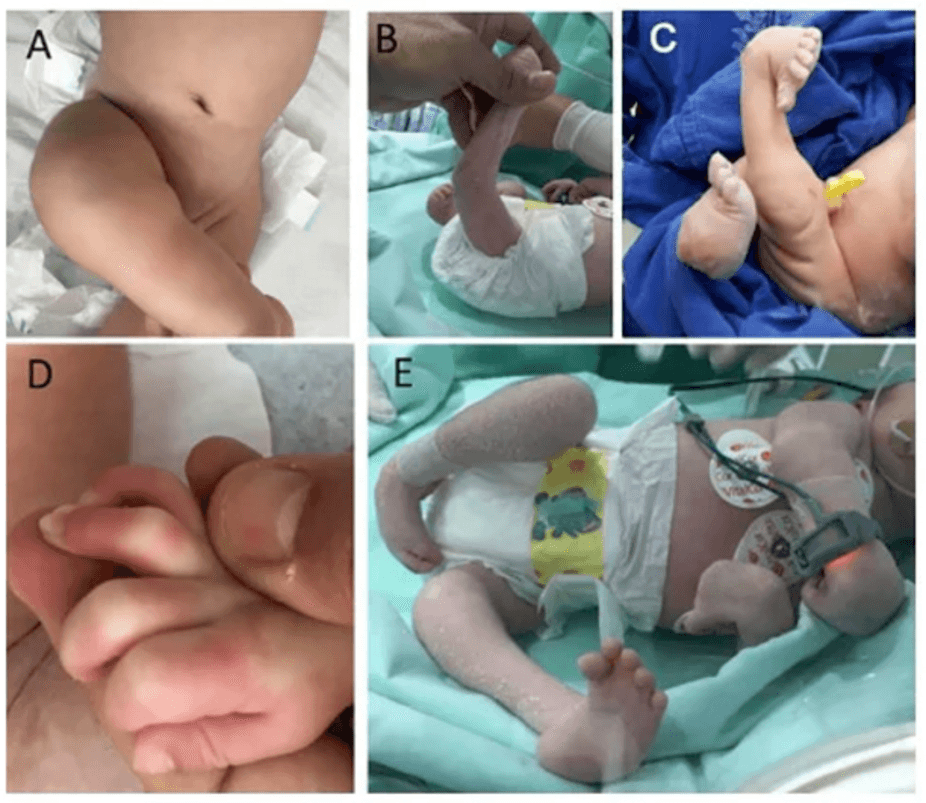
While we’re used to seeing the distressing images of small heads caused by infection with the Zika virus during pregnancy, a recent study has suggested the virus may be linked to another congenital birth disorder, namely arthrogryposis.
Arthrogryposis is where a baby’s joints are deformed due to a shortening (known as contractures) of the muscles from before birth. Arthrogryposis is derived from Greek and the literal translation means “curving of joints”. It is thought to arise from reduced or absent movement of the baby while it’s in the uterus, so the joints develop abnormally.
Arthrogryposis multiplex congenita is a condition in which the contractures of the joints are severe and affect many joints. It is also frequently accompanied by muscle weakness. Distal arthrogryposis is milder and generally affects the hands and feet.
The incidence of arthrogryposis is about one in 3,000 people, but cases where contractures affect only one joint or body area (such as clubfoot) are much more common.

Arthrogryposis of the feet (clubfoot). Wikimedia Commons
What causes it?
Inherited mutations in a number of genes have been shown to cause both the severe and milder forms of arthrogryposis. These genes affect proteins that are important for the function of the brain, peripheral nerves (nerves that connect the brain and spinal cord to the entire body), skeletal muscle and connective tissue.
Arthrogryposis can also arise in the setting of maternal illness such as myotonic dystrophy (a form of muscular dystrophy), myasthenia gravis (a rare chronic autoimmune disease causing muscular weakness), untreated lupus (a skin condition) or metabolic imbalances. It has been linked to lack of space or compromised blood flow in the uterus, and to drugs such as muscle relaxants, cocaine and alcohol.
More than 300 different disorders that include features of arthrogryposis have been described, but this doesn’t necessarily mean these disorders cause arthrogryposis.
A virus found in cows called the Akabane virus has been associated with arthrogryposis and hydranencephaly (where parts of the brain are missing and there is fluid in the cavity) in calves. Infection of pregnant sheep with this virus resulted in changes in the central nervous system and arthrogryposis in lambs. Until recently, arthrogryposis was not thought to be caused by infections that were present at birth.
Arthrogryposis and Zika
Most people infected with the Zika virus do not show any signs of being infected. Some experience mild symptoms such as fever, rash, joint pain and conjunctivitis, which go away on their own.
However, an increase in the number of children born with microcephaly (small heads) has been reported in regions with high levels of Zika virus. Mounting evidence suggests Zika is responsible.
Recently, three separate studies have reported a link between Zika infection during pregnancy and arthrogryposis in the newborn infant.
In an isolated case in Spain, Zika virus was detected in a pregnant woman at 17 weeks gestation. Ultrasound scans at 19 weeks revealed foetal malformations. The pregnancy was terminated and autopsy revealed hydrocephalus (enlargement of brain cavities due to excess fluid) and the severe form of arthrogryposis. Zika virus was detected in the umbilical cord and foetal brain.

Arthrogryposis multiplex congenita is the most severe form of the condition. Wikimedia Commons
In a series of five cases published in The Lancet, Zika virus was detected in brain tissue from three babies that were born with microcephaly and later died, including two that also had severe arthrogryposis. Zika virus was also detected in tissues from two further cases of spontaneous abortion.
There is growing evidence Zika virus can cause congenital brain malformations and arthrogryposis as well as miscarriage. Most recently, a study reported seven Brazilian cases of arthrogryposis in which three children had positive tests for Zika virus infection. Brain imaging showed all cases had malformations of the brain, a reduced brain volume, increased space in the four ventricles of the brain that produce spinal fluid, and alterations of the brainstem and cerebellum at the back of the skull.
High-resolution imaging of the joints did not reveal abnormalities. This study concluded the joint deformities were likely a consequence of poor brain and peripheral nerve function, which resulted in a fixed posture in the uterus. So the Zika virus itself may not have caused the deformities, but the virus' effect on the brain may have contributed to limited movement in the womb.
So while the link between the Zika virus and arthrogryposis is not yet proven, it is further evidence the consequences of Zika virus infection during pregnancy may contribute to a spectrum of abnormalities.
 Gina Ravenscroft receives funding from the NHMRC, WA Department of Health and the French Muscular Dystrophy Association (AFM).
Michelle Giles does not work for, consult, own shares in or receive funding from any company or organization that would benefit from this article, and has disclosed no relevant affiliations beyond the academic appointment above.
This article was originally published on The Conversation. Read the original article.