South Korea’s exports crossed $1 trillion for the first time on Nov. 19, while economic growth could reach the high 3% range if current momentum holds, the finance minister said on Nov. 26.
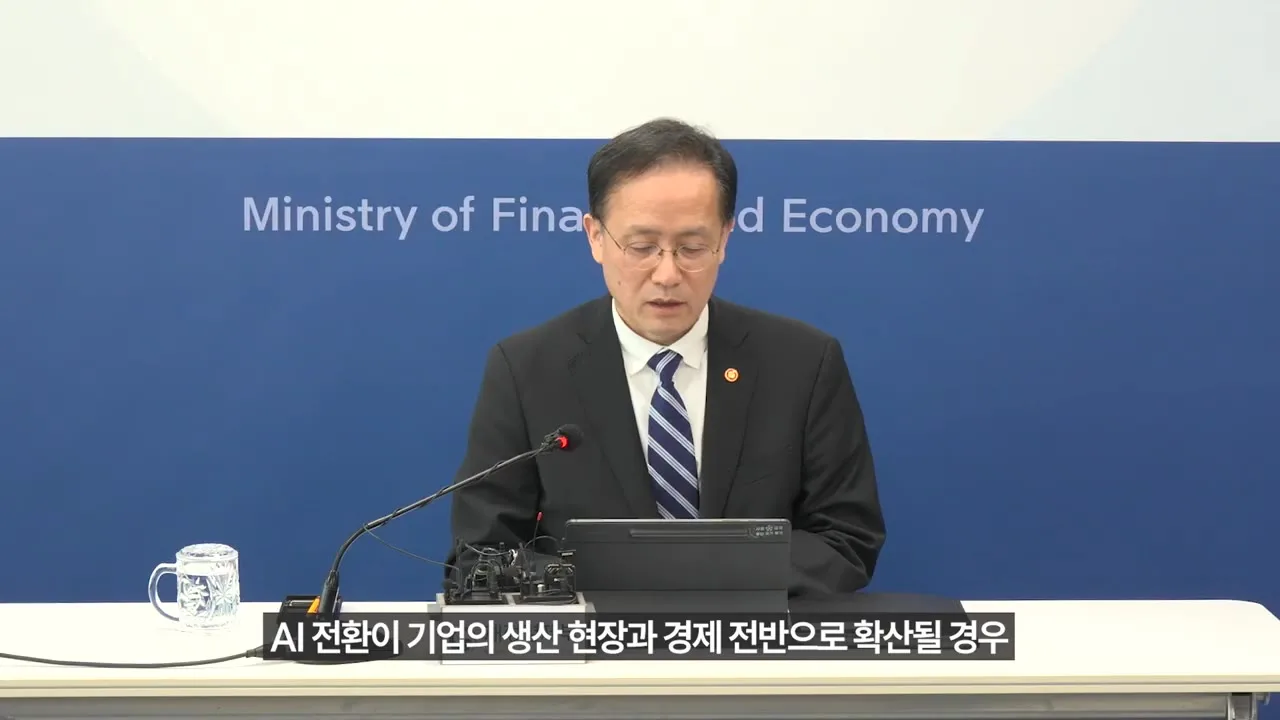
The minister spoke on the Economy and Finance Ministry’s official YouTube programme, “For $1 trillion exports to improve household finances: policy directions for jobs, housing and support for ordinary borrowers,” published Nov. 26. The remarks were issued by the ministry and are not independent reporting.
The minister said semiconductor-led exports were spreading into investment, with equipment investment growth expected to reach 8%, its highest level in five years. Private consumption was also improving gradually, while the International Monetary Fund expected South Korea’s potential growth rate to rise to 2.5% over the medium term as investment expands.
The minister said the country was close to exceeding $40,000 in per-capita national income and would work toward $50,000 during the current administration. But growth remained uneven because semiconductors account for a large share of the economy, while high prices, high interest rates and weak youth employment were slowing improvements in living standards.
The government is preparing three projects covering jobs, housing and financial support for lower-income households. It has also formed a task force on inequality covering gaps across labour, industry, companies, regions, generations and society. The minister said the government would focus on strengthening vulnerable sectors, improving social mobility and supporting productive investment while maintaining medium- and long-term fiscal soundness.
For 2027, exports and investment were expected to support continued growth as domestic demand gradually spreads, the minister said. Inflation could rise more slowly than this year if international oil prices remain stable, but uncertainty over artificial-intelligence regulation, geopolitical tensions, higher global interest rates and semiconductor volatility remained large.
The minister said authorities had begun checking procedures to activate a previously established market-stabilisation fund if conditions required. The fund was created in April 2020, but its size would be reviewed only if activation became necessary. Authorities had also partly activated a contingency plan amid increased market volatility linked to AI, semiconductors and U.S. rate increases.
On housing, the minister attributed weaker rental supply to reduced construction starts and permits three years earlier. The government plans to supply 1.19 million public homes. About 77% will be in the Seoul metropolitan area, and it is considering tax support for purchases of registered rental homes so they can remain in the rental market.
The minister said the government would support electric vehicles, services and seven targeted growth areas, while tightening monitoring of illegal short selling. Fuel price controls would continue for a period next year because oil and Middle East risks remained uncertain, especially for freight operators, low-income households and small businesses. The minister said the government would seek parliamentary approval of the budget and tax bills by the legal deadline.