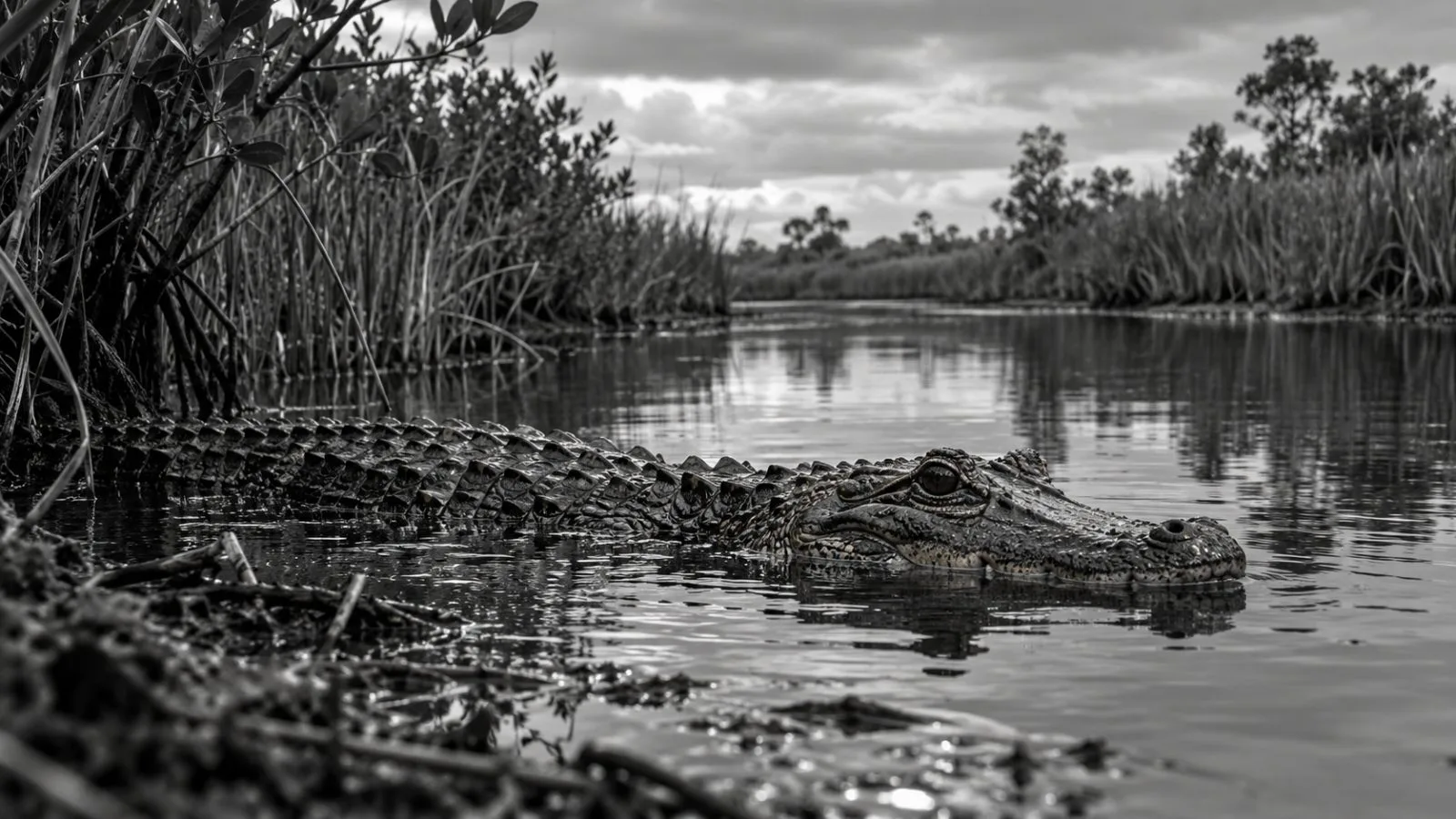
Florida's effort to remove nonnative spectacled caimans had reached 342 animals through November 2025, while researchers have yet to establish whether the reptiles compete with native alligators or crocodiles.
A 2026 review by Balaguera-Reina and co-authors in Frontiers in Amphibian and Reptile Science counted removals from the Biscayne Bay Coastal Wetlands, the C-111 Spreader Canal Project and Everglades National Park. The figure is a cumulative removal tally, not an estimate of how many caimans live in Florida.
A 2023 study by Sidney Godfrey and co-authors examined 11 survey routes over 2012 to 2021. Teams removed 251 caimans during those years, with annual totals rising from five in 2012 to 47 in 2020. Caimans encountered during surveys became less frequent over much of the period, then rose slightly in 2020-21. The authors said the increase likely reflected a change in search effort. Survey encounters do not establish Florida's total caiman population.
An August 2023 release from the U.S. Army Corps of Engineers quoted Godfrey, the study's lead author and a wildlife biologist, as “cautiously optimistic.” He said the results suggested removal work may be affecting caiman numbers in areas covered by Everglades restoration projects.
A 1980 paper by Tamir Ellis traced part of the animals' presence in Florida to the pet trade. Ellis wrote that legislation adopted in the early 1950s prohibited trade in American alligators, after which caiman imports, mostly for pets, increased. Citing U.S. Fish and Wildlife Service (USFWS) records, the paper reported that 112,402 spectacled caimans entered the United States in 1970, most through Miami. Ellis also reported a breeding population at Homestead Air Force Base in 1974.
The USFWS documented releases in Dade County after Hurricane Andrew damaged an exotic-animal dealer's cages in August 1992. A USFWS risk screening revised in 2016 rated the species' overall risk as “uncertain” and the assessment's certainty as “low,” citing the need for peer-reviewed studies of its impacts.
The 2026 review says caimans share habitat with American alligators and American crocodiles, more often with alligators, but researchers have not measured direct competition. It also says restoration ponds, canals and marshes can provide caiman habitat. Planned lower salinity at the Biscayne Bay Coastal Wetland project may attract the reptiles and complicate expected benefits for native crocodiles. The authors recommend regular surveys along standardized routes and nest searches from mid-July through late August to locate nests and females tending them.