
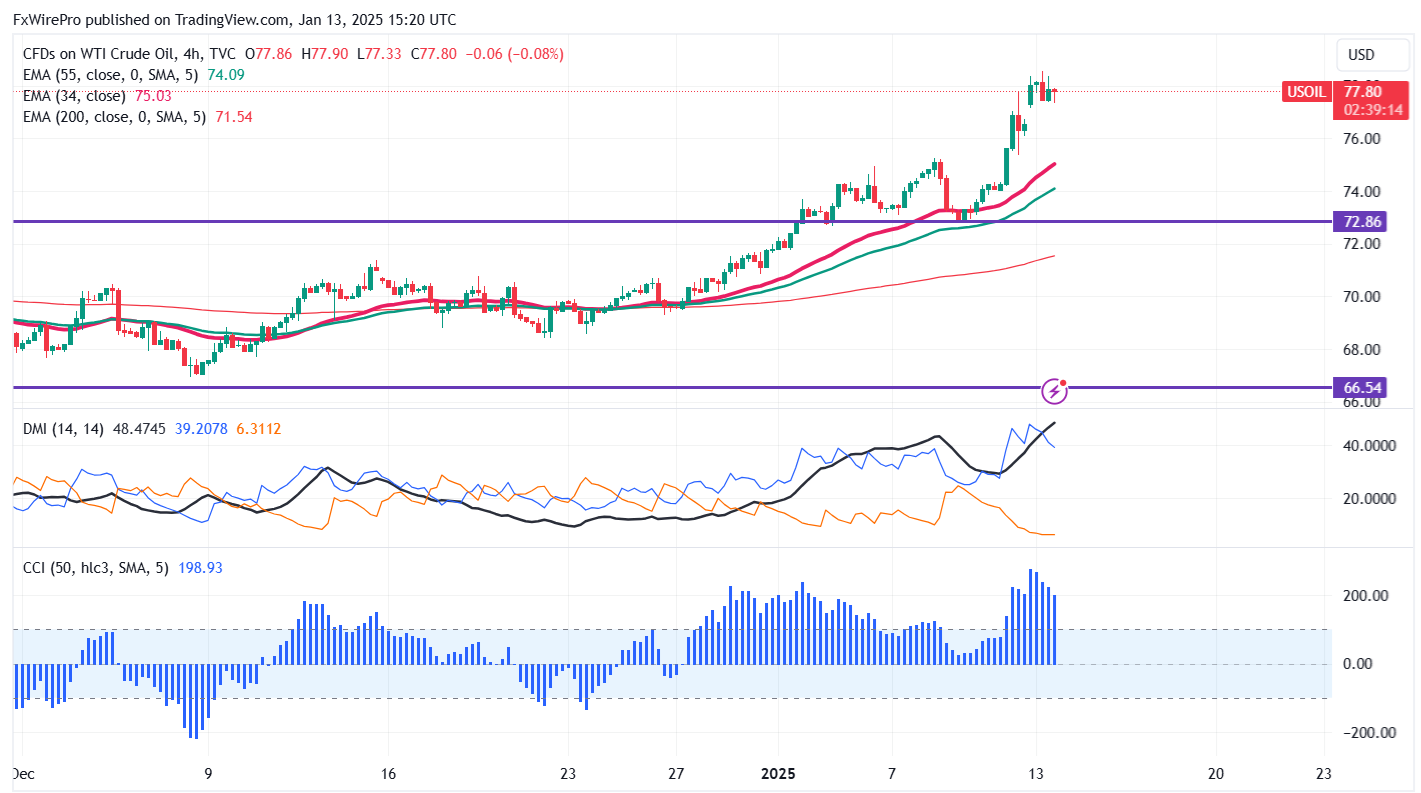
Crude oil prices hit six months on supply concern. It hit a high of $78.54 and currently trading around $77.52.
On January 12, 2025, the U.S. imposed sanctions on Russian oil, targeting 183 oil tankers and major producers like Gazprom Neft. This move aims to cut off revenue for Russia amid the Ukraine conflict. Following the announcement, crude oil prices jumped, with Brent reaching $81.23 per barrel and WTI hitting $78.12. The sanctions could disrupt Russian oil exports, which are about 1.7 million barrels per day. China and India are now looking for new oil sources, but they may face higher prices and logistical issues. While immediate shortages aren't expected, long-term effects could lead to a lack of discounted Russian crude. These changes could significantly affect the global oil market and economy.
Price Resistance and Support Levels
The near-term resistance is around $78.60; any breach above this level could push prices higher to $80.20/$82.90/$84.45. On the downside, immediate support is at $76.80, violation below targets $76/$75/$74.
It is good to buy on dips around $76 with a stop-loss around $74 and a target price of $80.


