


 NZDJPY: Bearish Bias Below 90 — Sell Rallies Toward 86.40
  FxWirePro: USD/JPY edges higher, remains on bullish path
  Major Pair Currency Score & Key Levels to Watch: GBPUSD Extremely Bearish; EURUSD, NZDUSD and AUDUSD Bearish; USDCAD and USDCHF Bullish
  FxWirePro- Major Pair levels and bias summary
  FxWirePro: NZD/USD rebounds modestly but outlook is still bearish
  FxWirePro: GBP/AUD edges lower ,scope for further downside
  FxWirePro: EUR/AUD gains some ground but outlook is bearish
  FxWirePro: NZD/USD bearish bias intact, eyes 0.5500 level
  FxWirePro: GBP/AUD steadies above 1.9000, retains bid tone
  JPY Major Currency Score: Mixed Trend — USDJPY Bullish; NZDJPY, AUDJPY, GBPJPY and EURJPY Bearish
  FxWirePro: AUD/USD edges lower as risk sentiment deteriorates
  AUDJPY: Bearish Below 110 — Sell Rallies for a Potential Move to 108
  FxWirePro: GBP/USD retreats as Bailey warns of prolonged inflation risks
  FxWirePro: EUR/NZD uptrend looks tired, but continues to hold
  AUD/JPY Stays Above 110 as Weak Yen Fuels a Potential Move Toward 112
  FxWirePro: USD/CAD steadies around 1.3260, retains bid tone
  FxWirePro: USD/CAD edges lower but outlook is still bullish


 Add as a preferred source on Google
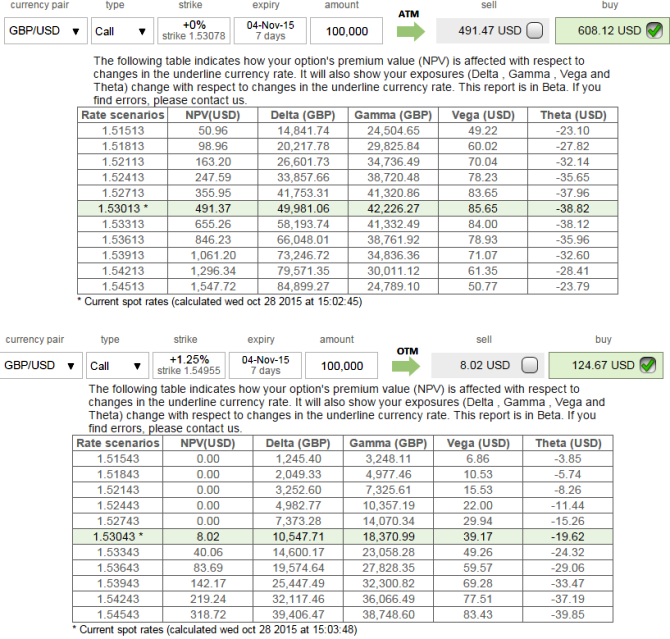
Let's contemplate the delta-hedged at the money call option, as shown in the figure, this GBPUSD call option has almost 50% delta (being at-the-money call), so we need to sell half as many lots of the underlying as we own call options in order to delta-hedge.
Let's also assume we hold 1.5500 OTM calls and delta hedge this by selling 50% units of the spot. Finally, let us assume the call option has a gamma of 0.42. Now, suppose the spot price falls suddenly below $1.5450.
We know from the option gamma that for a $1 price change in the spot, the delta will change by about 10 cents. (In reality, the change is likely to be less than 10 because the gamma is not constant and typically in this case will be lower than 10 when the call option is not precisely at-the-money; but for now let us assume it is always 10).
So the spot price 50 pips fall is accompanied by a fall in the delta of the call option to 40%. Here then we can see that our original delta-hedge is now too big; we sold 50% units of the spot, but now only need to be short 40, given the new call delta.
This implies we need to buy back 10% units of the spot and this is good news because the spot has just fallen in price by 50 pips. This demonstrates the basic idea of gamma hedging. It involves re-hedging an option portfolio due to the change in the portfolio delta, which in turn happens because the portfolio has gamma and the spot price has changed.
Note that if the underlying exchange price had risen instead of having fallen, this too would have been profitable. At 1.5550, the call has a delta (again, approximately) of 60%; in this case we are not short enough spot and need to sell more (because we are only short 50% of the spot).
This is good news because the spot has risen in price (and we now need to sell; in effect we are long the underlying when its price has risen). This shows the benefits of being long gamma; here we are long gamma because we owned the call option.

- News

- Economy

- Central Banks
- Investing
- Research
- Roundups
- Digital Currency
- Insights
- Technical Analysis
- Technology
- Business
- Law
- Health
- Nature
- Fintech
- Science
- Topic
- Opinions
- ©Econometrics LLC . All Rights Reserved.
FxWirePro: Delta gamma hedge of GBP/USD ATM Calls
Wednesday, October 28, 2015 9:47 AM UTC
Editor's Picks



- Market Data
Most Popular




