


 GBP/JPY Pullback Deepens: Sell-on-Rallies Strategy Targets 207.00 Support
  Sell the Rally: Gold Eyeing $4,000 as Dollar Strength Takes Control
  FxWirePro- Major Pair levels and bias summary
  Major Pair Currency Score: USDCAD and USDCHF Lead Bullish Momentum, While NZDUSD and AUDUSD Face Extreme Bearish Pressure
  FxWirePro: NZD/USD remains soft as US bond bloodbath dominates
  FxWirePro: GBP/USD gains some ground but bulls lack punch
  FxWirePro: USD/CAD extends advance as falling oil prices pressures commodity-linked loonie
  FxWirePro: GBP/NZD sustains gains as uptrend remains strong
  FxWirePro: USD/JPY loses momentum but outlook is bullish
  FxWirePro: AUD/USD pressured by rising treasury yields, risk-off mood
  FxWirePro: GBP/NZD steadies around 2.3350 , retains bid tone
  FxWirePro- Major Crypto levels and bias summary
  FxWirePro: GBP/AUD struggle to extend its recovery, good to sell on rally
  NZDJPY Plunges Below 90 Amidst Broad New Zealand Dollar Weakness; Resistance at 90.80 Key for Downside Continuation
  FxWirePro: USD/CAD hits two month high as Canadian as retail sales post monthly decline
  Fade the Rally: EUR/JPY Short Opportunity Near 180.80
  USD/CHF Bulls Eye 0.8400 Breakout as Broad Dollar Demand Drives 100-Pip Surge


 bouncing ahead of Kiwi trade balance - hedging rationale for both exporters & importers - EconoTimes)


 Add as a preferred source on Google
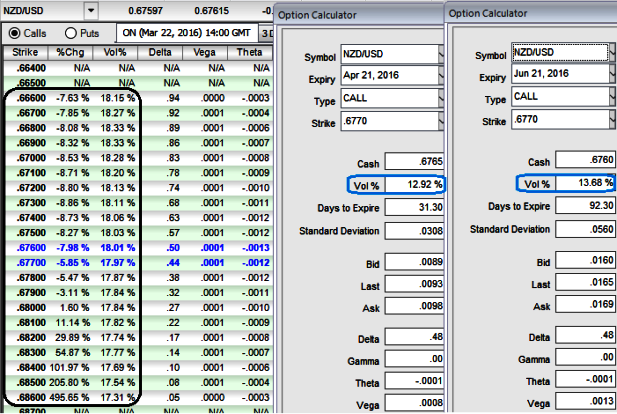
Please be informed that the implied volatilities of ATM contracts of 1-3 months tenors are bouncing about 13-14% ahead of this week's data releases of trade balance from NZ side and goods orders, unemployment claims and GDP (q/q) from U.S. side.
If IV is high, it means the market thinks the price has potential for large movement in either direction. Low IV implies the market thinks the price will not move much.
USD effects are dominating the kiwi as NZD/USD trades above where it was before the RBNZ cut rates. We continue to view the risks to the NZD outlook as being to the downside, but do not see an imminent catalyst, particularly with local data still robust.
This leaves us favouring selling NZD/USD at the top of the range, but without any urgency. We do, however, expect the USD to revert from last week’s FOMC induced sell-off as the data continues to validate a gradual US rate normalisation path. That might well set off the next raft of unease as tensions between the real economy and financial markets flare.
New Zealand trade surplus decreased to NZD 8 million in January of 2016 compared to a NZD 52 million surplus on a YoY basis, as exports rose 5.9%, led by higher sales of milk powder, butter, cheese and cherries, while imports went up at a faster 7.2% mainly due to purchases of intermediate and consumption goods.
Exports from New Zealand increased by 5.9% YoY to NZD 3.9 billion in January of 2016. Exports of milk powder, butter, and cheese, as well as cherries, propelled China further ahead of Australia as New Zealand’s top export destination in January 2016. The value and quantity of cherry exports rose to new record highs.
Exporters’ Strategy: The NZD is at the top of the range (range: 0.6870-0.6510), with a risk positive rally that continues to confound. As such we favour holding off hedging for now, waiting for better levels.
Importers’ Strategy: Importers should consider hedging at current levels. We are near range edges and the TWI remains strong and disconnected with other markets.
Options preferred so as to maintain exposure to lower floating interest rates. You can trade the higher IV value by monitoring an IV chart for NZDUSD underlying market for a certain time period and determine the IV range. The peaks suggest the option is expensive to buy and the troughs suggest the option is inexpensive.







