• NZD/USD rose on Wednesday as New Zealand dollar jumped after the RBNZ cut rates but signalled that it was likely finished with its easing cycle.
• New Zealand’s central bank lowered its benchmark official cash rate by 25 basis points to 2.25% on Wednesday, the lowest level since mid-2022, but signalled that the easing cycle may be over as the economy begins to show early signs of improvement.
•The RBNZ meeting minutes showed that the committee had weighed holding the cash rate steady or cutting it by 25 basis points, with five of the six members ultimately voting in favour of a cut.
•The New Zealand central bank’s cautious stance mirrors that of its counterparts in Australia and the U.S. Federal Reserve. The Reserve Bank of Australia kept policy unchanged this month after three rate cuts earlier in the year, citing lingering inflation concerns.
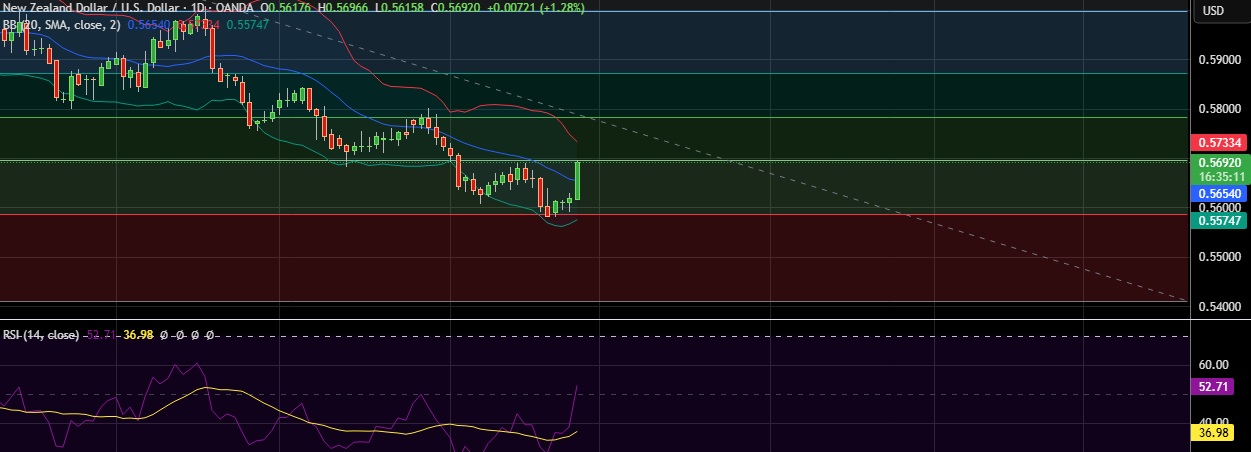
• Immediate resistance is located at 0.5696(38.2%fib), any close above will push the pair towards 0.5732(Higher BB).
• Support is seen at 0.5654(SMA 20) and break below could take the pair towards 0.5588(23.6%fib).
Recommendation: Good to sell around 0.5700, with stop loss of 0.5770 and target price of 0.5630