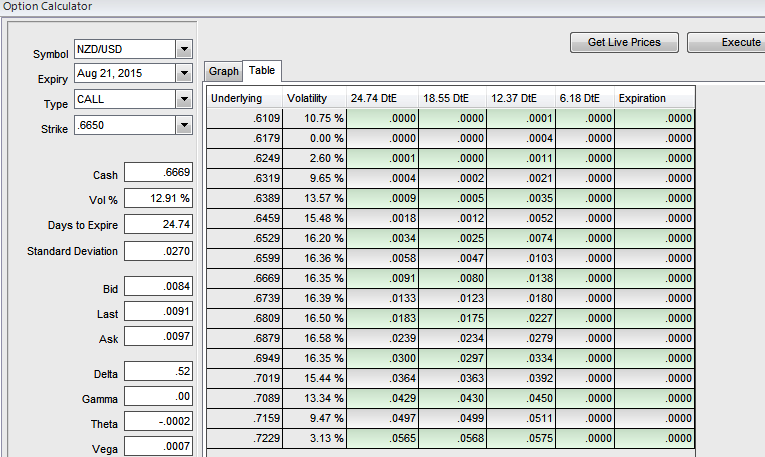
The implied volatility for next month ATM contracts of NZDUSD pair is seen at 12.91%, which is comparatively higher in APAC currency baskets except AUDUSD.
We recommend on pure speculation basis buying one touch binary calls in order to extract maximum leverage for extended profitability. By employing At-The-Money binary delta calls one can multiply returns by twice, thrice or even pour returns exponentially. But do remember these are exclusively for speculative basis.
The prime merits of such one touch option are high yields during high volatility plays. Wider spreads indicates lack of liquidity. The spreads for one touch NZD/USD options are constant time and barrier levels. Usually, such binary options for every change in 1 pip the relative change in option price 0.01% or even exponential at high implied volatility times.
Kiwi dollar after a long lasted losing streak that was started from last 1 year or so to hit almost 6 year's lows has now changed its direction. So on hedging grounds, buy 60D (far month) At-The-Money 0.51 delta call and simultaneously short 15D near month contract (1%) Out-Of-The-Money call (strike at 1165) with positive theta value. But always have this in mind that the shorting instruments with +ve theta to be analyzed with other option Greeks during selection of such short side options. This strategy can also be executed by buying 1M protective At-The-Money 0.5 delta put option while writing 21D Out-Of-The-Money covered calls with around 30+ Theta value.