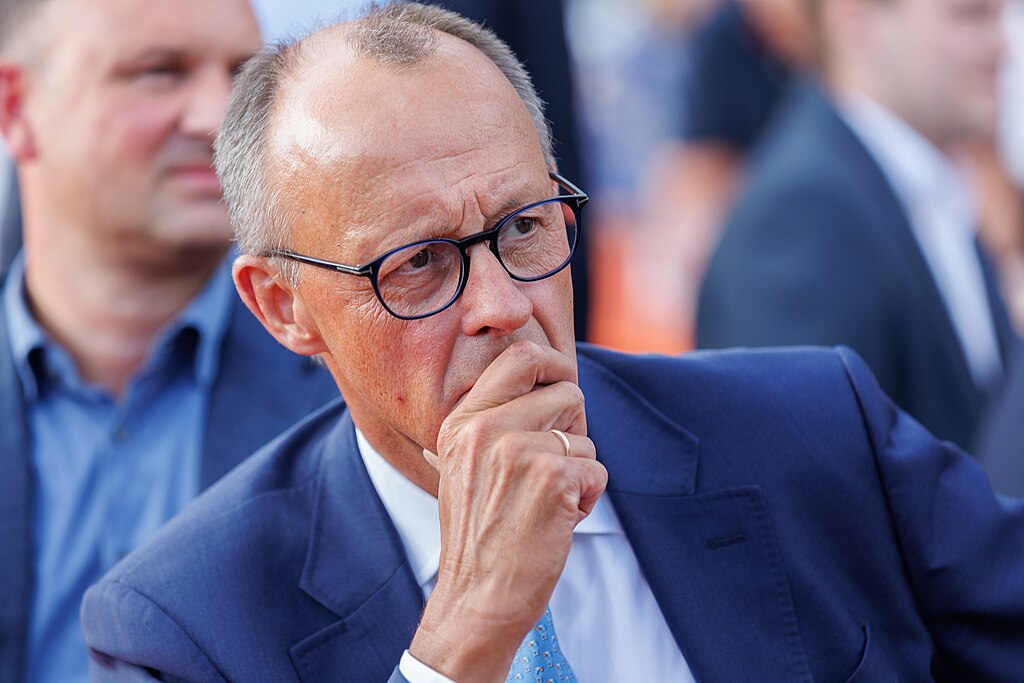
German Chancellor Friedrich Merz concluded a pivotal visit to Beijing this week, signaling Germany’s continued commitment to open markets and strong economic ties with China. As the first foreign leader to visit China in the new lunar year, Merz met with President Xi Jinping to strengthen bilateral relations and outline priorities for the “Year of the Horse.” The high-profile trip underscores the importance of Germany-China relations in shaping global trade and economic stability.
The delegation included 30 leading German executives, highlighting the deep economic interdependence between the world’s second- and third-largest economies. Annual trade between Germany and China exceeds $200 billion, while two-way investment stocks have surpassed $65 billion. These figures reflect a robust partnership built on industrial cooperation, advanced manufacturing, and expanding collaboration in digital transformation and green technology innovation.
During the summit, both leaders reaffirmed their support for mutual respect, “win-win” cooperation, and long-term strategic alignment. Talks focused on upgrading traditional manufacturing ties into next-generation sectors such as renewable energy, artificial intelligence, and smart industrial systems. German media reported extensive preparations ahead of the visit, emphasizing Berlin’s recognition of China as a key partner in achieving its technology and innovation goals through 2030.
Beyond economic cooperation, the meeting addressed broader geopolitical challenges. Germany and China issued a joint statement supporting free trade, multilateralism, and the role of the United Nations in maintaining a stable international order. President Xi outlined three guiding principles for future cooperation: reliability, innovation, and cultural exchange, while calling for stronger coordination in upholding international law.
Chancellor Merz reiterated Germany’s readiness to deepen its strategic partnership with China. As global markets face uncertainty, closer alignment between Germany’s digitalization strategy and China’s 15th Five-Year Plan positions both nations as stabilizing forces in the global economy, reinforcing their shared commitment to open trade and sustainable growth.