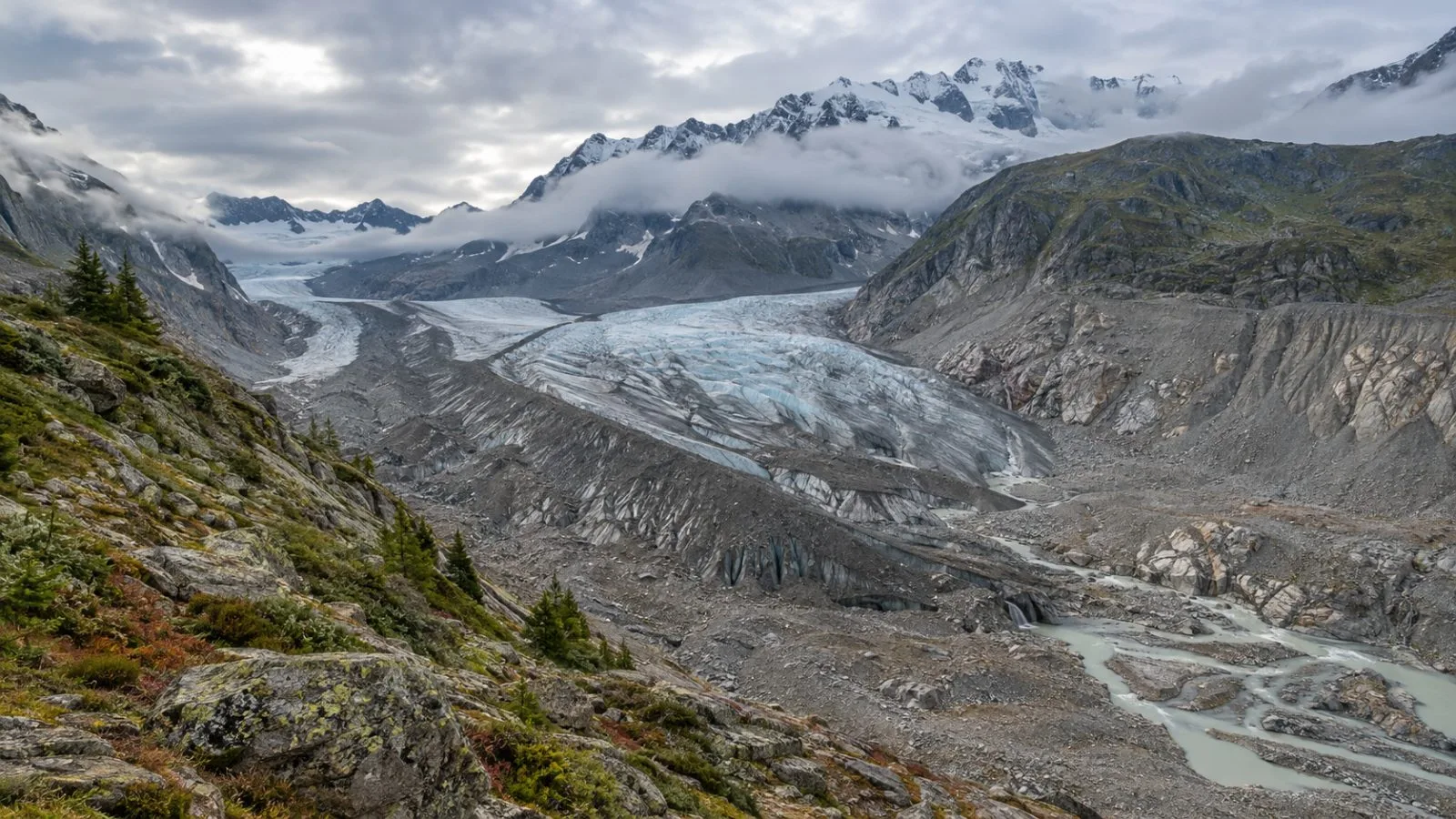
Peer-reviewed glacier studies project losses near half by 2100 under 1.5°C warming, while a separate estimate reported by Hindustan Times lacks a timeframe, complicating comparisons of risks to water supplies and sea levels.
A 2023 Science study projected that 104,000 ± 20,000 cataloged glaciers could disappear by 2100 under that warming level, amounting to 49% ± 9% of the inventory. The model assigned 50% or more of its projected disappearances to the years before 2050.
A 2025 Nature Climate Change study using three global glacier models projected that close to 50% of today’s glaciers could remain in 2100 under 1.5°C warming. At 2.7°C, it projected about 20% would remain by 2100. The paper says totals can shift with the boundaries used to catalog glaciers and with modeling choices.
Separately, Hindustan Times reported Nov. 2 that two reports from the International Cryosphere Climate Initiative and the United Nations Environment Programme put the share of glaciers facing extinction above half at 1.5°C. The outlet’s account did not provide the estimate’s projection period, model ensemble or uncertainty range.
Glacier counts and total ice mass track different aspects of loss: small glaciers can account for many individual disappearances, while larger bodies hold more ice. A separate 2025 Science study modeled the eventual response to sustained warming. At 1.5°C, it estimated a 47% [20%–64%] loss of global glacier mass and 138 [59–237] millimeters of global mean sea-level rise. At 2°C, its estimates were 63% [43%–76%] mass loss and 190 [128–279] millimeters. These figures reflect glaciers’ adjustment over centuries, rather than losses by 2100.
A 2025 review put the central estimate for rapid retreat thresholds in Greenland and West Antarctica at 1.5°C, while noting some research places thresholds lower in parts of both ice sheets. It said sustained warming at 1.2°C could produce several meters of sea-level rise over coming centuries. Mountain glacier retreat can disrupt seasonal water resources and increase hazards, while polar ice melt adds to sea-level rise over longer timescales, the studies say.
“Every fraction of a degree matters,” said Harry Zekollari, a co-lead author of the 2025 glacier study, in an International Cryosphere Climate Initiative press release on May 29, 2025. The United Nations Framework Convention on Climate Change lists COP31 as beginning Monday, Nov. 9, and running through Nov. 20, 2026, in Antalya, Türkiye.