


 The world’s biggest trees could hold the secret to coping with drought
  We combed through old botanical surveys to track how plants on Australia’s islands are changing
  How to create a thriving forest, not box-checking ‘tree cover’
  Rice feeds billions of people – but its role in fueling climate change is growing
  Fungi are among the planet’s most important organisms — yet they continue to be overlooked in conservation strategies
  Parasites are ecological dark matter – and they need protecting
  Thousands of satellites are due to burn up in the atmosphere every year – damaging the ozone layer and changing the climate
  How is Antarctica melting, exactly? Crucial details are beginning to come into focus
  How America courted increasingly destructive wildfires − and what that means for protecting homes today
  Rise of the Zombie Bugs takes readers on a jaw-dropping tour of the parasite world
  Ukraine minerals deal: the idea that natural resource extraction can build peace has been around for decades
  How ongoing deforestation is rooted in colonialism and its management practices
  Extreme heat, flooding, wildfires – Colorado’s formerly incarcerated people on the hazards they faced behind bars
  Unsustainable – or manageable? We don’t yet know how data centres will impact Australia’s environment
  GesiaPlatform Launches Carbon-Neutral Lifestyle App ‘Net Zero Heroes’


 Add as a preferred source on Google
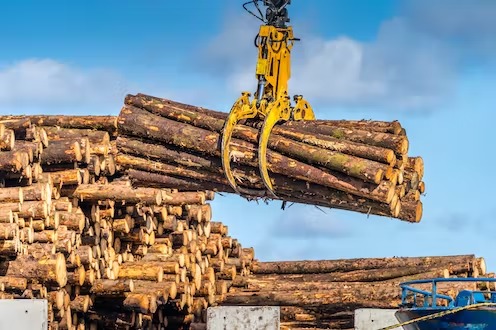


While farming continues to drive deforestation around the world, 60% of the destruction of Earth’s large, intact forests is caused by other forces. In particular, our research shows that more than one-third of this destruction can be blamed on the production of commodities for export, particularly timber, minerals and oil and gas.
Increasing global demand for these commodities, which are often exported through globe-spanning supply chains, explains much of the ongoing removal, degradation and fragmentation of intact forests in a handful of countries including Brazil, Canada, the Democratic Republic of Congo and Russia.
We define intact forest landscapes (IFLs) as seamless mosaics of forest and related habitats bigger than 500km² where there is no detectable sign of activities such as logging, mining or energy extraction. Although IFLs made up 20% of the world’s remaining tropical forest in 2020, they stored 40% of all the carbon held in these habitats. Since 2000, the global extent of IFLs has shrunk by 7.2%, a loss of 1.5 million km² – more than quadruple the area of Germany.
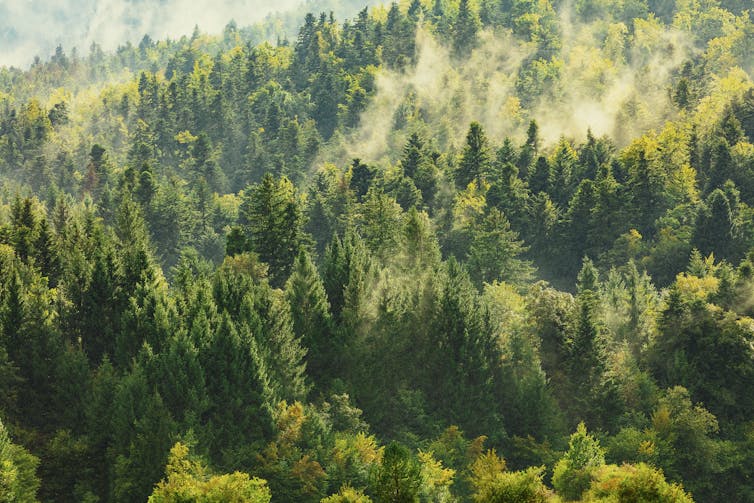
Intact forests are havens for biodiversity and colossal carbon sinks. Sivivolk/Shutterstock
We integrated economic models with a global dataset on IFL loss to better understand the extraction and export of commodities in the 2014 world economy. We found that the commodities driving the lion’s share of forest loss were primarily extracted from Russia, Canada and tropical regions to the EU, US and China. More than 60% of IFL loss was related to the consumption of a wide range of non-agricultural products including paper, metals and other highly processed products.
These causes of forest loss are more obscure to consumers than traditional food and forest products. For example, it is widely understood that beef production drives deforestation in the Amazon. It is less well known that the manufacture of office furniture involves timber and metals acquired at the expense of the world’s dwindling intact forests. Even the power in your home may be derived from oil and gas associated with IFL loss.

The origins of the products we buy aren’t always clear. Fizkes/Shutterstock
So, adopting a plant-based diet will not target all of the big drivers of forest loss. Governments and businesses improving the transparency and traceability of the supply chains they govern could kickstart the phasing out of other destructive products.
Forest loss and supply chains
Forest scientists and campaigners tend to focus their attention on the wholesale conversion of forests into livestock pasture or cropland. But even the intrusion of logging and mining into relatively small areas can degrade and fragment a forest, greatly damaging the ecosystem’s health and accelerating its destruction by making it easier for people to access what remains.
The establishment of roads, exploration trails and electricity transmission lines often precedes the complete destruction of forests. Mining and the extraction of oil and gas is second only to agriculture in destroying IFLs – and the loss of stored carbon which results from forest degradation has exceeded that from deforestation (the complete removal of forest) in the Brazilian Amazon.
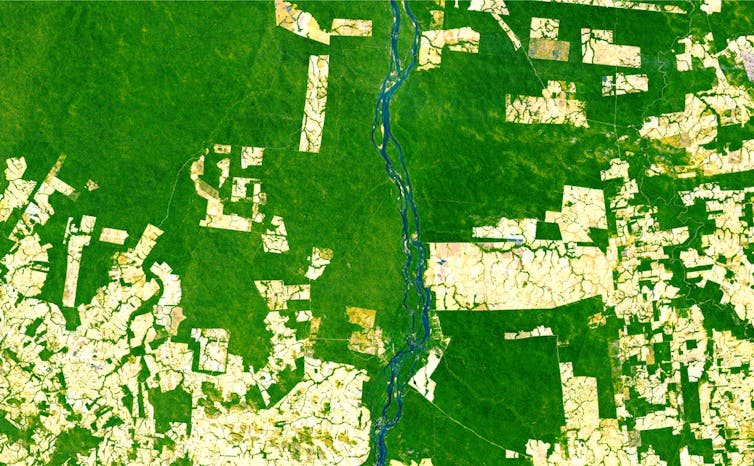
Roads can connect extraction sites and allow commodity production to expand into forests. ASVMAGZ/Shutterstock
Global supply chains enable countries to avoid destroying forests within their own borders by importing finished products from overseas. How countries decide to use their land is no longer simply determined by demand for products within the country.
International trade and surging global consumption of land-based products plays a far bigger role. For example, Russia produces lots of wood for countries with few forests and for strictly regulated regions such as EU member states.
Revealing the ties between regional IFL loss and the products people buy in other countries shows how global supply chains of various commodities influence forest ecosystems worldwide. Considering the exceptional value of IFLs to conservation, this perspective can also expose the forces driving carbon emissions and biodiversity loss.







