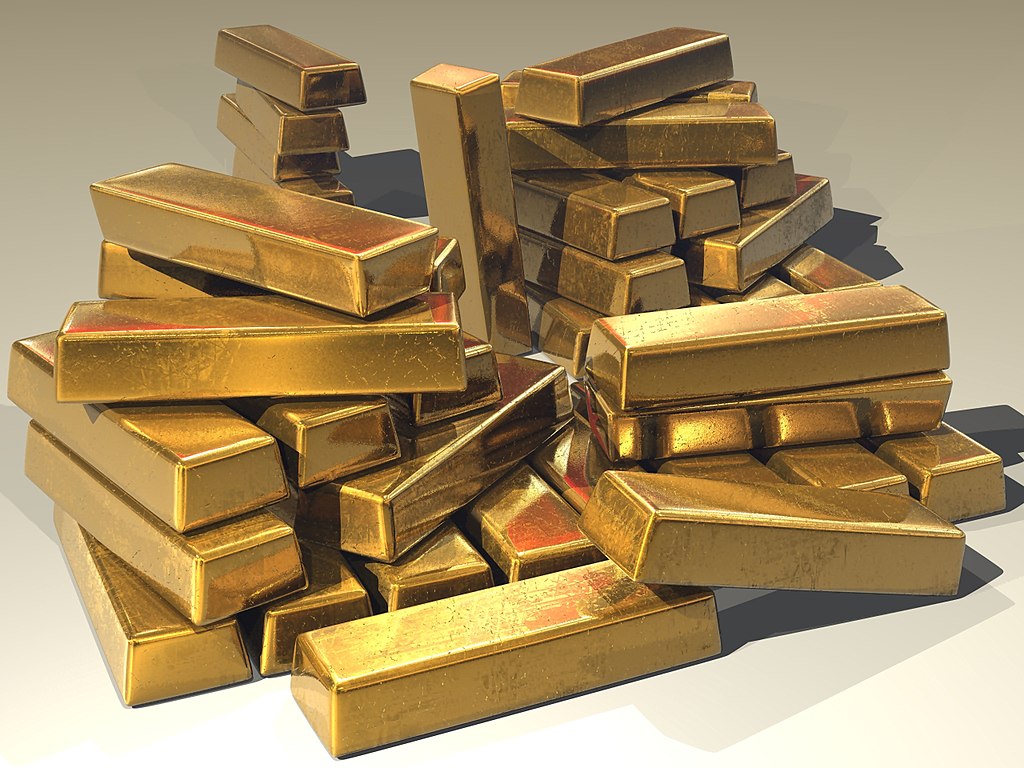
Gold prices continued their downward trend on Tuesday during Asian trading, marking a tenth consecutive session of losses. Spot gold dropped 1.3% to $4,351.28 per ounce, while U.S. gold futures declined 0.3% to $4,399.59, as geopolitical confusion and shifting interest rate expectations kept investors on edge.
Markets had briefly found relief after U.S. President Donald Trump chose to delay threatened strikes on Iran's energy infrastructure, describing recent discussions with unnamed Iranian officials as "very good and productive." However, Iran's Parliamentary Speaker Mohammad Baqer Qalibaf quickly contradicted this claim on social media, denying that any negotiations had taken place. The conflicting statements revived uncertainty and eroded the short-lived calm in financial markets.
Despite gold's well-established reputation as a safe-haven asset during times of geopolitical tension, the precious metal has struggled to attract buyers in recent weeks. A significant driver of this weakness has been the surge in global energy prices, which has stoked fears that inflation may remain stubbornly high. As a result, investors have dialed back their expectations for central bank rate cuts, now increasingly pricing in a higher-for-longer interest rate environment from institutions including the U.S. Federal Reserve.
This shift in monetary policy expectations has been particularly damaging for gold. Because the metal generates no yield, it becomes comparatively less attractive when interest-bearing assets like government bonds offer stronger returns in a high-rate climate.
The bearish pressure extended across the broader precious metals market. Silver fell 1.5% to $68.08 per ounce, while platinum edged lower by 0.3% to $1,879.40 per ounce. With macroeconomic headwinds and geopolitical ambiguity still in play, gold traders remain cautious as markets await clearer signals on both the Iran situation and the global inflation outlook.