Gold prices delivered a mixed performance on Monday as a stronger U.S. dollar and shifting expectations for Federal Reserve policy counterbalanced support from geopolitical developments and ongoing market uncertainty.
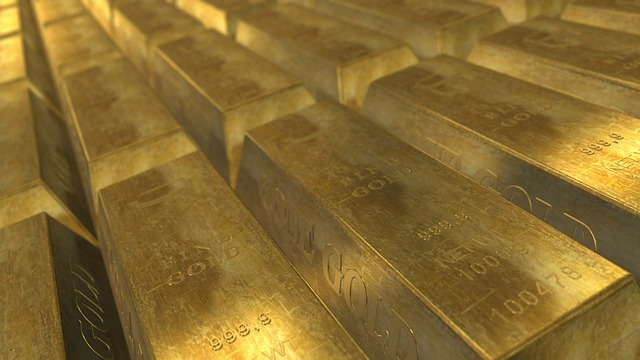
Spot gold climbed 0.8% to close at $4,191.43 per ounce, while gold futures declined 0.9% to settle at $4,209.70 per ounce. In the broader precious metals market, silver gained 0.3% to $65.1065 per ounce and platinum advanced 0.6% to $1,677.65 per ounce.
Meanwhile, copper prices were mixed. London Metal Exchange (LME) copper futures fell 0.7% to $13,595 per ton, while U.S. copper futures rose 0.5% to $6.3678 per pound.
Investors continued to assess the Federal Reserve’s latest policy outlook after last week’s unexpectedly hawkish Summary of Economic Projections (SEP). The updated “dot plot” indicated that at least half of Federal Open Market Committee members now expect interest rate hikes this year to address inflation risks linked to higher energy costs stemming from Middle East tensions.
The Fed’s outlook marks a significant shift from previous projections that suggested multiple rate cuts. Analysts at Bank of America now forecast that the central bank may not lower rates until 2028. Higher interest rates typically reduce the appeal of non-yielding assets such as gold, creating headwinds for bullion prices.
Market participants also digested comments from Federal Reserve Chair Kevin Warsh, who unveiled several initiatives aimed at reviewing key aspects of the central bank’s operations and monetary policy framework.
Geopolitical developments remained a major focus. Oil prices extended recent losses after U.S. officials reported progress in peace negotiations with Iran. Earlier optimism followed a memorandum of understanding signed by President Donald Trump and Iranian officials, which included a temporary halt to military operations and measures to keep the Strait of Hormuz open.
However, renewed clashes involving Israel and Iran-backed Hezbollah raised concerns about the durability of the agreement. Sentiment improved later in the day after U.S. and Iranian representatives met in Switzerland, where negotiators reportedly reached preliminary agreements, including a mechanism designed to maintain access through the strategically important Strait of Hormuz.
Despite gold’s recent resilience, analysts note that expectations of tighter monetary policy and easing geopolitical risks could limit further gains, with investors closely watching support levels near $4,000 per ounce.