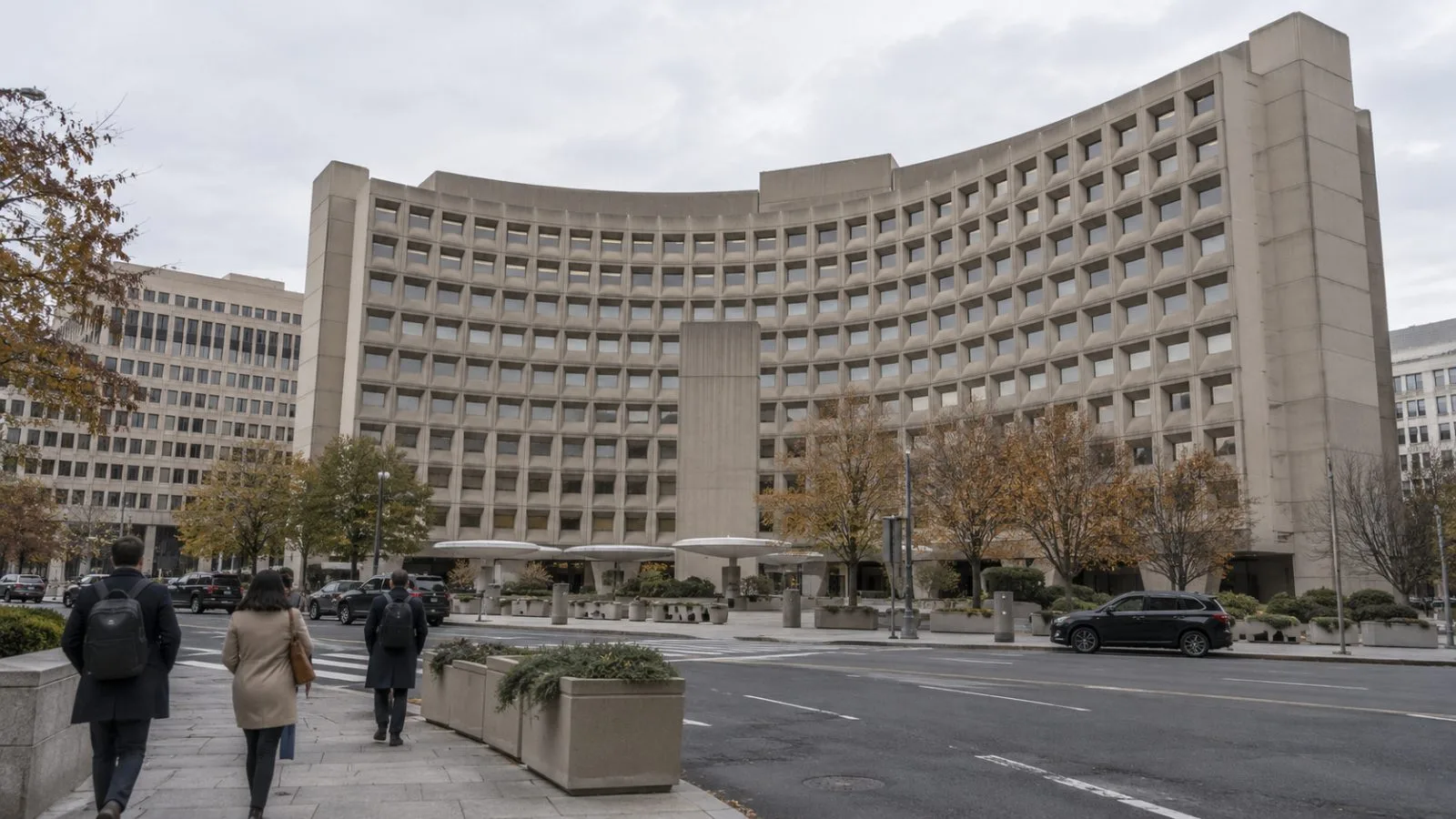
The U.S. Department of Housing and Urban Development (HUD) on Oct. 14 expanded Federal Housing Administration (FHA) mortgage insurance to qualifying build-to-rent communities, opening a federal financing route for rental developments of houses and small buildings. The change took effect immediately.
Section 221(d)(4) covers new construction. Section 223(f) applies to acquisitions or refinancings when the property’s certificate of occupancy is dated less than three years before the application.
Eligible projects need at least five dwelling units on one cohesive, contiguous site, must be intended for long-term rental and must operate as a single multifamily rental property. HUD bars privately owned homes or parcels interspersed within a development. It also will not permit sales of individual buildings or parcels, or partial releases of loan collateral, while the insured loan remains active.
Management must be comparable to multifamily properties in the local market. Borrowers, contractors and management agents must show successful experience with projects of similar type and scale.
The underwriting rules include an initial operating-deficit escrow of at least 3% of the loan amount or four months of debt service, whichever is greater. For market-rate projects, the vacancy assumption must be at least 7% or the comparable market rate, whichever is higher. Affordable developments require an assumption of at least 5%.
HUD's letter exempts detached single-family homes, duplexes and triplexes, treated as individual buildings, from certain Fair Housing Act design requirements. Accessibility rules still cover shared-use areas and site amenities; federal, state or local laws may impose additional requirements.
Before the change, HUD generally insured multifamily developments built around buildings with four or more units. The agency said it had kept build-to-rent communities outside that approach amid questions about accessibility, property valuation and loan underwriting. HUD also cited rental demand from families unable to buy homes and growth in professionally managed rental communities.
The policy follows Section 3 of Executive Order 14376, issued Jan. 20. It directs agencies to make narrowly tailored exceptions for build-to-rent properties planned, permitted, financed and built as rental communities. “Expanding housing supply, including new rental housing, is essential to improving affordability,” Joe Gormley, whom HUD identified as overseeing the FHA and Office of Housing, said in the agency’s announcement.
Bravo Capital said Oct. 15 that it was accepting financing requests and assessing projects under the new criteria. The company did not identify a borrower or financing amount. HUD plans to revise its Multifamily Accelerated Processing Guide to reflect the policy, but has not provided a timetable.