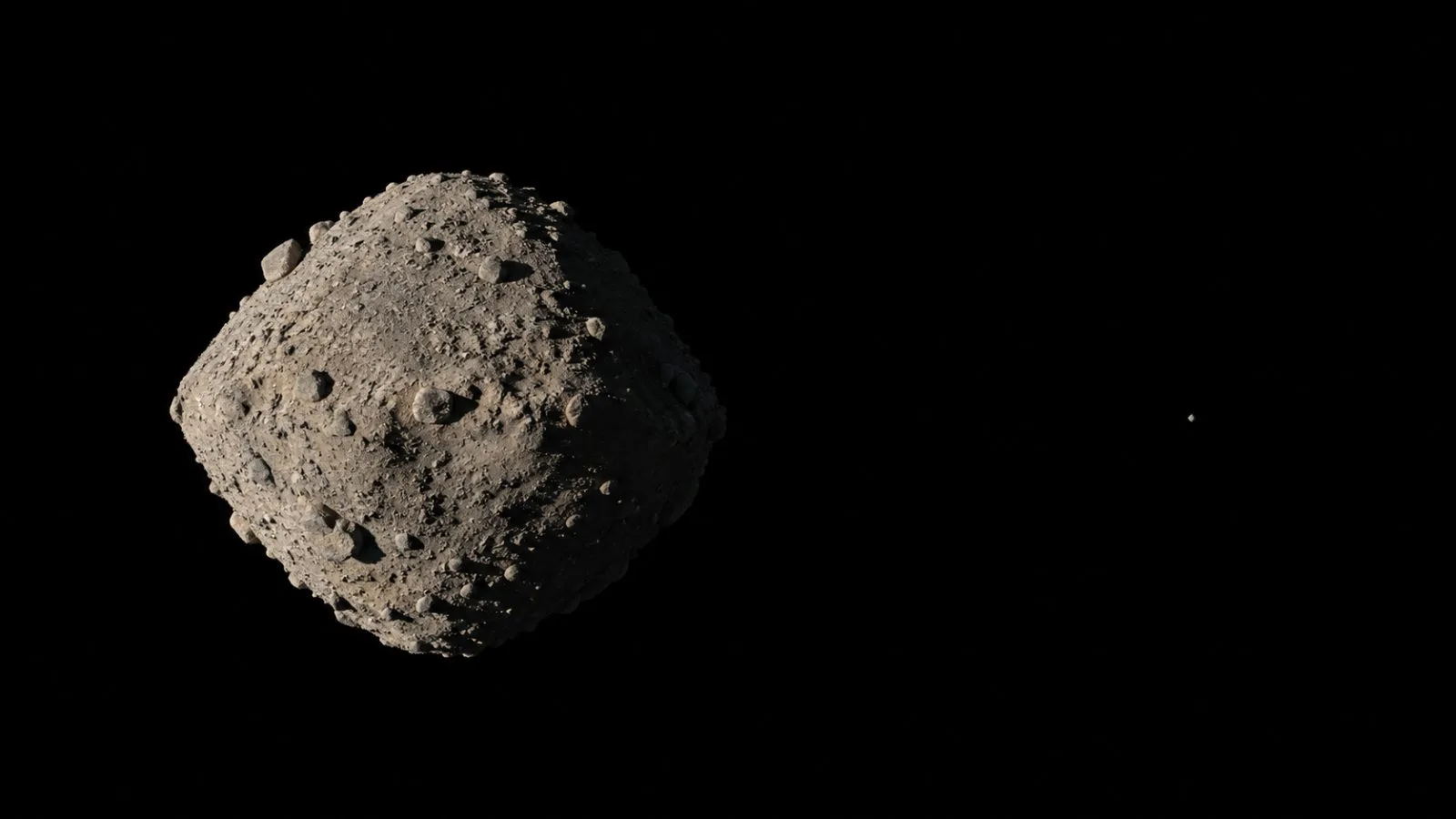
The European Space Agency (ESA) says its Hera spacecraft will reach the Didymos system in November to inspect Dimorphos after NASA’s DART spacecraft struck it, gathering data for asteroid-defense research.
NASA’s Double Asteroid Redirection Test (DART) spacecraft hit Dimorphos on Sept. 26, 2022. ESA says the impact caused a brightening visible to telescopes on Earth, but that observation did not reveal the physical changes to the asteroid. The agency describes Dimorphos as the first Solar System object whose orbit was changed by human action.
Dimorphos is 151 meters across and circles Didymos, which measures 780 meters. Hera will survey the impact site to determine how the collision affected Dimorphos. ESA says the spacecraft will also examine what Dimorphos is made of and how its interior is arranged.
Two CubeSats will contribute observations of the impact zone, according to ESA. The agency has framed Hera’s work around 10 questions, including how a kinetic impact can be used to redirect asteroids. The mission’s findings are intended to help researchers better understand that deflection method.
Hera has already photographed the two bodies separately; its first resolved view of Dimorphos beside Didymos captured them during the spacecraft’s approach. ESA has set Nov. 25 for publication of its first detailed images of Dimorphos.