A small study found that recreationally active adults took longer to reach a set core-temperature target in water after high-intensity interval exercise, a result that may matter when assessing post-exercise cooling in hot conditions.
The 15 participants completed randomized crossover trials in a 40°C environment with 20% relative humidity. The researchers compared high-intensity interval exercise with low-intensity exercise that restricted evaporative heat loss.
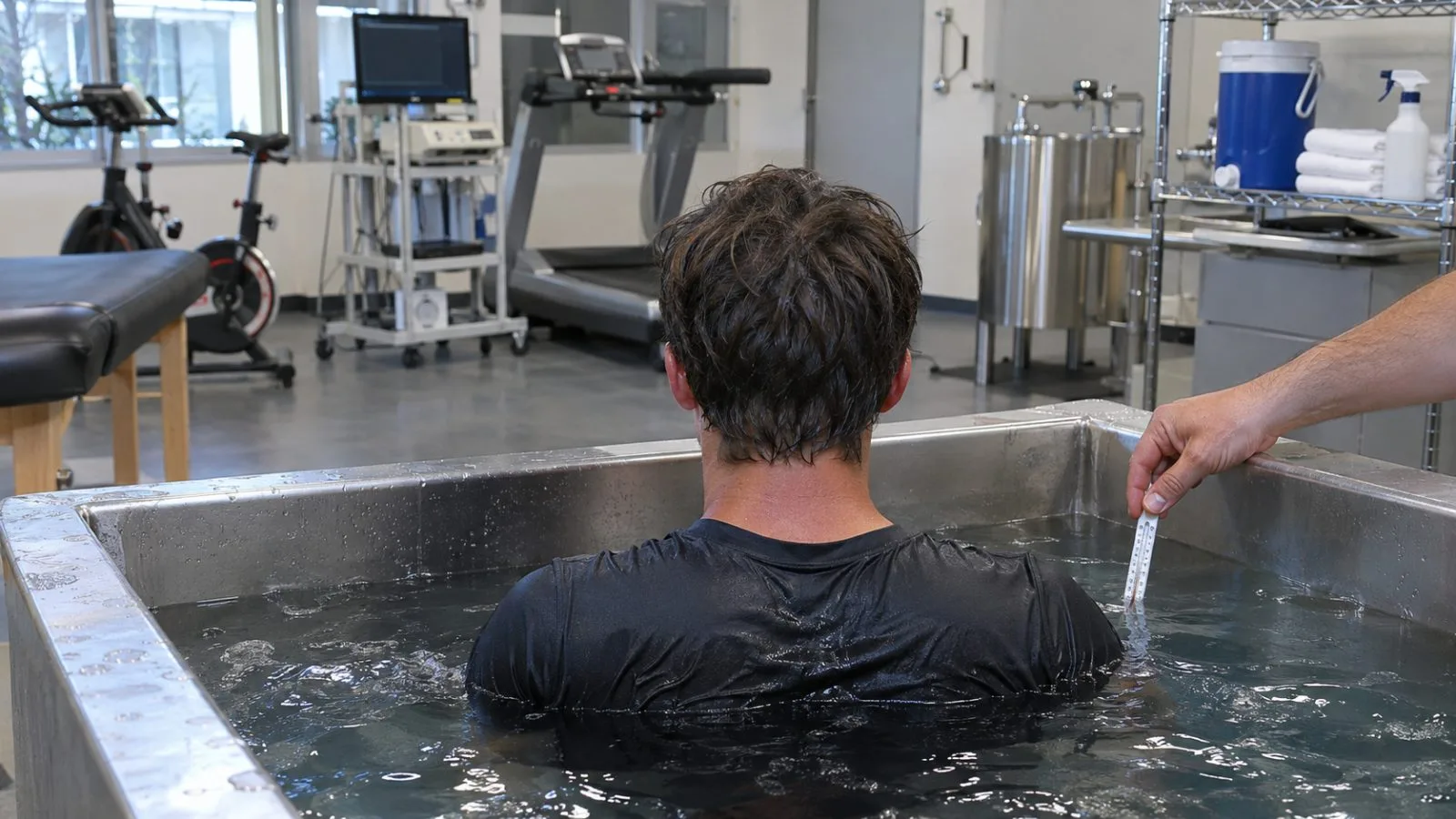
Exercise continued until participants’ core temperatures reached 39.5°C or they stopped because of fatigue. After a five-minute preparation period, they were immersed to sternum level in 20°C water until their core temperatures fell to 37.5°C.
The mean time to reach that endpoint was 22.93 minutes after interval exercise and 9.93 minutes after low-intensity exercise. The average cooling rates were 0.10°C and 0.23°C per minute, respectively. Peak core temperature and the rate of heating did not differ between the conditions.
Researchers recorded greater metabolic and cardiovascular strain during interval exercise. During immersion, participants also had lower skin temperatures and cutaneous vascular conductance, a measure of blood flow near the skin. Post-exercise body-mass loss was similar between the two conditions.
The study, by Gang Wang, Junli Fan and Chansol Hurr, was published in Journal of Thermal Biology in August 2026. Its abstract says the reason for the slower cooling after interval exercise remains undetermined.
The results come from a 15-person study using a specific hot-environment protocol. They do not establish whether the same difference would occur in other populations or conditions.