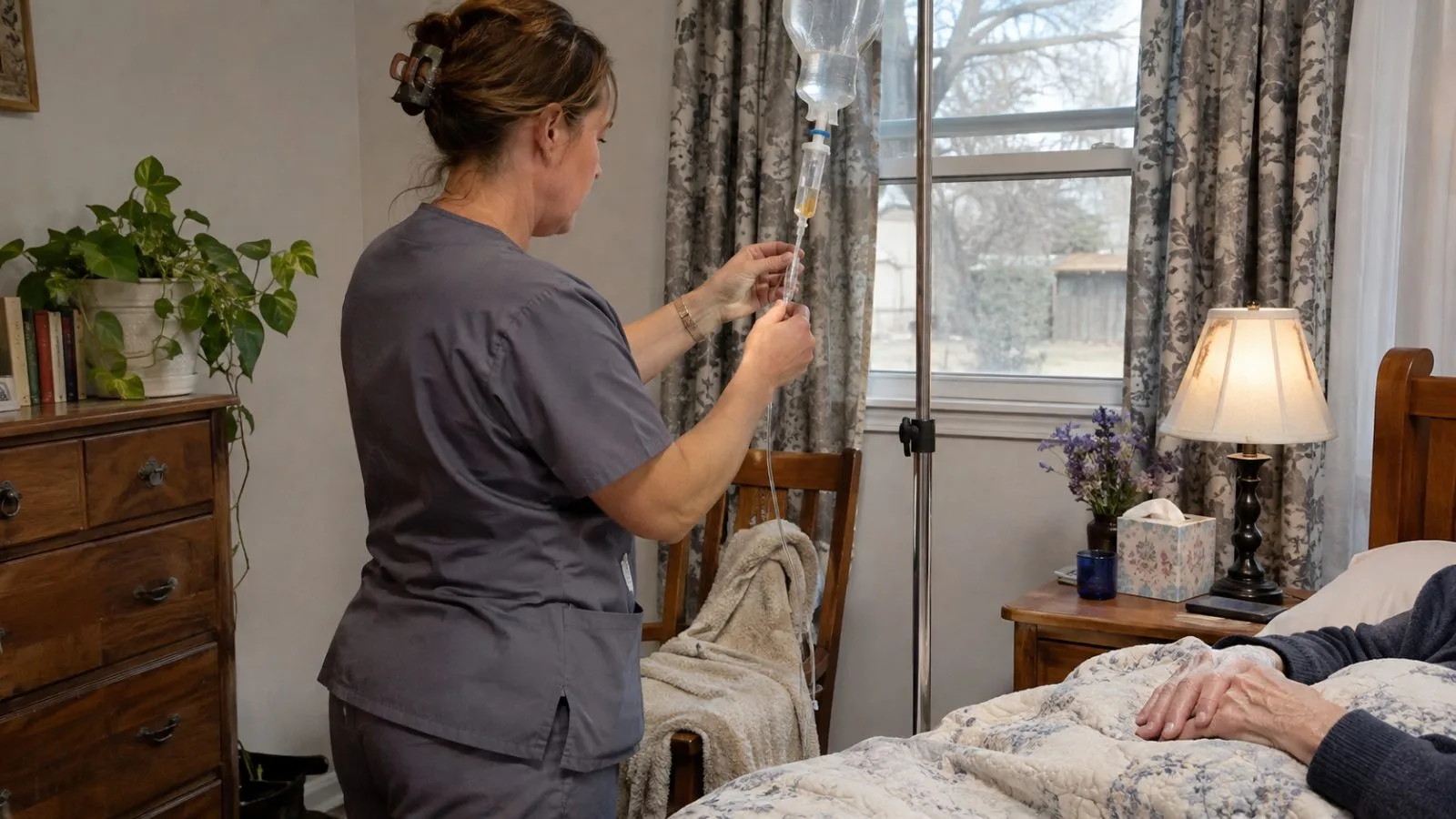
Home transfusions of red blood cells and platelets may be feasible for some hospice patients with blood cancers, according to a small nonrandomized pilot study published in eClinicalMedicine. The study reported no transfusion reactions, hospitalizations or intensive care admissions among the 20 patients analyzed, but did not find a statistically significant change in its measured quality-of-life score.
The researchers enrolled 21 adults between August 2020 and July 2023; one withdrew, leaving 20 in the analysis. Participants were offered weekly transfusions based on symptoms such as fatigue, shortness of breath, bruising or bleeding, rather than relying solely on blood-test results. The study’s abstract says all participants died at home.
The study reported a median hospice stay of 11 days. Its measured composite quality-of-life score had a post-transfusion least-squares mean difference of 0.18 (standard error 1.88; p=0.92), a change that was not statistically significant.
The mean reported cost was $571 per patient per week (standard deviation $939). The University of Oklahoma’s announcement described the cost as below hospital transfusion costs, but did not give a hospital comparison figure.
Jennifer Holter-Chakrabarty, a professor at the OU College of Medicine and hematologist-oncologist with OU Health Stephenson Cancer Center, said, “If patients want to transition to hospice, the need for transfusions doesn’t go away.”
The findings are relevant to U.S. hospice payment. Medicare generally pays hospice providers a daily rate, and the American Society of Hematology says that structure can make it difficult for agencies to absorb the cost of transfusions. The group has called for reimbursement changes and exploration of home-based transfusions.
A 2018 analysis of Medicare beneficiaries with leukemia found a median hospice stay of six days for transfusion-dependent patients, compared with 11 days for patients who were not transfusion-dependent. That historical comparison does not show that transfusions lengthened hospice stays in the new pilot, which had no control group.