Hong Kong's first five-year plan would preserve its capitalist system while setting priorities for the city's economy and society, the city's chief executive said in remarks reported on Oct. 21.
The plan sets longer-term targets, while the annual policy address lays out measures to reach them. The chief executive rejected the idea that following Beijing's planning approach meant adopting a planned economy.
The South China Morning Post carried the remarks in its news channel programme, “How Hong Kong's policy address links with five-year plan”, published on Oct. 21. The commitments represent the Hong Kong government's account of its own programme.
In a written statement, the chief executive said the plan would protect the rule of law and the capitalist system. It would follow the Basic Law, Hong Kong's constitutional framework, and “one country, two systems”, he said.
The plan would also preserve Hong Kong's international status and the free movement of capital, people, goods and information, the chief executive said. He said it would retain the flexibility and advantages of a capitalist market.
“It is a plan which tells us where the strategic directions are, where we are heading,” he said.
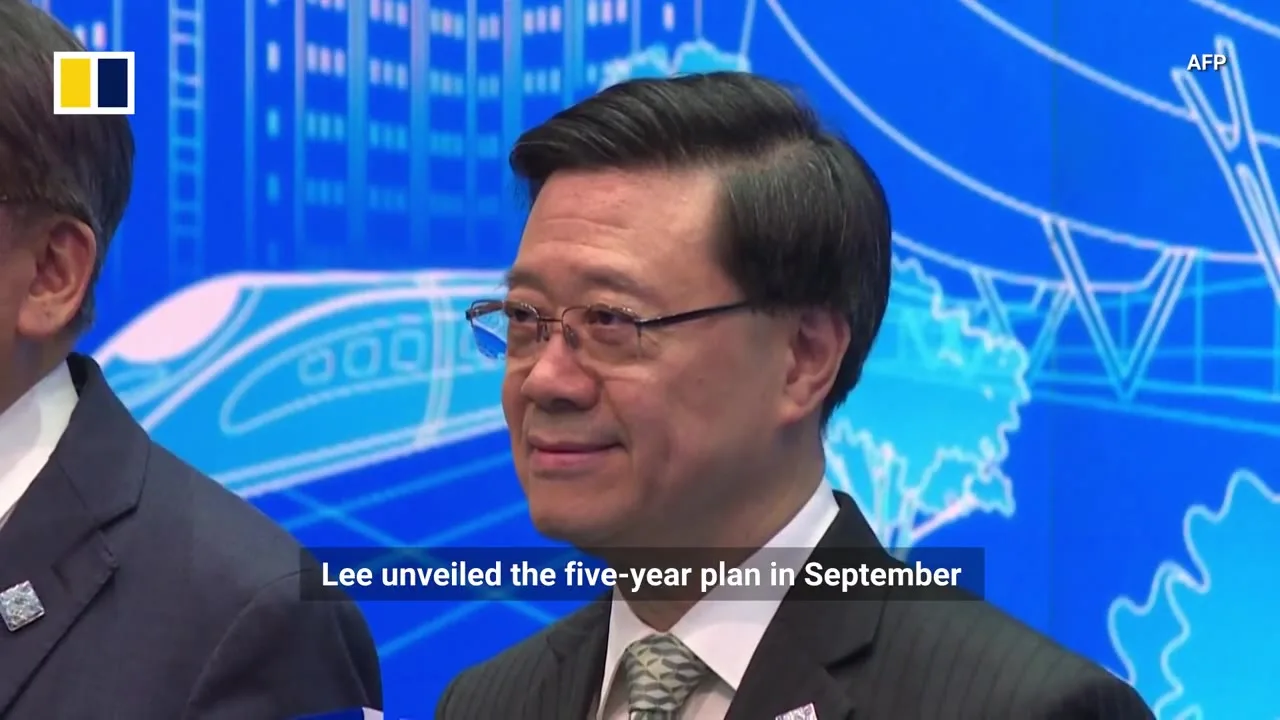
The chief executive unveiled the plan in September alongside his government's annual policy address, the final address of his current term. He described the two as “intrinsically linked”.
The Hong Kong government's plan contains five mandatory performance targets, with those responsible held accountable if they are missed. It also sets 17 aspirational goals intended to guide development without fixed quotas.
The government bears responsibility for meeting the mandatory targets, while the aspirational goals require participation across the city, the chief executive said. The policy address translates those broader aims into annual measures.
For the Northern Metropolis development, the government aims to prepare 900 hectares of land for construction by 2030-31. Rezoning, land clearance and site preparation must be finished by then.
The policy address includes starting land allocation this year for a university town within the development. The plan envisages the Northern Metropolis becoming a primary driver of the city's economy.
The government's four other mandatory targets concern reducing carbon intensity, expanding clean energy and improving air and water quality. Its electricity target calls for zero-carbon sources to supply 30% of generation by 2030.
The government plans land reclamation this year for new energy facilities. The policy address also includes measures aimed at expanding tourism, raising salaries and providing more public housing.
The programme gave no numerical targets for those three aspirations and did not specify what penalties would follow a failure to meet mandatory targets.