


 Zcash Privacy Demand Rises as AI Exposes Bitcoin Transactions
  Sector Spotlight: Data Availability and Storage Lead 24-Hour Market Gains
  Bitmine to Stop Ethereum Buying After Reaching 5% ETH Supply
  ECB May Stop Rate Hikes After December, Capital Economics Says
  BOJ Raises Interest Rate to 31-Year High as Yen Weakens
  BofA Raises Coinbase Stock Target to $203 on Stablecoin Growth
  JPMorgan CEO Jamie Dimon Warns Mythos AI Raises Cyber Risk Tenfold
  Ethereum Price Drops Below $2,600 as Long Liquidations Hit 4-Month High
  Fed Rate Hike Threatens Housing as U.S. Growth Leans on AI, Citi Says
  RBA Set for September Rate Hike as Inflation Stays High
  Fed’s Hammack Says Bond Yield Surge Is Not Driven by Inflation Fears
  Bitcoin Outflows From Binance Hit Three-Year High as Whales Accumulate


 Add as a preferred source on Google
After UK decides to exit from EU, euro’s vulnerability against majors still looks intact, euro against dollar and yen has just shown a negligible recovery from the recent lows, but the commodity currencies, such as CAD and AUD continued to claim their bulls streaks.
But the biggest possible support comes from on-going FOMC inaction and an energy-inspired rise in inflation that sees (German) pressure to start tapering the bond purchases increase.
The debate about how the ECB should respond to higher inflation is the single-biggest potential catalyst for euro strength in H2 2016 or H1 2017.
While, sterling seems ending its longest bearish streaks since 2009 after UK authorities lent some helping hand that cushion the economy as the country decides to exit from the EU. Sterling began rising against majors after Mr George Osborne (the chancellor of the Exchequer) floated a lower corporate tax, While BoE’s Carney hints the macro-prudential easing, so at the moment these two developments could provide the cushion sterling in near terms.
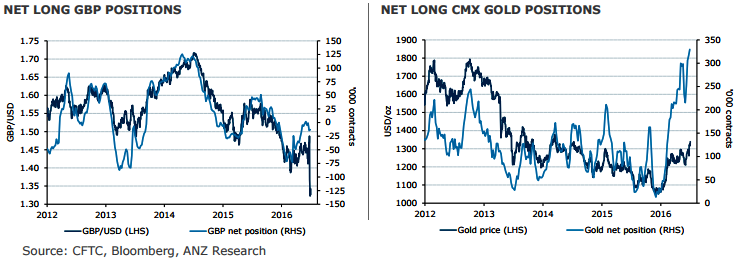
As a result, the net short GBP positions were reduced despite the sharp slump in sterling, by USD0.2bn to USD1.1bn, (see above graph). EUR saw the largest net buying during the week at USD2.4bn, which is at odds with the price action. This is the first time in six weeks that EUR has seen net buying.
Brexit volatility saw funds turning to safe haven assets like gold. Net long contracts in gold rose to 329,800 this week, the highest in CFTC data history (see above graph).
European banks are undergoing a real-life stress test in the wake of Britain's vote to leave the European Union.
For the banks, the implications aren’t yet encouraging. While increased capital requirements have bolstered lenders, Barclays Plc, Royal Bank of Scotland Group Plc and Lloyds Banking Group Plc saw their shares plummet after the June 23 referendum.
The UK central bank is in crisis-fighting mode, unleashing emergency liquidity to ensure lenders have access to cheap funds.
The Bank of England (BoE) has pumped £3.1bn worth of liquidity into the UK’s banking system, following the financial turmoil caused by the EU referendum vote.
Lenders bid for a record of £6.33bn of funds, but the BoE only filled £3.07bn worth of requests.







