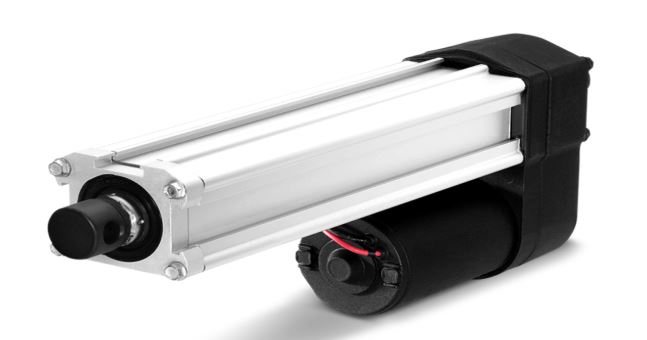
Linear actuators are essential nowadays, but most people don’t even know what is a linear actuator and what are they for. To put in simple words, this is a device that moves any load in a straight motion. It can be used for multiple purposes, from mass production of electronics to food manufacturing. The most common use for a linear actuator nowadays is robotics.
Linear actuators come in different forms, so it is quite understandable that the price ranges respectively. The stroke force determines the power of position changing. The bigger stroke force – the more strokes the device will make in a minute. Load forces can also be different. What is a load force? This is crucial when you want the device to move certain loads. The bigger the load force, the heavier loads the device will lift. It is extremely crucial when you work with car manufacturing, as well as robotics. Stroke length is the third adjustable value. Linear actuators work in a linear motion, being capable to double and even triple up in size. You have to consider a stoke length because if you choose a mini- or micro- actuator, it simply can be not long enough for a build. The stroke length can value from 1 to 60 inches. Each actuator can be a component of a robot’s limb, allowing the device to move and rotate its legs, arms etc. And finally, you have to decide on the speed of the actuator you need to purchase. The speed can range from 0.25 seconds to 2 seconds, depending on the purpose of the device you need to build your actuator in.
How to choose a linear actuator?
You need to consider a couple of steps before finally deciding on the type of an actuator you want to purchase.
1. Decide on the force of the actuator.
Different projects require different forces. Linear actuators are capable of lifting loads from 15 to 2000 lbs, so if you need to build a device that will move itself or lift groceries, for example, you need to choose a simple actuator with a minimal lifting force. However, if you are aiming at a manufacturing scope, the best choice will be a professional actuator that lifts the weight of 1000-2000 lbs, which will cost significantly more, but will do the job perfectly.
2. Decide on the distance, or the stroke length.
Do you need an actuator for home safety (lifting garage doors, car trunk etc.) or you need it to be long? A distance of an actuator determines how far the device will move in one direction. It can be from tiny microscopic distance of 1”to 60”.
3. Decide on the speed of an actuator.
Do you need your device to move faster or slower? Depending on your requirements, you can choose a linear actuator with corresponding speed and force. Bigger projects will need slower actuators, as the load is significantly heavier. But if you need to lift smaller loads, you can choose a faster type of actuator. Mind you that the bigger the load, the slower the actuator will move.
4. Decide on the price you are ready to spend.
You can always substitute the model with a bigger cost with a cheaper one. But to construct serious projects, it is better to have a powerful trusty linear actuator.
This article does not necessarily reflect the opinions of the editors or management of EconoTimes.