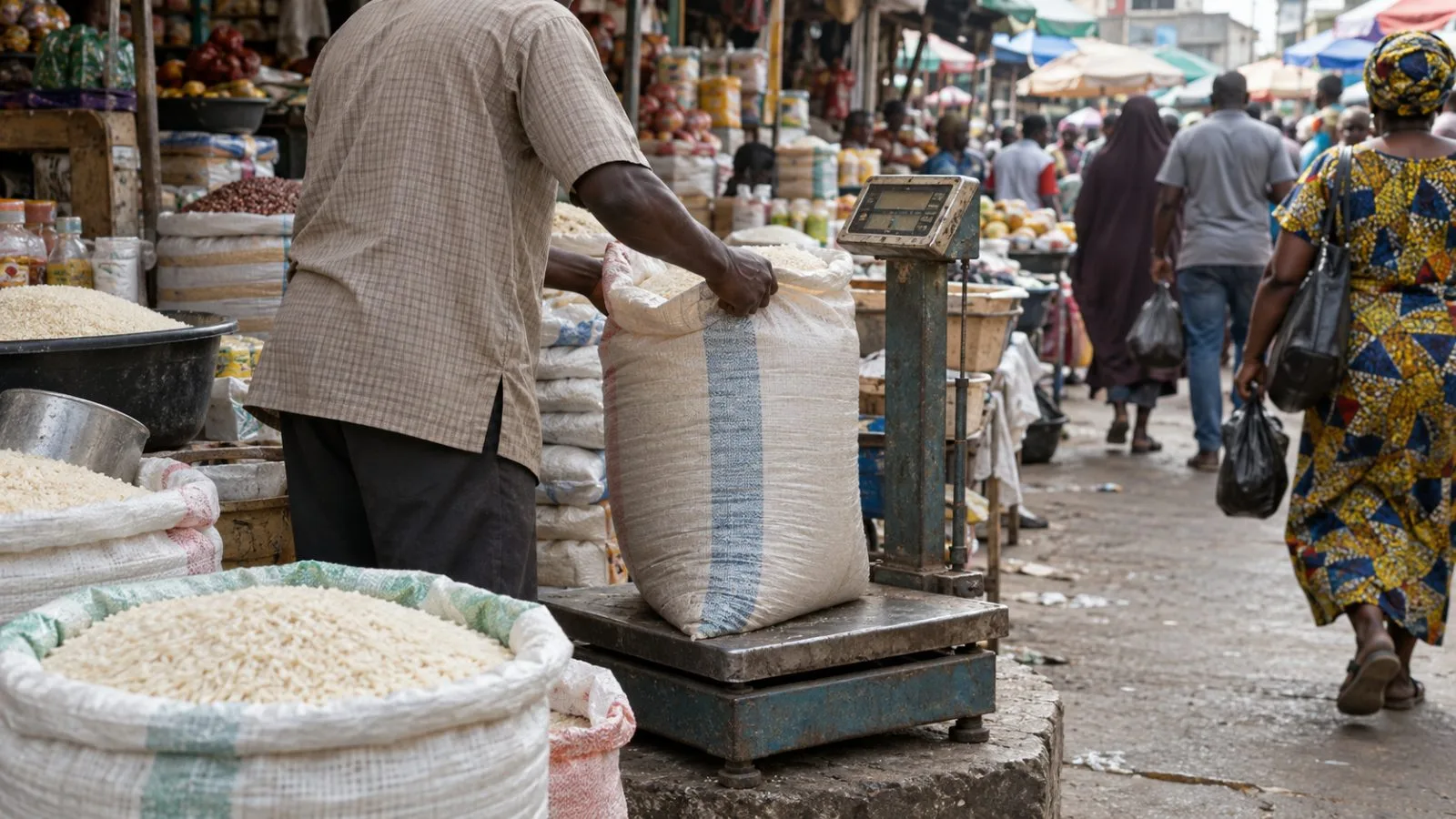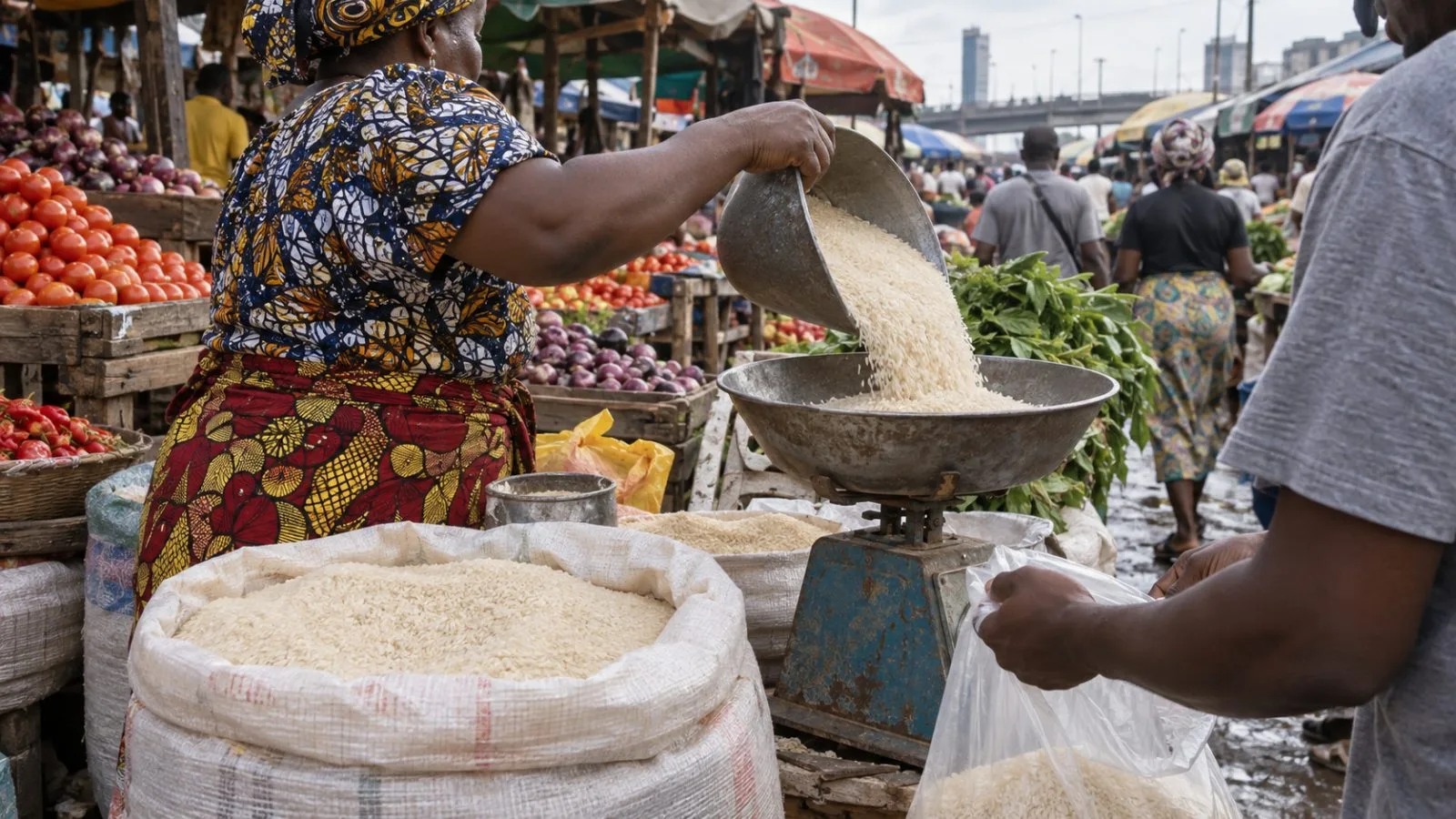
Nigeria’s growth outlook remains positive, but September food inflation of 19.59% shows the cost pressure households still face as headline inflation eases and economic forecasts point to continued expansion.
The National Bureau of Statistics (NBS) reported that annual headline inflation slowed to 14.63% in September from 15.39% in August and 20.98% in September 2025. Annual food inflation inched up to 19.59% from 19.57% in August, while the food index fell 1.55% from the previous month. The food data offered two different signals: the index declined over one month, while its annual inflation rate remained close to 20%.
The International Monetary Fund’s (IMF) October 2026 World Economic Outlook projected real gross domestic product growth of 4.2% in 2026 and 4.3% in 2027. In its separate June 2026 Article IV assessment, the IMF estimated that 63% of Nigerians lived below the national poverty line and 27 million faced food insecurity in fall 2025.
At a Chatham House event on Wednesday, Oct. 21, Finance Minister Taiwo Oyedele spoke about Nigeria’s economic reforms and prospects for inclusive growth. Chatham House says President Bola Tinubu’s 2023 program included removing fuel subsidies and allowing the naira to float. The institute links the reforms to stronger investor confidence and more stable macroeconomic conditions. It also says the speed of the adjustment contributed to inflation and left households under greater strain.
BusinessDay has reported that power disruptions, delays in moving goods and expensive borrowing make it harder for companies to expand and add staff.
A Federal Ministry of Finance dashboard listed external reserves at $54.6 billion on Sept. 14, 2026. Oyo State Gov. Seyi Makinde has challenged the use of rising reserves as a measure of recovery, arguing that daily living conditions should carry more weight.
In an Oct. 12 statement, the Federal Ministry of Finance said its priority is to direct improved economic conditions toward investment, jobs and higher living standards.