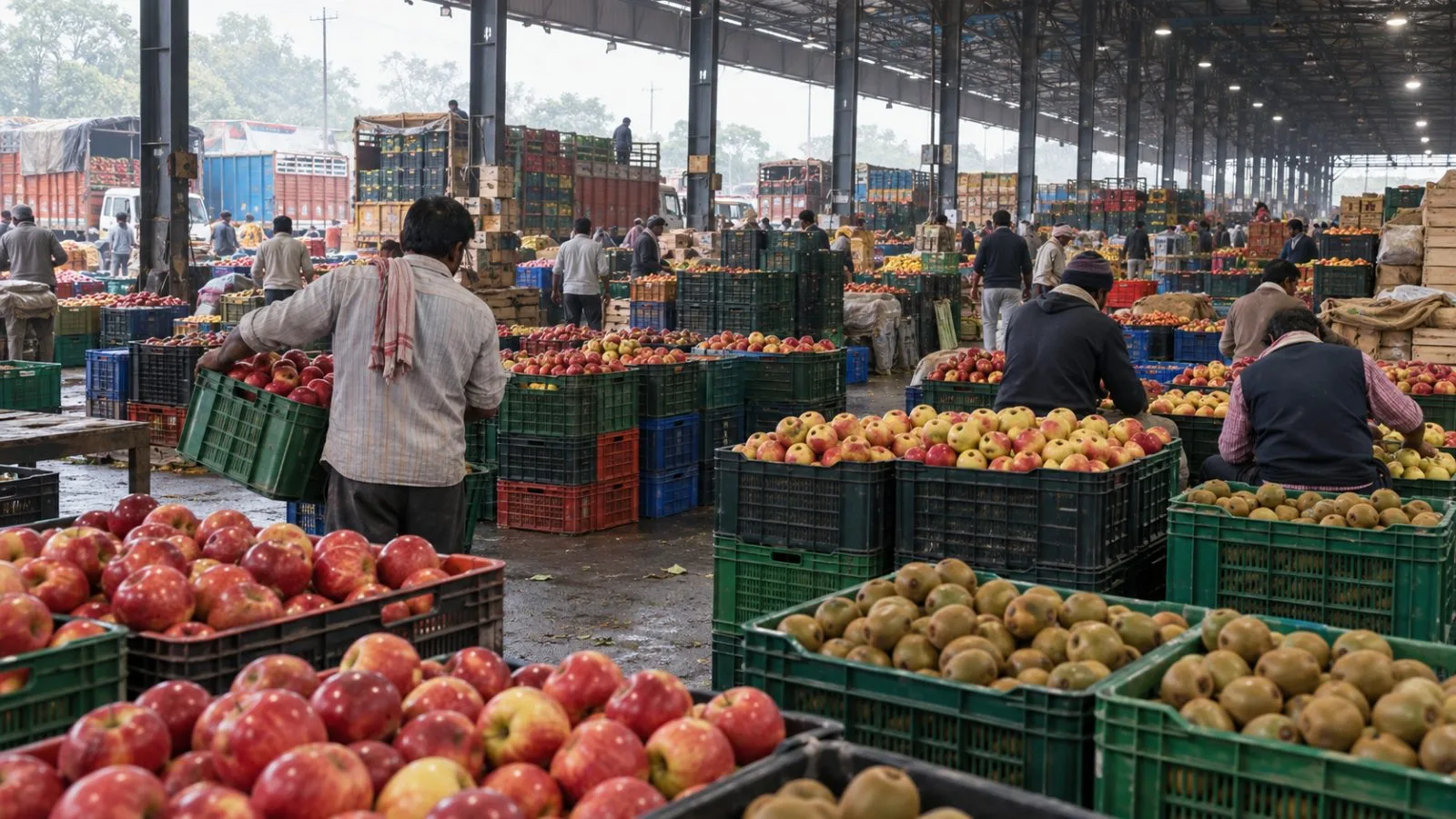
India and New Zealand’s trade pact took effect Oct. 20, after seasonal windows for its apple and kiwifruit quotas had closed, leaving the first in-quota access until April 2027.
The treaty defines its first tariff year as Oct. 20-Dec. 31, 2026. Its schedule assigns 32,500 metric tons of apples a 25% in-quota tariff and sets 6,250 metric tons of kiwifruit at zero duty. But the apple season runs April 1-Aug. 31 and the kiwifruit season ends Oct. 15, so both windows had closed before the pact took effect. The next windows open April 1, 2027, with year-two ceilings of 35,000 metric tons for apples and 8,000 metric tons for kiwifruit. Apples shipped outside quota face India’s prevailing tariff; qualifying kiwifruit may still receive an out-of-quota tariff reduction year-round.
New Zealand’s schedule removes duties on 8,284 tariff lines for Indian goods that meet rules of origin, which set the criteria for where products are made. India’s Ministry of Commerce and Industry identifies textiles, apparel, footwear, leather, engineering products, gems and jewelry, and processed foods among the sectors eligible to benefit.
India’s offer uses several different forms of tariff relief. Duties disappear immediately on 30% of tariff lines, while another 35.6% are phased out over three, five, seven or 10 years. A further 4.37% receive reductions without full elimination, and 0.06% fall under quotas. Nearly 30% remain excluded, including core dairy products. The ministry says safeguards for sensitive agricultural goods are intended to protect Indian farmers.
Using 2024 goods-trade value, New Zealand estimates that products representing 57% of its exports to India qualify for duty-free treatment under the opening schedules; it puts the share at 82% after 10 years. The 57% calculation includes goods that already faced no duty and kiwifruit counted under seasonal quotas, so it does not represent the share that could all enter at zero duty on Oct. 20. New Zealand’s government has described the pact as a way for exporters to diversify amid uncertainty in global markets.
India’s exporters gain wider access to New Zealand, while India retains restrictions on sensitive farm imports. The agreement also covers services and worker mobility, discussed in earlier EconoTimes coverage of the pact. Further tariff changes are due Jan. 1, 2027; the next seasonal windows for apples and kiwifruit open April 1.