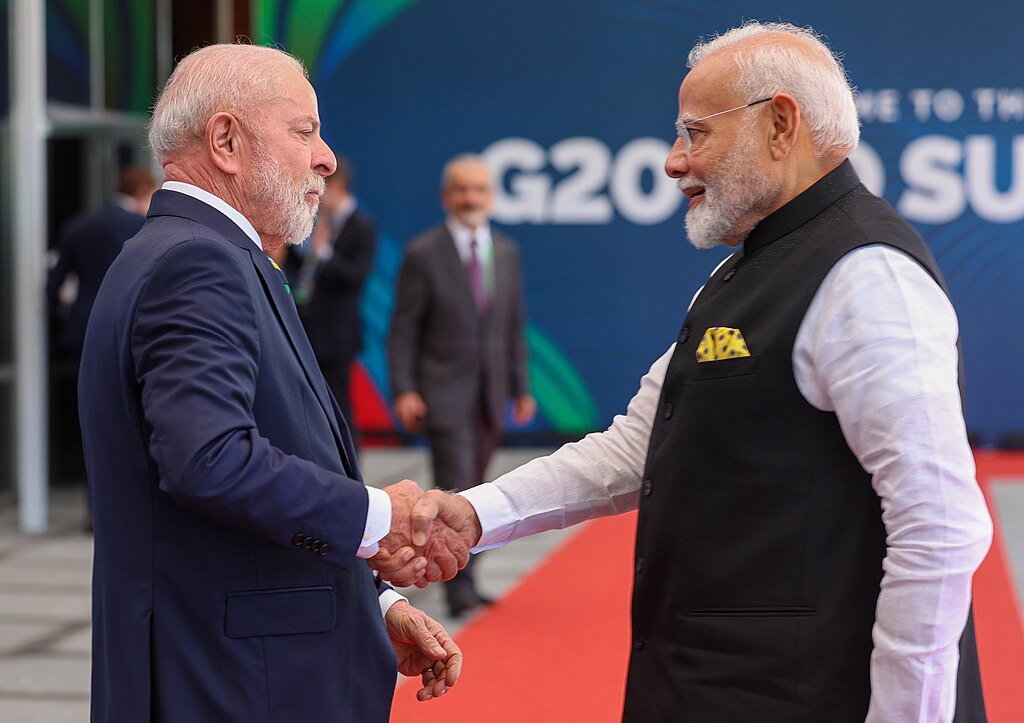
India and Brazil have taken a major step toward strengthening bilateral trade relations by signing a new agreement focused on mining, minerals, and steel sector cooperation. The pact, signed in New Delhi in the presence of Prime Minister Narendra Modi and Brazilian President Luiz Inacio Lula da Silva, aims to secure critical raw materials and support India’s growing steel industry amid intensifying global competition for mineral resources.
Brazil, one of the world’s leading producers of iron ore, holds significant reserves of minerals essential for steel production. The new agreement is expected to enhance India’s access to these raw materials while encouraging technology exchange and long-term collaboration in exploration and mining. According to an official statement, both countries will promote investment in mining projects, mineral exploration, and steel infrastructure development.
India currently has a steelmaking capacity of 218 million metric tons and is expanding output to meet rising domestic demand driven by rapid infrastructure development and industrialization. Strengthening trade ties with Brazil will help India ensure a stable supply of iron ore and other critical minerals required to sustain capacity expansion and economic growth.
During talks with the Brazilian delegation, Modi emphasized the shared commitment to significantly boost bilateral trade beyond the current $15 billion level to over $20 billion within the next five years. He also highlighted plans to deepen cooperation in technology, innovation, digital public infrastructure, artificial intelligence, and semiconductors.
India and Brazil have been strategic partners since 2006, collaborating across sectors such as defense, energy, agriculture, health, and critical minerals. As India’s largest trading partner in Latin America and the Caribbean, Brazil also works closely with New Delhi on global issues including climate change, counter-terrorism, and United Nations reform. President Lula additionally supported increasing trade settlements in local currencies while dismissing speculation about a BRICS common currency.