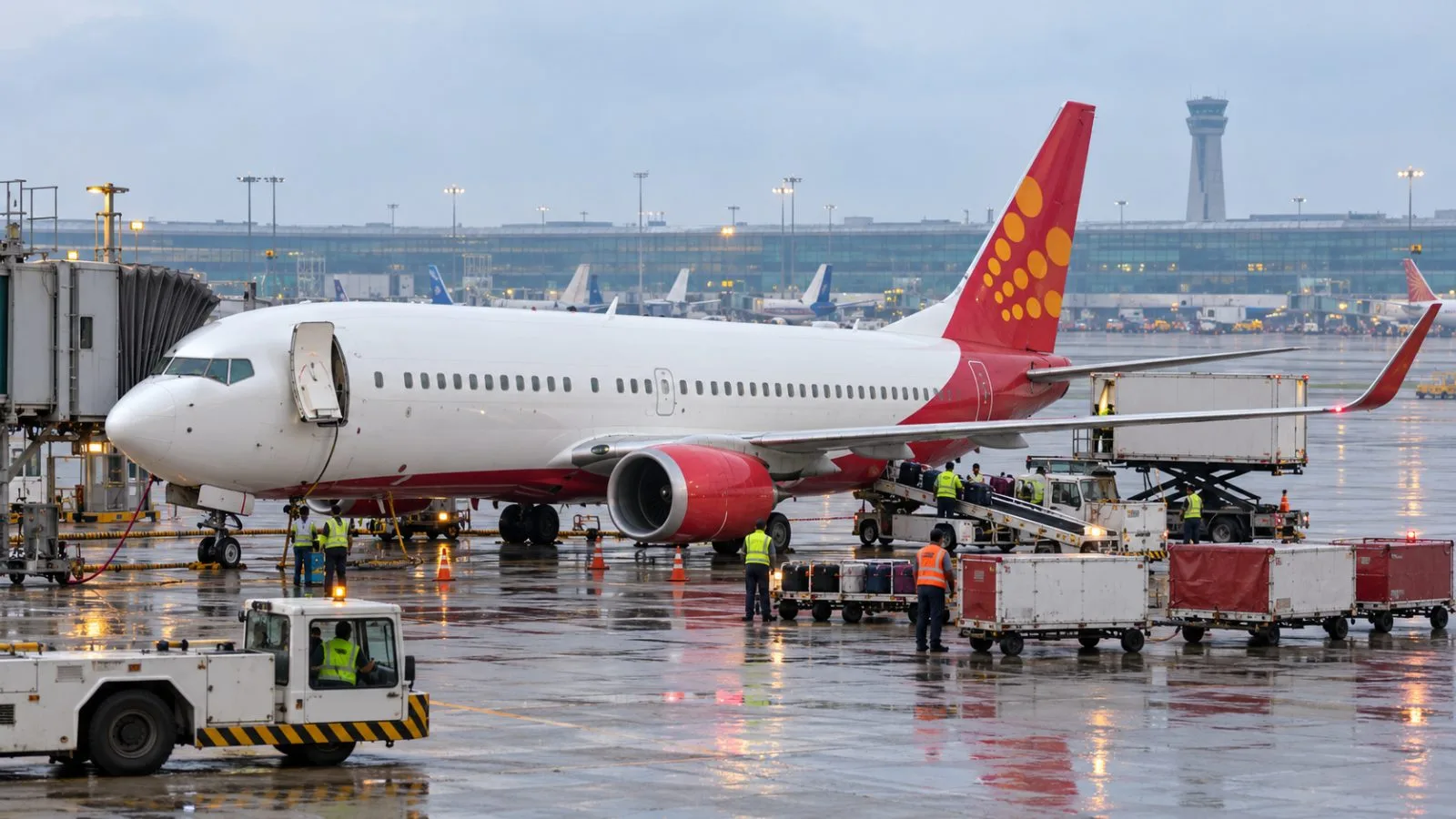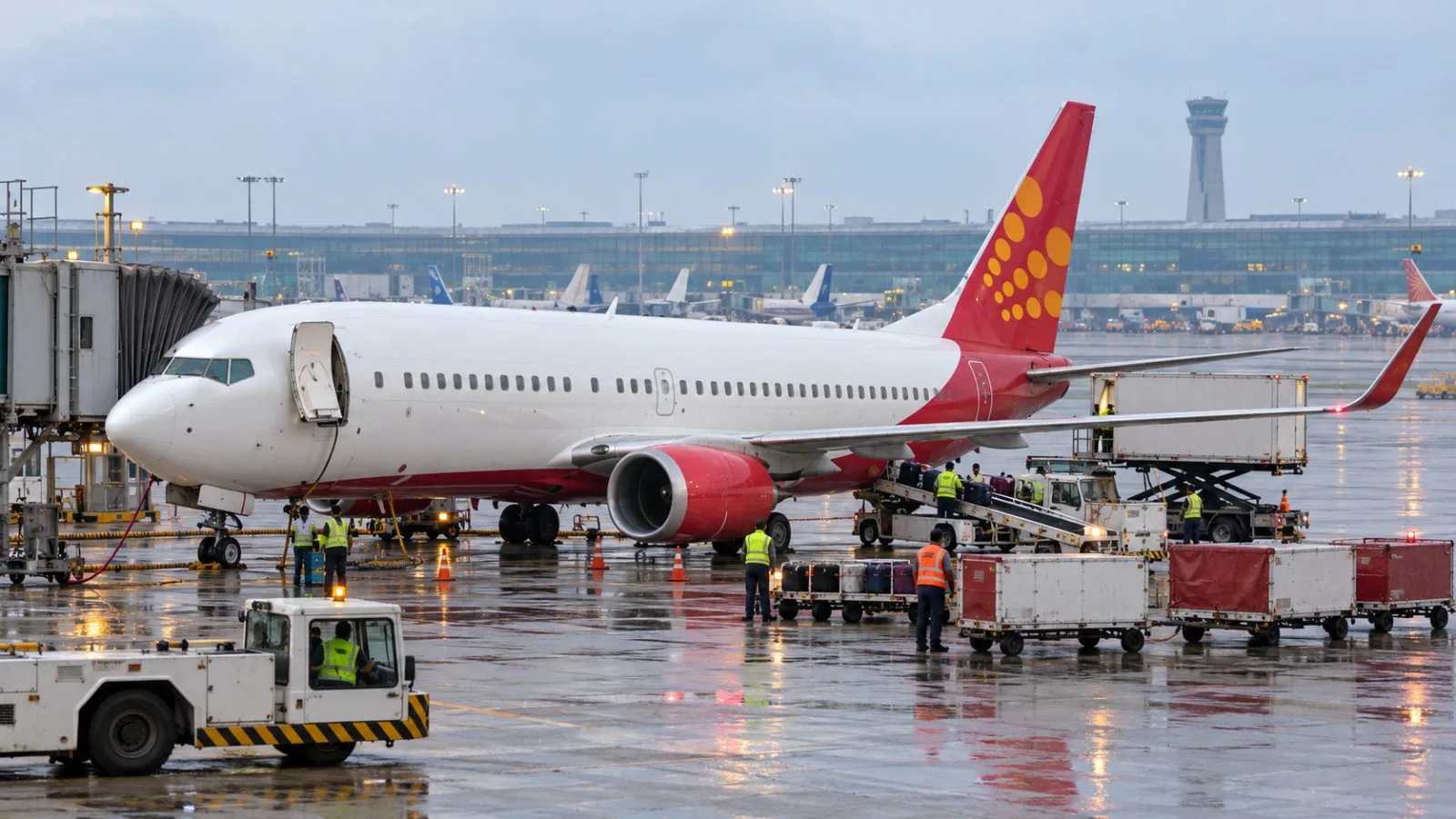
India’s aviation regulator gave SpiceJet seven days to answer alleged operational and compliance failures after September cancellations reached 20.29%, as its board pursues up to ₹5,500 crore in new funding.
The Directorate General of Civil Aviation (DGCA) issued the show-cause notice Nov. 17. It cited declining on-time performance, rising delays and cancellations, failure to follow the approved schedule, passenger inconvenience and inadequate facilitation.
The notice lists eight alleged lapses, including repeated violations of the Route Dispersal Guidelines, failure to meet eligibility requirements for scheduled international operations, non-payment of an earlier penalty, uncertainty over mandatory insurance renewal and complaints from overseas aviation authorities about delayed payments to service providers. The allegations were reported by Moneycontrol from material accessed by CNBC-TV18.
DGCA said a majority of SpiceJet’s aircraft were grounded and that the airline had not submitted a credible plan to return them to service. Moneycontrol, citing CNBC-TV18 sources, reported that five aircraft were operating — three Boeing 737s and two Q400s. That figure was not included in the regulator’s published traffic report.
DGCA data showed SpiceJet’s on-time performance at 10 major airports was 16.6% in September 2026, compared with a 20.29% cancellation rate for the airline and 1.15% for scheduled domestic airlines overall. SpiceJet carried 0.73 lakh passengers and held 0.6% of India’s domestic market, down from 3.9% in January, according to earlier DGCA market-share coverage.
The airline’s Route Dispersal Guidelines (RDG) deployment on Category I/II/III routes was 24.6%, below the stated 35% minimum. The report also recorded deployment of 1.29% on Category IIA routes against a 1% minimum and 77.2% on Category II routes against a 10% minimum.
SpiceJet’s board approved the fundraise Nov. 18 through equity, debt, convertible securities or other permitted instruments, subject to shareholder and regulatory approvals. It also approved increasing authorized share capital to ₹7,500 crore from ₹2,000 crore.
Chairman and Managing Director Ajay Singh said the fundraising would help “rebuild the airline, strengthen its operations and restore the brand.” SpiceJet’s filing attributed operating pressure to geopolitical disturbances, airspace restrictions and more than doubled aviation turbine fuel prices. The airline must respond to the DGCA notice within seven days.