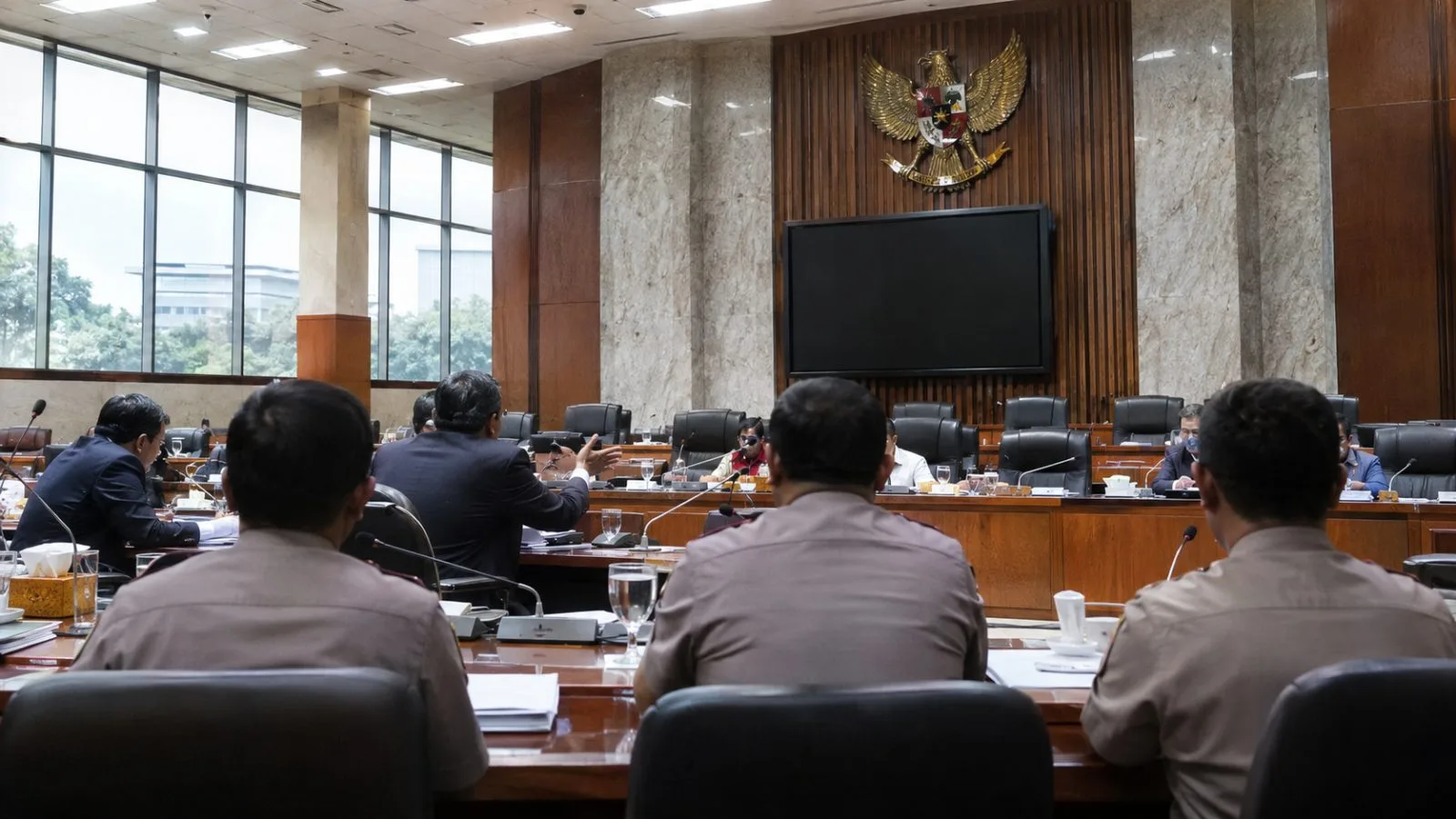
Indonesia’s House of Representatives approved a bill on Nov. 19 that would let authorities pursue crime-linked assets without first securing a criminal conviction in some cases, setting out a new tool for recovering public losses and compensating victims.
The House said the measure is intended to recover assets for the state and the public, including victims. It describes steps to locate and restrict property, obtain judicial review and carry out a court ruling. An independent body would manage recovered assets, which could be distributed to the state, victims or good-faith third parties.
The House lists corruption, narcotics and psychotropic drugs, terrorism and terrorism financing, human and arms smuggling, human trafficking, and certain technology-enabled fraud or embezzlement among offenses covered by the bill.
During deliberations, lawmakers expanded the bill from 67 to 74 articles and resolved 397 items on an issue list, the House said. Habiburokhman, chair of the House Commission III working committee on the bill, cautioned that the forfeiture process should not be used for political purposes, extortion or official abuse.
The Directorate General of State Assets at the Finance Ministry described an earlier draft that allowed the process when a criminal case could not proceed because a suspect or defendant had died, fled or become permanently ill, or could not be identified or located. That draft also set a minimum asset value of 1 billion rupiah. Those provisions have not been confirmed against the version approved by lawmakers.
Administrative and Bureaucratic Reform Minister Rini Widyantini said asset recovery can be constrained when authorities must first obtain a criminal conviction, Reuters reported. The Legal Aid Institute of Indonesia said the bill could aid anti-corruption efforts and asset recovery, while warning that broad powers to freeze, seize and manage property carry risks without strong safeguards, Reuters reported, citing a Nov. 16 draft it could not verify.