


 What is Zionism? The different meanings of a contested term
  Big AI wants to slow down AI research. Is it a safety pause or a strategic retreat?
  Banking scandal rocks Brazil’s politics and the country’s presidential election in October
  AI is supercharging money scams – here’s what you can do to protect yourself
  Gold Slides to $4,262 as Hawkish Fed Rate Hike Triggers Technical Breakdown
  1 in 3 uni students experience serious financial hardship. Could concession cards for all help?
  Who should own the knowledge that underpins AI technology?
  Physicists zoom into the birth of cosmic rainstorms with new CERN study


 Add as a preferred source on Google
Even if the unscheduled outages caused by Brazil and Libya and inventories were to increase somewhat in yesterday's inventory checks.
The U.S. crude inventory checks are evidencing a fresh highs and mining edging upwards must be the reason for the market shakedown, referring to an upbeat numbers of 4.2 million barrel crude inventory rise by last week against a market expectation for a 1.4 million barrel gain.
As a result, WTI crude price fell for a third session in a row on Friday to the lowest in over two months as a relentless climb in oil stockpiles which is very well in line with previously guidance by EIA - according to EIA estimates, they already totalled 3.7 million barrels in September, which was their highest level since 2010 - supply remains more than ample on the oil market.
This has been helping to trigger a 10% drop in prices since the early November, with traders taking on bets on further falls.
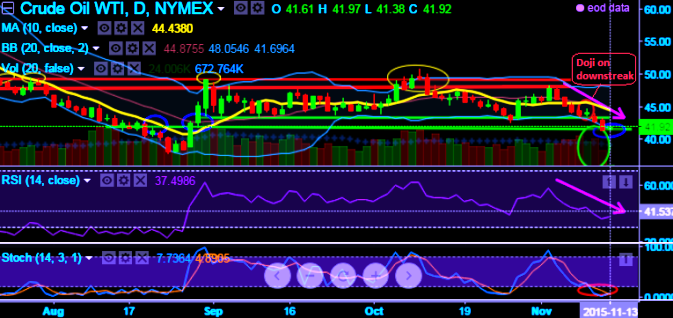
As a result we could foresee weakness in crude prices which in turn was struggling to hold onto supports at 41.75 levels.
So from the current levels keeping speculation mindset we recommend shorting near month futures for target towards $40.45 levels again, however short term traders keep a strict stop loss at 42.45 levels. Thereby, we have attractive risk reward ratio.

- News

- Economy

- Central Banks
- Investing
- Research
- Roundups
- Digital Currency
- Insights
- Technical Analysis
- Technology
- Business
- Law
- Health
- Nature
- Fintech
- Science
- Topic
- Opinions
- ©Econometrics LLC . All Rights Reserved.
Inventory check hampers crude to below 41.75 – short WTI futures for TP at 40.45
Friday, November 13, 2015 9:29 AM UTC
Editor's Picks



- Market Data
Most Popular




